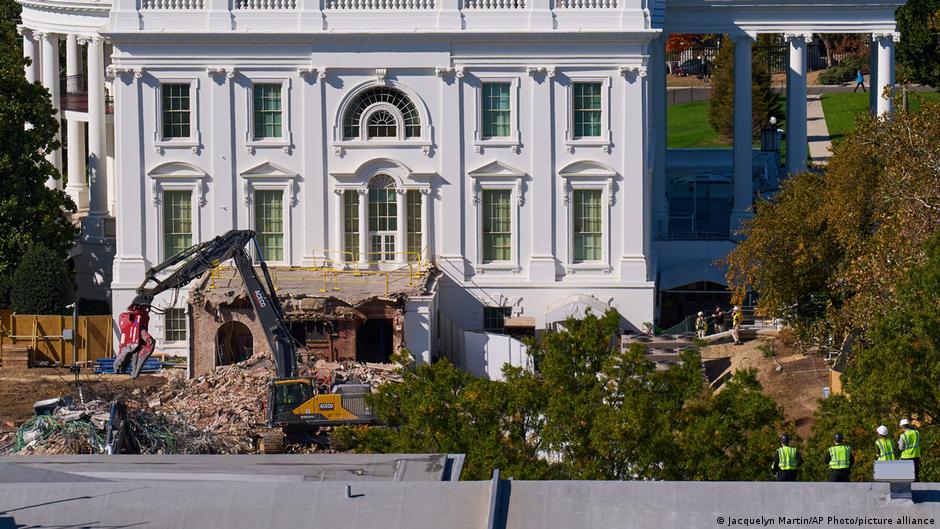
In a striking judicial decision, a U.S. judge ruled on Tuesday that President Donald Trump cannot build a dance hall on the White House grounds without obtaining congressional approval. The project, which is estimated to cost $400 million, was slated for the East Wing of the White House, which was demolished last year in preparation for the new structure.
Trump views this dance hall as a necessary addition to the White House complex, aiming to enhance official events and meetings. However, the National Trust for Historic Preservation, a nonprofit organization that filed the lawsuit, claimed that Trump exceeded his authority with this project.
Details of the Ruling
Judge Richard Leon, appointed by former Republican President George Bush, agreed to the request for a preliminary injunction, meaning that the construction of the dance hall will cease until the legal matter is resolved. In the ruling, Leon noted that "the President of the United States is a steward of the White House for future generations of first families, but he does not own it!"
The judge added, "Where does this leave us? Unfortunately for the defendants, unless Congress blesses this project through legal authorization, construction must stop!" The Trump administration was given a 14-day period to appeal the decision, which it did immediately following the ruling.
Context and Background
This case arises amid increasing tensions between the Trump administration and entities seeking to protect historic landmarks in the United States. Since taking office, Trump has faced numerous legal challenges related to his projects, including those concerning the renovation of the Kennedy Center for the Performing Arts in Washington, which he renamed to Trump Kennedy Center without congressional approval.
Historically, the White House is a symbol of American power and was designed to be a historic landmark preserved for future generations. Therefore, any significant changes to it require congressional approval, adding a legal and political dimension to this dispute.
Implications and Effects
This case could affect how future administrations handle major projects at the White House. If Trump is allowed to continue the project without congressional approval, it may open the door for other unauthorized changes to historic landmarks. Conversely, if the ruling is upheld, it could set a legal precedent limiting the powers of presidents in making decisions regarding historic sites.
This case is also seen as a victory for groups seeking to protect cultural and historical heritage in the United States, as Carol Quillen, the CEO of the National Trust, stated that this ruling is "a win for the American people against a project that permanently impacts one of the most beloved and iconic places in our nation."
Impact on the Arab Region
While this dispute appears to concern only the United States, it has broader implications for how historic landmarks are managed in other countries, including Arab nations. Preserving cultural and architectural heritage is a significant issue in many Arab countries, where governments and local communities strive to protect historical sites from alteration or destruction.
Ultimately, this case highlights the importance of balancing development and innovation on one hand, with the preservation of cultural heritage on the other. The debate over the rights of presidents to make decisions regarding historic landmarks may resonate in many countries seeking to maintain their cultural identity.