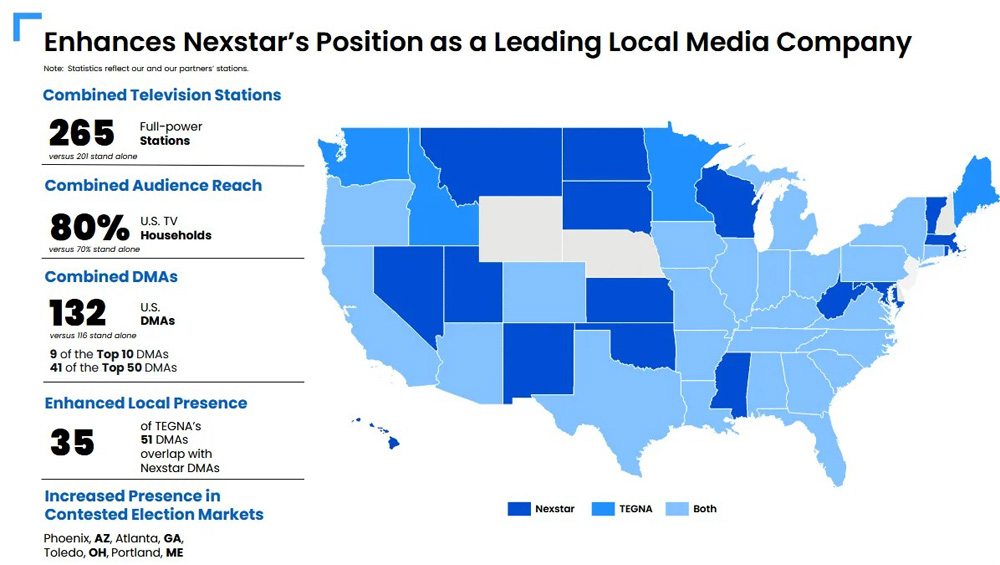
A U.S. federal court judge, Troy Nunley, has ruled that the assets of Tegna must be separated from Nexstar during a legal review concerning Nexstar's acquisition of Tegna valued at $3.54 billion. This ruling was issued on March 27, following approvals from both the Department of Justice and the Federal Communications Commission on March 19.
This action comes after a lawsuit was filed by DirecTV, which warned that the deal would lead to increased consumer costs, reduced local competition, the closure of local newsrooms, and an increase in the frequency and duration of broadcast interruptions for local sports teams.
Details of the Case
In the context of this case, Judge Nunley noted that DirecTV had demonstrated that the proposed deal is likely to violate antitrust laws based on the combined market share of the two companies. Eight states, led by California and New York, have filed a request to temporarily halt the deal, arguing that it would lead to a greater concentration of broadcasting power in the hands of fewer companies, negatively impacting local jobs and increasing cable bills.
Judge Nunley explained that the deal would enhance Nexstar's negotiating power to impose higher fees on broadcasting services, which would, in turn, lead to increased prices for subscribers.
Background & Context
This acquisition is considered one of the largest in the history of American media, resulting in the creation of the largest group of broadcasting stations in the United States, reaching up to 80% of American households. The deal has raised significant concerns among market observers and competitors, who believe that such a concentration of media power could reduce diversity in media content.
Historically, the United States has witnessed numerous acquisitions in the media sector, but this particular deal raises special concerns due to its size and potential impact on local competition and the quality of news provided to the public.
Impact & Consequences
This case could have significant ramifications for the media industry in the United States. If the deal is canceled, it may lead to changes in the strategies of major companies in the media sector and prompt a reevaluation of how acquisitions are regulated in this field. Additionally, the ruling could open the door for increased scrutiny of future acquisitions, affecting how major companies operate.
Moreover, this case could influence the pricing of broadcasting services, as companies may need to reassess their pricing strategies in light of increased competition. Rising prices could impact consumers, potentially placing additional pressure on American households.
Regional Significance
While this case appears to focus on the American market, it has potential implications for the Arab region. With the increasing number of acquisitions in the Arab media sector, this case could serve as a model for addressing competition issues and consumer protection. Furthermore, the significant concentration of media power in the hands of a few companies could lead to reduced diversity in Arab media content, highlighting the need for stringent antitrust laws.
In conclusion, this case underscores the importance of protecting competition in the media sector, both in the United States and in the Arab world, as media plays a vital role in shaping public opinion and providing information.