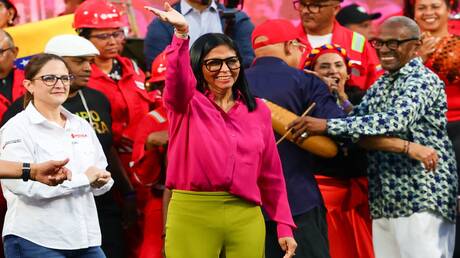
The United States has lifted sanctions on Delcy Rodriguez, the interim president of Venezuela, as announced by White House Deputy Press Secretary Anna Kelly. This decision is attributed to her outstanding performance and close cooperation with the U.S. government. The move is part of Washington's efforts to strengthen relations with Caracas during a time of political turmoil in Venezuela.
Delcy Rodriguez, who assumed her position following a period of political unrest in Venezuela, is a pivotal figure in the interim government. She has shown a clear commitment to the political and economic reforms that the country seeks, making her a focal point of interest for Washington.
Details of the Event
During a press conference, Anna Kelly confirmed that the lifting of sanctions reflects the U.S. appreciation for Rodriguez's efforts in improving the internal situation in Venezuela, as well as enhancing bilateral cooperation. She noted that this decision comes at a time when Venezuela needs international support to address its economic and social challenges.
The sanctions previously imposed on Rodriguez were part of a broader set of measures taken by the United States against Venezuelan government officials, aimed at pressuring the former regime led by Nicolas Maduro. However, the current U.S. administration seeks to change this dynamic by supporting figures who demonstrate a willingness to cooperate.
Background & Context
Historically, relations between the United States and Venezuela have been marked by significant tension, especially under Maduro's rule. U.S. sanctions aimed to pressure the Venezuelan government to change its policies, but the situation did not improve markedly. Nevertheless, Rodriguez's emergence as an interim leader may open new avenues for cooperation between the two countries.
Venezuela is considered one of the richest countries in the world in terms of natural resources, particularly oil, yet it suffers from crippling economic crises. Cooperation with the United States could help restore some economic stability, but this depends on the interim government's commitment to the necessary reforms.
Impact & Consequences
The lifting of sanctions on Rodriguez could have positive effects on the internal situation in Venezuela, as it may encourage more foreign investments and enhance confidence in the interim government. Additionally, this step could contribute to improving relations between Caracas and Washington, potentially leading to increased international support for Venezuela.
However, the biggest challenge remains how to manage these relations in a way that ensures the interests of the Venezuelan people are met. Past experiences with Venezuelan governments indicate that political changes can be slow and difficult.
Regional Significance
As the United States focuses on Venezuela, this may also impact American relations with other countries in the region, including Arab nations. The shift towards supporting interim governments or political reforms could reflect on how Washington engages with issues in the Middle East.
Moreover, the success or failure of the interim government in Venezuela could influence opposition movements in other countries, making it crucial to closely monitor developments in Caracas.
In conclusion, the lifting of sanctions on Delcy Rodriguez represents a strategic move by the United States aimed at supporting stability in Venezuela and enhancing bilateral cooperation. However, the greatest challenge remains translating these steps into tangible benefits for the Venezuelan people.