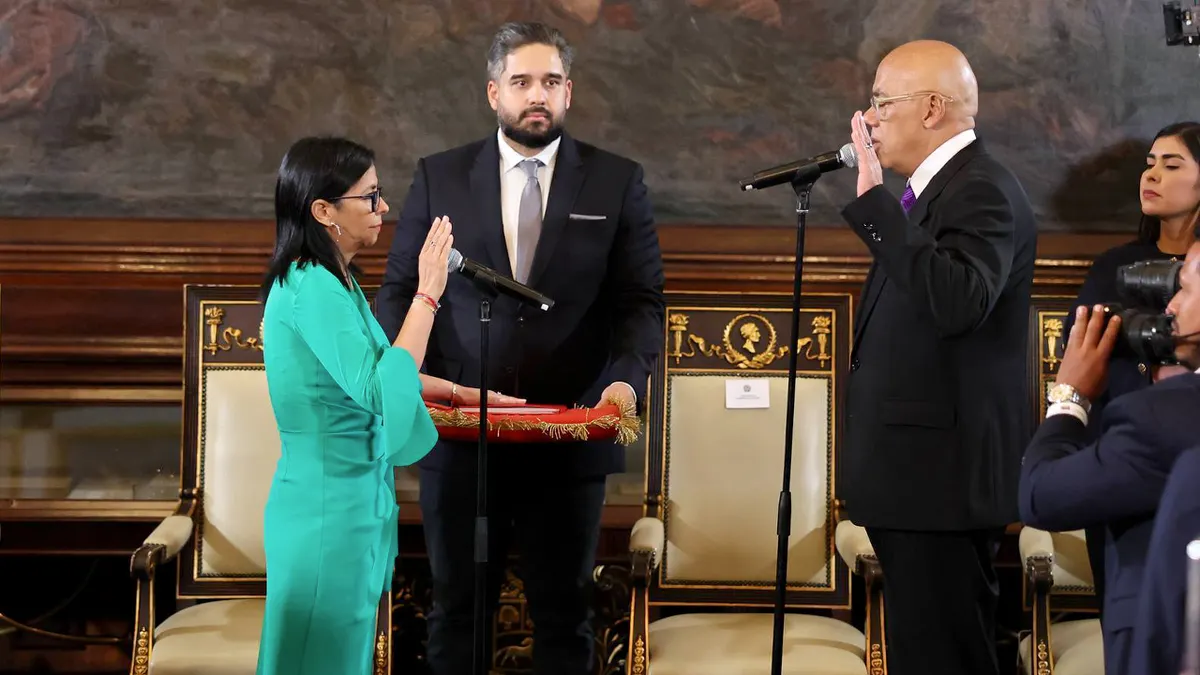
In a surprising move, the United States announced the lifting of sanctions imposed on interim Venezuelan President Delsy Rodriguez. This decision comes three months after the kidnapping of Venezuelan President Nicolas Maduro, reflecting a notable shift in U.S. policy towards Caracas.
This development is seen as a sign of potential rebuilding of relations between the two countries, which have experienced severe tensions over the past years. The U.S. had imposed strict sanctions on Venezuela, targeting prominent government figures, including Maduro himself, due to human rights violations and government corruption.
Details of the Event
The lifting of sanctions on Rodriguez represents a bold step by the Biden administration as it seeks to reassess its strategy in Latin America. This decision comes at a sensitive time as the Venezuelan government attempts to transition to a new phase of governance after years of political and economic turmoil.
Despite the lifting of sanctions, the Venezuelan opposition continues to strive for its voice in this transitional phase. They are facing significant marginalization in the political process, raising questions about the future of democracy in the country.
Background & Context
Historically, relations between the United States and Venezuela have been strained, especially following Maduro's rise to power in 2013. Washington has accused the Venezuelan government of corruption and human rights abuses, leading to the imposition of harsh economic sanctions.
In recent years, Venezuela has faced a crippling economic crisis, resulting in widespread poverty and severe shortages of food and medicine. The Venezuelan government has attempted to address these crises by turning to other allies, such as Russia and China.
Impact & Consequences
The lifting of sanctions could have significant implications for the economic and political situation in Venezuela. This decision may lead to increased foreign investments in the country, helping to improve the deteriorating economic conditions.
However, the question remains about how the opposition will respond to this development. Will they be able to regain their strength and influence in the political arena, or will they remain marginalized amid the new shifts?
Regional Significance
The U.S.-Venezuela relations are part of the larger picture of international relations, which indirectly affects Arab countries. Any change in U.S. policy towards Latin America could influence Arab nations' strategies in dealing with Washington.
Moreover, the economic and political crises in Venezuela may serve as a lesson for Arab countries facing similar challenges, prompting reflection on how to manage internal and external crises.
The lifting of sanctions on Delsy Rodriguez marks a new beginning in U.S.-Venezuela relations, but it also raises questions about the future of democracy in the country and the role of the opposition during this transitional phase.