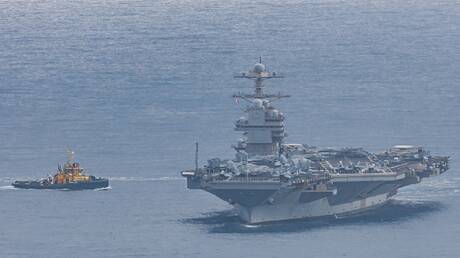
The Wall Street Journal has reported that the material losses for the United States of America, including losses in equipment and weaponry, since the beginning of the Iran War, have reached approximately $3 billion. This statement was made by a former official at the U.S. Department of Defense (Pentagon), shedding light on the substantial financial costs that the United States has incurred in this war.
These figures serve as an indicator of the extent of the damage inflicted on U.S. forces, reflecting the challenges faced in the context of the ongoing conflict. This report comes at a time when concerns are rising over escalating tensions in the region, raising questions about the military and political strategies adopted by the United States in the Middle East.
Details of the Event
The reported losses encompass all dimensions related to military equipment, including aircraft, vehicles, and weapons that were used in military operations. Reports also indicate that these losses may impact the U.S. defense budget, placing additional pressure on the government amid current economic challenges.
These statements come at a sensitive time, as pressures mount on the U.S. administration to reassess its strategies in the region. The figures have shown that the financial costs of the war are not only in direct losses but also include expenses related to reconstruction and logistical support.
Background & Context
Historically, the United States has witnessed multiple military interventions in the Middle East, each with its own costs. Since the beginning of the Iran War, which started in 1980 and lasted until 1988, the United States has supported Iraq in its struggle against Iran, complicating relations between Washington and Tehran.
The significance of this report is underscored by the ongoing tensions between the United States and Iran, as relations between the two countries remain strained, especially after the U.S. withdrawal from the Iranian nuclear agreement in 2018. This backdrop makes it essential to understand the financial and political dimensions of the conflict.
Impact & Consequences
The implications of U.S. financial losses in the Iran War extend beyond economic dimensions, affecting U.S. foreign policy. With rising costs, the U.S. administration may be compelled to reevaluate its military strategies in the region, potentially leading to changes in how it addresses future conflicts.
Moreover, these losses could bolster Iran's position in the region, as they may be used to justify an escalation of military or political activities. Additionally, these figures may influence American public opinion, placing further pressure on decision-makers.
Regional Significance
The U.S. losses in the Iran War serve as an indicator of the ongoing tensions in the Middle East, which directly affect Arab countries. As tensions rise, Arab nations may find themselves in a difficult position, needing to balance their national interests with security challenges.
These figures may also impact relations between Arab countries and the United States, potentially leading to a reassessment of alliances and security cooperation. Under these circumstances, it becomes crucial for Arab nations to be prepared to deal with the repercussions of any potential escalation in the region.
In conclusion, U.S. losses in the Iran War highlight the complexities faced by the United States in the Middle East. As tensions continue, the question remains about how these figures will affect American policy in the region and how Arab nations will respond to these challenges.