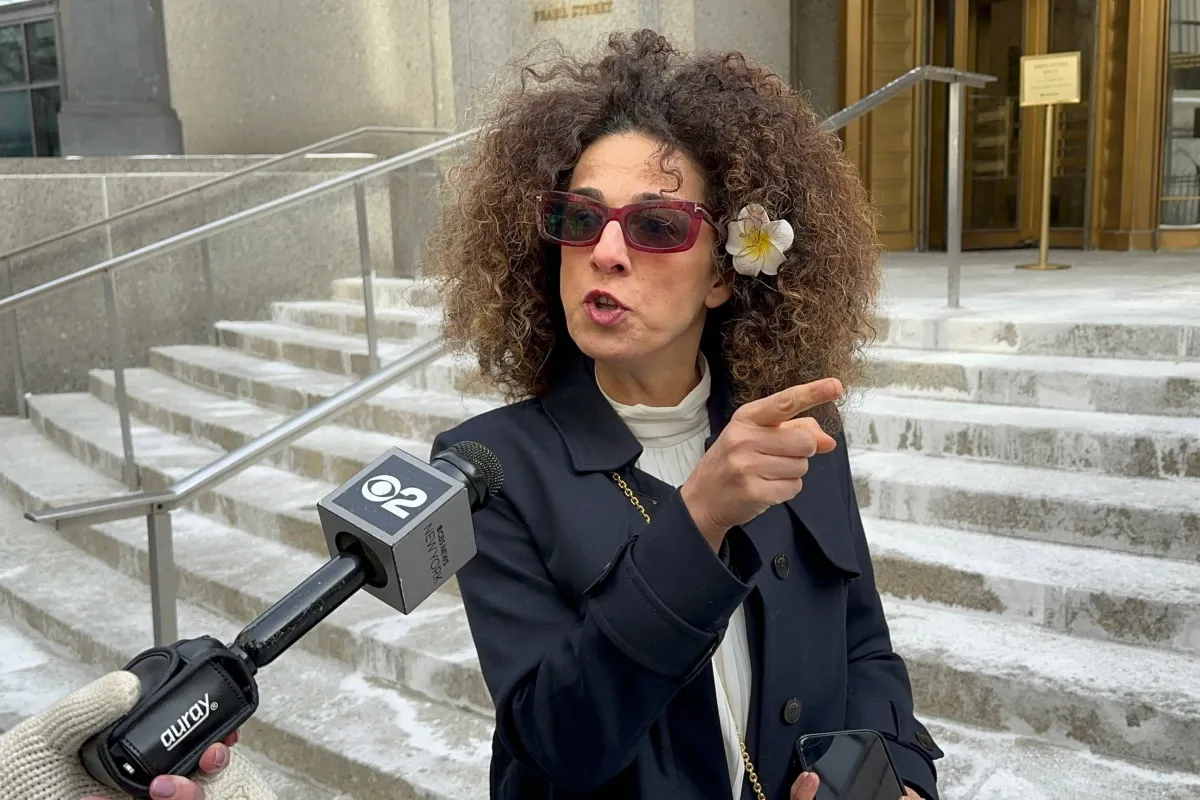
A U.S. court sentenced Jonathan Ludholt to ten years in prison on Wednesday after he confessed to being involved in a plot to assassinate Iranian-American journalist Masih Alinejad, who is considered one of the most prominent critics of the Iranian regime. This case underscores the increasing tensions between the United States and Iran, especially concerning freedom of expression and human rights.
Ludholt, aged 37, was arrested in November 2024 and admitted to charges of money laundering and stalking in connection with the scheme targeting Alinejad, who is 49 years old. He and another man, Carlisle Rivera, were charged with accepting $100,000 to kill Alinejad, who resides in the United States.
Details of the Incident
Rivera was sentenced to 15 years in prison in January after pleading guilty to conspiracy to commit murder for hire. The U.S. Department of Justice reported that the assassination plot against Alinejad was ordered by the Iranian government, with Assistant Attorney General for National Security John Eisenberg stating, "Tehran attempted to assassinate an American journalist on U.S. soil simply because she exposed some of the regime's numerous violations."
Another suspect in the case, Farhad Shakri, an Afghan residing in Iran, is accused of recruiting the two men on behalf of the Iranian Revolutionary Guard. Alinejad, who left Iran in 2009, is a leading opponent of the Iranian authorities and has campaigned for years to abolish the mandatory hijab in Iran under the slogan "My Hidden Freedom."
Background & Context
These events occur within a broader context of tensions between Iran and the United States, where concerns about human rights violations in Iran, particularly against dissenters, are growing. Alinejad, who has over nine million followers on Instagram, was the target of another assassination attempt that was foiled at the last moment in the summer of 2022.
This case illustrates how Iran may resort to violent methods against dissenters abroad, raising international concerns about freedom of expression and human rights. It also reflects the ongoing struggle between the two countries over human rights issues and foreign policies.
Impact & Consequences
This case serves as a warning to Iranian dissidents abroad, demonstrating that the Iranian regime is willing to use violence against its critics. The sentencing of Ludholt and his accomplices reflects the United States' commitment to protecting the rights of its citizens and residents, even in the face of external threats.
This case also serves as evidence of the rising tensions between Iran and the United States, which may affect diplomatic relations between the two countries. As the United States seeks to strengthen its position in the region, these events could lead to further escalation of tensions.
Regional Significance
These events illustrate how political conflicts in Iran impact the Arab region, where Iran is considered a key player in many regional disputes. This case may lead to increased tensions between Iran and Arab countries, as Iran is viewed as a threat to regional security.
Furthermore, this case highlights the importance of freedom of expression and human rights in the region, which may prompt Arab countries to reassess their policies towards Iran and Iranian dissidents. Ultimately, this case exemplifies how political conflicts affect individuals and their rights throughout the region.