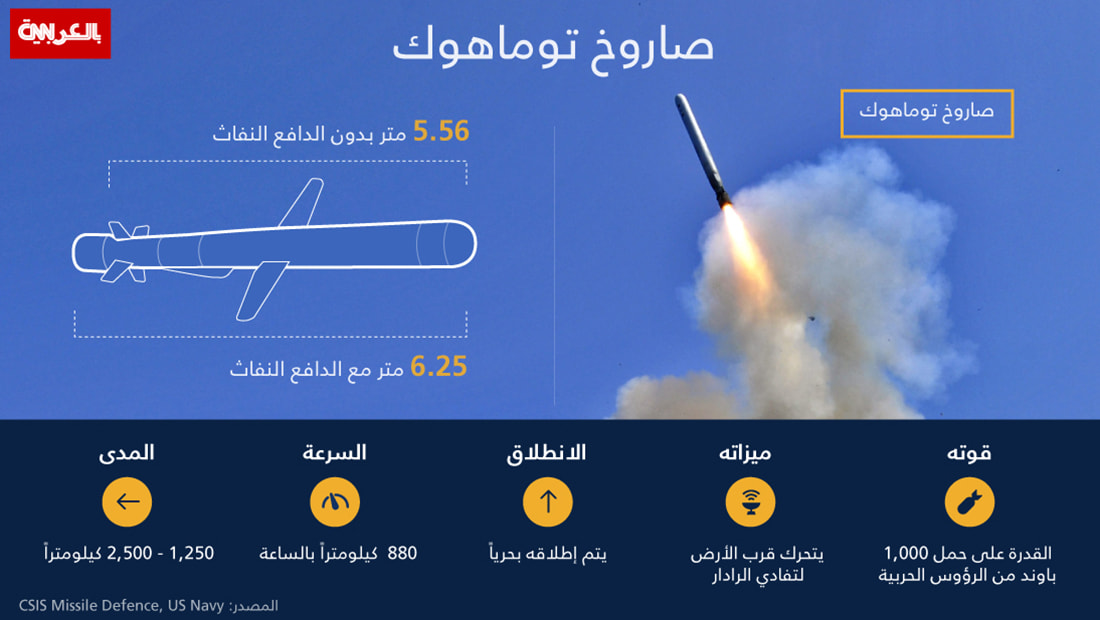
Reports indicate that the U.S. military has launched over 850 Tomahawk missiles in the past four weeks as part of military operations against Iran. These operations are occurring at a time when the region is witnessing a significant escalation in tensions, raising concerns within the international community.
The Tomahawk missiles are considered precision weapons used by the United States in its military operations, known for their ability to hit targets with high accuracy. These missiles have been launched from warships and U.S. military bases in the region, reflecting Washington's commitment to enhancing its military presence in the Middle East.
Details of the Operations
Reports suggest that these military operations are part of the U.S. response to Iran's destabilizing activities in the region. Military sites and command centers belonging to the Iranian Revolutionary Guard have been targeted, leading to the destruction of several strategic objectives.
Sources have also reported that the U.S. military operations have resulted in the deaths of several Iranian personnel, complicating the security situation in the region further. These operations are seen as part of a broader strategy aimed at deterring Iran from continuing activities that the United States considers a threat to regional and international security.
Background & Context
Historically, U.S.-Iranian relations have experienced increasing tensions since the U.S. withdrawal from the nuclear agreement in 2018. These tensions have significantly escalated following a series of attacks targeting U.S. interests in Iraq and Syria, which Iran has been accused of orchestrating.
In recent years, the United States has taken multiple steps to bolster its military presence in the region, including deploying additional troops and warships. These measures come at a sensitive time, as fears of military escalation that could lead to widespread conflict are on the rise.
Impact & Consequences
Analysts expect these military operations to escalate tensions between the United States and Iran, which could negatively impact regional security. Additionally, military escalation may provoke reactions from Iran and its allies in the region, increasing the risk of armed conflict.
Furthermore, the continuation of U.S. military operations may affect diplomatic relations between Washington and Tehran, complicating regional and international mediation efforts. At the same time, these operations could heighten tensions within Iraq and Syria, where both U.S. and Iranian forces are present.
Regional Significance
Arab countries are directly affected by the escalating tensions between the United States and Iran, as they are part of the conflict's battleground. U.S. military operations may lead to increased insecurity in Iraq and Syria, negatively impacting stability in the region.
The rising tensions could also affect oil prices and financial markets, which would have repercussions for Arab economies that heavily rely on oil exports. Under these circumstances, Arab nations must adopt cautious positions to safeguard their national interests.
In conclusion, the situation in the region remains tense, and the military escalation between the United States and Iran appears set to continue impacting security and stability in the Middle East. The current situation requires Arab nations to take proactive steps to address the growing challenges.