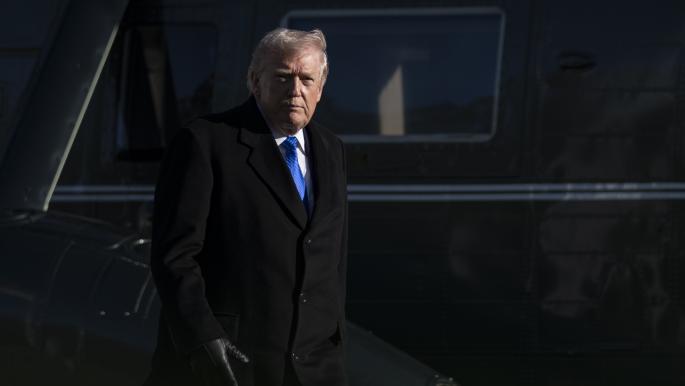
The Trump administration is contemplating a military operation to extract approximately 450 kilograms of uranium from Iran, according to reports from the "Wall Street Journal" citing American officials. This step comes at a sensitive time of increasing tensions between Washington and Tehran, where fears regarding Iran's nuclear program are escalating.
The United States aims to strengthen its position against Iranian nuclear activities, which it views as a threat to regional and international security. The administration has expressed its readiness to take drastic measures to ensure that Iran does not gain the capability to develop nuclear weapons.
Details of the Proposed Operation
According to officials, the proposed military operation involves targeting uranium storage sites in Iran, which are believed to contain significant quantities of nuclear materials. This move is considered part of a broader strategy aimed at pressuring Tehran to comply with the nuclear agreement established in 2015, from which the United States withdrew in 2018.
These developments follow a series of hostile statements from both sides, with the United States accusing Iran of violating the nuclear agreement, while Tehran responds that its nuclear program is peaceful and aims to meet energy needs.
Background & Context
Historically, U.S.-Iranian relations have seen increasing tensions since the Islamic Revolution in 1979. These tensions have led to the imposition of severe economic sanctions on Iran, significantly impacting its economy. In recent years, Iran has ramped up its nuclear activities, raising concerns within the international community.
In 2015, a nuclear agreement was reached between Iran and the P5+1 group (the United States, United Kingdom, France, Russia, China, and Germany) aimed at reducing Iranian nuclear activities in exchange for easing sanctions. However, the U.S. withdrawal from the agreement in 2018 brought matters back to square one, with Iran significantly increasing its uranium enrichment.
Impact & Consequences
If the proposed military operation is carried out, it could lead to a significant escalation in tensions between the United States and Iran, potentially dragging the region into a large-scale military conflict. This move may also affect U.S. relations with its allies in the region, who might be concerned about the repercussions of any military action.
On the other hand, the operation could bolster Trump's domestic standing, as he seeks to demonstrate his administration's strength in the face of nuclear threats. However, the potential consequences could be severe, as it may provoke retaliatory responses from Iran and its allies in the region.
Regional Significance
Neighboring Arab states, such as Saudi Arabia and the United Arab Emirates, view Iran's nuclear activities as a threat to their national security. Therefore, any military escalation could increase tensions in the region and may push these countries to strengthen their military alliances with the United States.
At the same time, this situation could exacerbate humanitarian crises in the region, as countries already suffering from conflicts, such as Iraq and Syria, could be significantly affected by any military escalation.
In conclusion, the question remains whether the U.S. administration will take concrete steps toward implementing this military operation, and what the potential consequences will be for regional and international security.