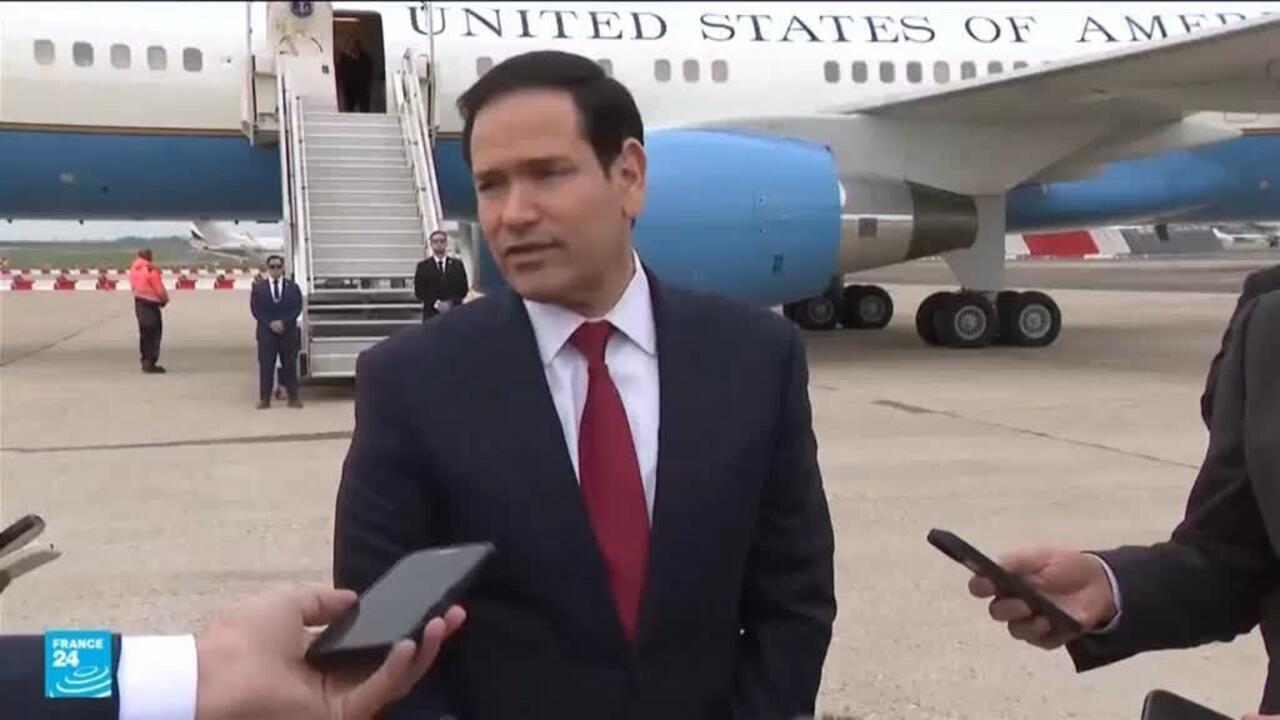
U.S. Secretary of State Marco Rubio confirmed that military operations against Iran will last for weeks, not months, indicating that the United States is capable of achieving all its objectives without the need to deploy ground troops. This statement was made during a press conference held by Rubio after a meeting with his counterparts from the G7 in the French capital, Paris.
Rubio explained that the United States is "on track or ahead of schedule" in military operations, expecting these operations to conclude in a timely manner. He noted that this operation is not merely a military escalation but part of a broader strategy aimed at achieving stability in the region.
Details of the Event
Rubio's remarks come at a sensitive time, as tensions between the United States and Iran have escalated recently. The region has witnessed an increase in military operations, raising fears of a full-scale war. Rubio confirmed that Washington is closely monitoring the situation and will take necessary measures to protect its interests and those of its allies in the region.
He also pointed out that the United States is working in coordination with its allies in the G7, and there is a consensus on the need to take decisive steps to address Iranian threats. These issues were discussed in the meeting that brought together foreign ministers from the world's seven largest economies, where opinions were exchanged on how to tackle security challenges in the region.
Background & Context
Historically, relations between the United States and Iran have been tense since the Islamic Revolution in 1979. These relations have seen numerous crises, including economic sanctions and limited military operations. In recent years, tensions have notably escalated, especially following the U.S. withdrawal from the Iranian nuclear deal in 2018.
Iran is considered a key player in the region, supporting various armed groups in Iraq, Syria, and Lebanon, complicating the security situation. These activities have provoked strong reactions from the United States and its allies, who view Iran as a threat to regional and international security.
Impact & Consequences
If military operations against Iran continue as Rubio anticipates, it could have significant implications for regional security. These operations are likely to escalate tensions in the region, which may adversely affect stability in neighboring countries. Additionally, any military escalation could lead to rising oil prices and impact the global economy.
Furthermore, military operations may provoke reactions from Iran and its allies, potentially intensifying the conflict. It is crucial for neighboring countries to closely monitor these developments, as any escalation could directly affect their security and stability.
Regional Significance
Arab countries neighboring Iran, such as Iraq, Syria, and Lebanon, find themselves in a sensitive position regarding any military escalation. These countries may be directly affected by military operations, potentially exacerbating humanitarian and security situations within them. There are also concerns that military operations could lead to new waves of displacement and asylum seekers.
At the same time, some armed groups in the region may exploit these situations to enhance their influence, further complicating the security landscape. Therefore, Arab countries need to enhance coordination among themselves to address the increasing challenges.
In conclusion, the situation in the region remains complex and requires careful monitoring by the international community. The statements from the U.S. Secretary of State reflect current trends in U.S. policy towards Iran, but they also raise questions about the future of security and stability in the region.