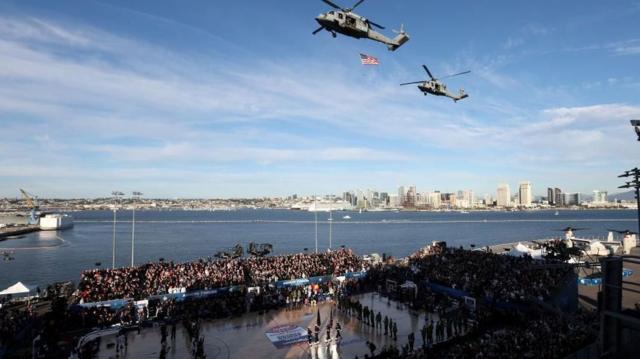
The US aircraft carrier USS Abraham Lincoln continues military operations in regional waters, as the US Central Command announced ongoing operations against military targets in Iran. This follows reports from the Iranian military claiming they targeted the carrier with cruise missiles, heightening tensions between the United States and Iran.
Reports indicate that the carrier, regarded as one of the largest aircraft carriers in the world, is carrying out its missions in the region despite Iranian threats. This escalation comes at a time when relations between Washington and Tehran are increasingly strained, particularly after the US withdrawal from the Iranian nuclear deal in 2018.
Details of the Incident
The US Central Command has stated that the USS Abraham Lincoln is conducting military operations against Iranian military targets, reflecting the US commitment to protecting its interests in the region. The carrier, which is operating in regional waters, is part of a larger naval group aimed at enhancing the US military presence in the Arabian Gulf.
In response, the Iranian military confirmed that it had targeted the carrier with cruise missiles, marking a serious escalation in the confrontation between the two sides. These events occur amid rising military tensions, with both the US and Iran increasingly exchanging threats.
Background & Context
Historically, US-Iran relations have been marked by ongoing tensions, particularly since the Islamic Revolution in 1979. Since then, there have been several military confrontations, including maritime incidents in the Arabian Gulf. The US withdrawal from the Iranian nuclear deal has led to the imposition of severe economic sanctions on Tehran, exacerbating tensions.
In recent years, Iran has developed its military capabilities, including naval cruise missiles, making it a greater threat to US military presence in the region. These developments reflect the challenges the United States faces in maintaining its influence in a conflict-ridden area.
Impact & Consequences
The current escalation between the United States and Iran could have dire consequences for regional and international security. If military operations continue, we may witness further escalation in confrontations, potentially leading to direct military intervention by the United States or its allies.
Any military escalation could also impact global oil prices, as the Arabian Gulf is a vital transit point for oil transport. Any threats to maritime navigation could lead to price increases and global economic tensions.
Regional Significance
Arab countries are directly affected by any military escalation in the Arabian Gulf. Gulf nations, such as Saudi Arabia and the UAE, heavily rely on regional stability to ensure their economic and political security. Any escalation could lead to negative repercussions for regional security.
Moreover, tensions between the United States and Iran could affect relations between Arab countries and Iran, as some nations seek to balance their interests with both the United States and Iran.
In conclusion, the situation in the Arabian Gulf remains tense, with increasing fears of military escalation that could have severe consequences for regional and international security. It is crucial for Arab nations to closely monitor these developments and work towards enhancing regional stability.