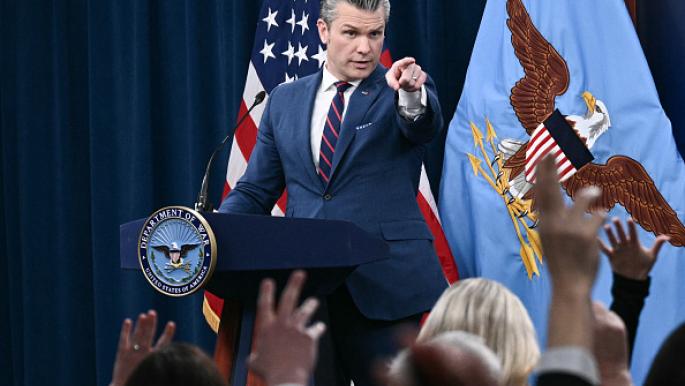
The Washington Post reports that the U.S. Department of Defense (Pentagon) has developed plans for ground operations in Iran that could extend for weeks, amid ongoing military reinforcements awaiting President Trump's decision.
These developments come at a sensitive time in the region, where tensions between the United States and Iran are escalating, raising concerns about a military escalation that could impact the stability of the entire region.
Details of the Event
According to reports, the Pentagon is preparing military plans that include the deployment of ground forces in Iran, which may require a lengthy period for implementation. These plans are part of the response to the increasing security challenges faced by the United States in the Middle East, especially in light of Iran's destabilizing activities.
The U.S. military reinforcements include sending more troops and equipment to the region, reflecting Washington's seriousness in addressing potential threats. However, the final decision on execution rests with President Trump, who is facing both internal and external pressures regarding how to deal with Iran.
Background & Context
Historically, U.S.-Iranian relations have seen increasing tensions since the United States withdrew from the nuclear agreement in 2018. This withdrawal led to the re-imposition of strict economic sanctions on Iran, negatively impacting its economy and leading to a rise in popular protests.
In recent years, Iran has taken several steps to enhance its influence in the region, including supporting militias in Iraq, Syria, and Lebanon. These activities have raised concerns among the United States and its allies, prompting them to consider military options as a means of response.
Impact & Consequences
If U.S. military plans are implemented, it could lead to a significant escalation in the conflict between the United States and Iran. Such an escalation could drag the region into a full-scale war, affecting both regional and global security.
Potential repercussions include increased tensions between neighboring countries, such as Iraq and Turkey, as well as impacts on global oil markets, where any military operations could drive up oil prices due to concerns over supply disruptions.
Regional Significance
Arab countries neighboring Iran, such as Iraq and Syria, are likely to be the most affected by any potential military escalation. These countries are already suffering from internal crises, and any U.S. military intervention could complicate their situations further.
The situation in the Arabian Gulf could also be severely impacted, as fears of potential Iranian attacks on U.S. interests or its allies in the region may increase, leading to military responses from Washington.
In conclusion, the situation in the region remains tense, and everyone is awaiting President Trump's decision regarding the military plans, as any decision could significantly affect the future of U.S.-Iranian relations and the stability of the region.