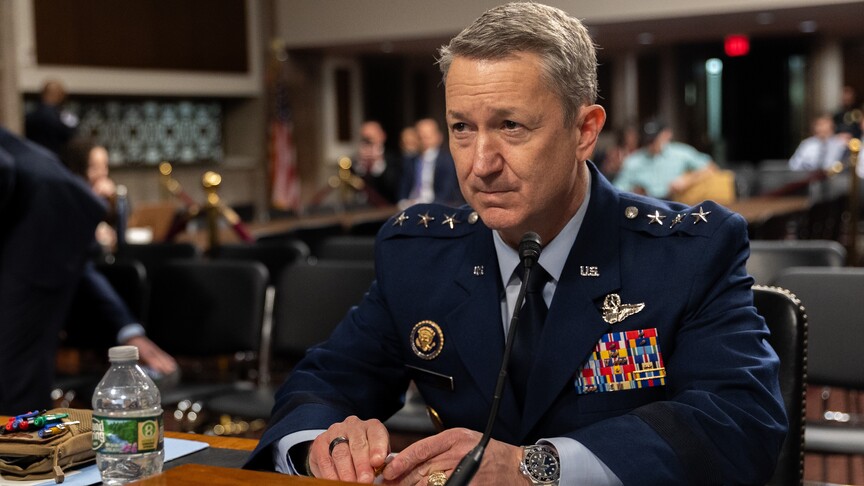
General Mark Milley, Chairman of the U.S. Joint Chiefs of Staff, stated that U.S. forces remain ready to resume military operations if ordered to do so. These remarks come amid escalating tensions between the United States and Iran, where U.S. Secretary of Defense Lloyd Austin indicated that Iran "no longer possesses effective air defense," asserting that U.S. forces control Iranian airspace.
These statements follow a series of events that have heightened tensions between Washington and Tehran, including attacks on commercial vessels in the Arabian Gulf and mutual threats from both sides. U.S. officials have indicated that these preparations are part of maintaining regional security and ensuring the safety of American forces in the area.
Details of Military Readiness
In remarks made during a press conference, General Milley emphasized that U.S. forces are prepared to respond to any threats that may arise from Iran. He confirmed that the United States has the capability to conduct complex military operations in the region and will do so if necessary. He also noted that U.S. forces are closely monitoring the situation and assessing any new developments that may occur.
In a related context, the U.S. Secretary of Defense reiterated that Iran no longer has an effective air defense system, which leaves Iranian airspace open to U.S. military operations. These statements come at a sensitive time, as fears of escalating military tensions in the region are increasing.
Background & Context
Historically, U.S.-Iranian relations have been marked by severe tensions since the Islamic Revolution in 1979. Since then, the United States has imposed economic and military sanctions on Iran, exacerbating conditions in the region. In recent years, these tensions have significantly increased, especially following the U.S. withdrawal from the Iranian nuclear deal in 2018.
The Arabian Gulf is considered one of the most tense regions in the world, hosting a significant number of U.S. military forces. The area has witnessed numerous military incidents, including attacks on oil facilities and commercial vessels, complicating the security situation further.
Impact & Consequences
The recent statements from U.S. officials may lead to a new escalation in tensions between the United States and Iran. It is likely that Iran will respond to these statements by increasing its military activity or executing operations against U.S. interests in the region. Additionally, these tensions could impact oil prices and financial markets, reflecting on the global economy.
Moreover, any potential military operations could have negative effects on regional security, as other countries might intervene in the conflict, further complicating the situation. The international community must closely monitor these developments, as any escalation could lead to widespread repercussions.
Regional Significance
These statements come at a critical time as tensions in the Gulf region escalate, which could affect regional security and the global economy. The implications of U.S. military readiness and Iran's potential responses could reshape the dynamics of power in the Middle East.
In conclusion, the situation remains fluid, and the international community must remain vigilant to prevent further escalation and ensure stability in the region.