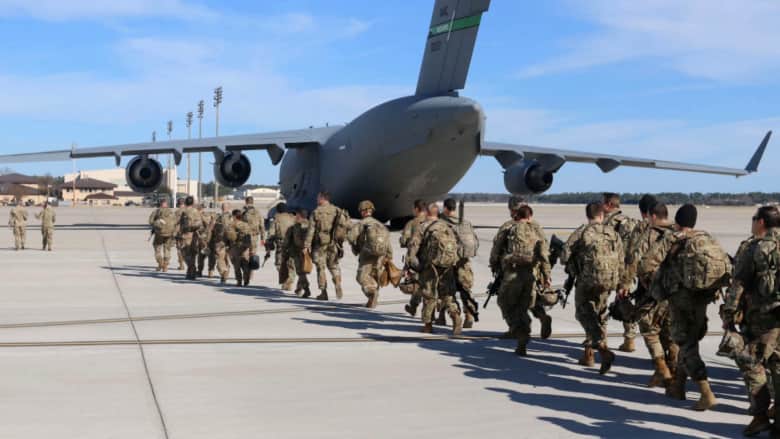
In a new development regarding the tense relations between the United States and Iran, the US military has announced the commencement of a maritime security operation in the Strait of Hormuz. This step comes at a time when negotiations between both sides are ongoing regarding a revised plan, reflecting a state of tension and concern in the region.
The United States aims through this operation to enhance maritime security in one of the world's most important waterways, which sees significant traffic of oil and goods. However, Iran did not delay in responding, warning that these measures represent mere illusions, indicating its non-recognition of the legitimacy of US actions.
Details of the Operation
The maritime security operation in the Strait of Hormuz comes at a sensitive time, as fears of escalating military tensions in the region are increasing. The Strait of Hormuz is a vital transit point for oil, with approximately 20% of the world's total oil exports passing through it. In this context, the United States has confirmed that it will work to protect commercial vessels and provide security for maritime navigation, in a move aimed at reassuring its allies in the region.
On the other hand, Iran continues to assert its right to protect its national interests, emphasizing that it will not allow any foreign power to interfere in its affairs. Iranian officials have indicated that US actions could lead to an escalation of the situation, increasing the risk of military conflict in the region.
Background & Context
The roots of tensions between the United States and Iran date back several decades, with the relationship between the two countries experiencing significant fluctuations since the Iranian Revolution in 1979. Since then, the United States has imposed economic sanctions on Iran, exacerbating the economic and political situation in the country.
In recent years, tensions have notably escalated, particularly after the United States withdrew from the Iranian nuclear deal in 2018. Since then, Iran has taken steps to reduce its commitments under the agreement, further intensifying the conflict between the two parties.
Impact & Consequences
Analyses indicate that escalating tensions in the Strait of Hormuz could significantly impact global oil prices, as any military escalation could disrupt traffic in this vital corridor. Markets have already reacted negatively, with oil prices rising slightly following the US military's announcement of the security operation.
Moreover, these events may increase pressure on US allies in the region, who may find themselves in a difficult position between supporting US actions or attempting to maintain their relationships with Iran.
Regional Significance
Neighboring Arab countries such as Saudi Arabia and the United Arab Emirates are among the most affected by the tensions in the Strait of Hormuz. The economies of these countries heavily rely on oil exports, and any escalation could negatively impact their economic stability.
Additionally, these events may influence regional security, as some countries may seek to enhance their military capabilities in response to potential threats. In this context, Arab nations must take proactive steps to ensure their security and stability amid these rising tensions.
In conclusion, the situation in the Strait of Hormuz remains a focal point for the world, as fears of military escalation grow, potentially affecting security and stability across the entire region.