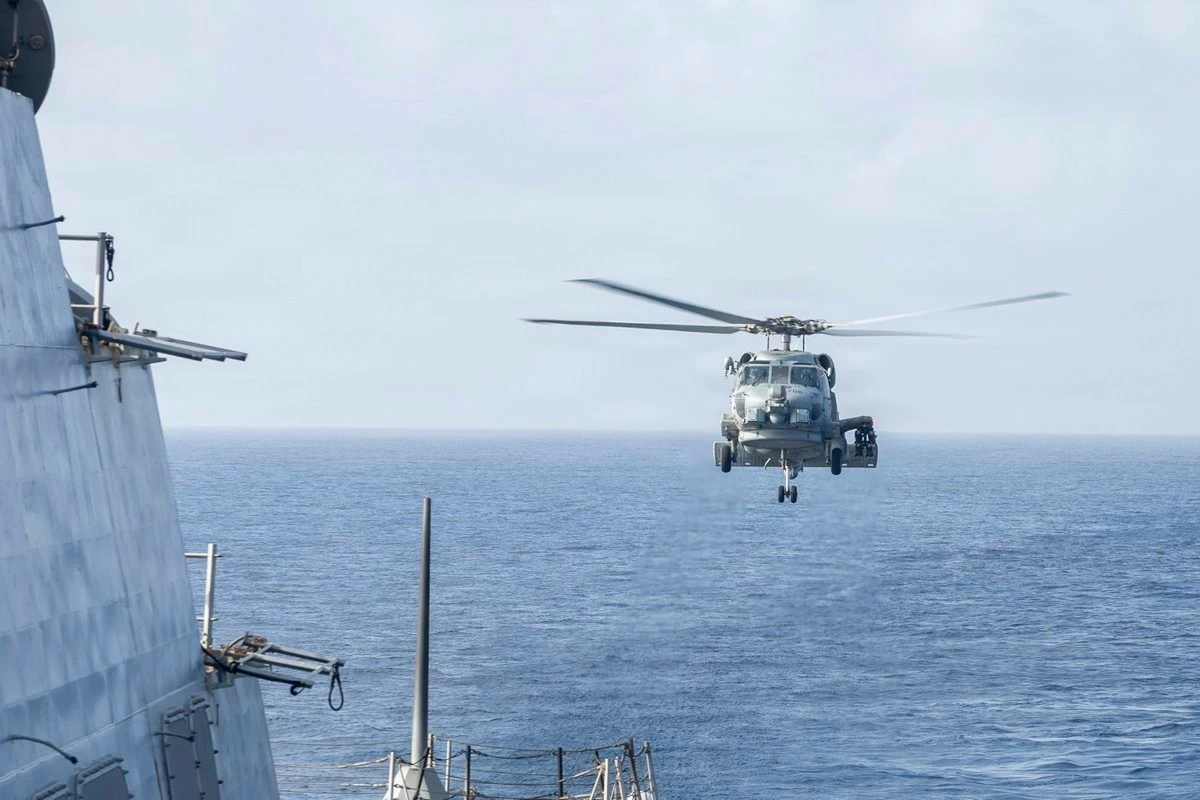
In a new military escalation threatening regional stability, the US military launched fresh strikes against Iranian targets in the coastal city of Bandar Abbas early today (Thursday). The strikes targeted a drone operation unit, with an American official reporting that these drones were preparing to carry out attacks against American ships near the Strait of Hormuz.
The official confirmed that US forces shot down four attack drones deemed a "direct threat" to international navigation. He also noted that another strike targeted an Iranian ground control station that was about to launch a fifth drone. He emphasized that the military operations were "calculated and purely defensive" aimed at protecting US forces and maintaining the ceasefire.
Details of the Incident
In response, the Iranian Revolutionary Guard announced that it fired warning shots at four ships attempting to cross the Strait of Hormuz without prior coordination with Tehran. The Revolutionary Guard also confirmed that it retaliated against the US attack by targeting a US airbase, without disclosing the extent of the damage or the location of the targeted base.
Iranian media reported hearing three explosions east of Bandar Abbas around 1:30 AM local time, coinciding with the activation of Iranian air defenses for several minutes, amid intense drone activity in the area. This US attack marks the second since the announcement of the ceasefire, following similar strikes by Washington in southern Iran last Monday.
Background & Context
Tensions between the United States and Iran have escalated significantly in recent times, as Washington seeks to protect its forces deployed in the region. Reports indicate that the US administration is preparing a new list of additional Iranian military targets in anticipation of the possibility of resuming extensive military operations against Iran.
Sources within the US Department of Defense confirmed that any upcoming strikes would be "more complex and broader in scope." According to NBC News, most remaining Iranian targets rely on camouflage and rapid deployment strategies, making them more difficult to detect and target.
Impact & Consequences
The list of potential US targets includes mobile ballistic missile launch platforms, as well as fortified nuclear and missile facilities, such as the mountainous "Fordow" facility. Potential targets also include Iranian naval assets deployed near the Strait of Hormuz and Bandar Abbas, including fast attack boats and anti-ship missile platforms.
This military escalation could exacerbate conditions in the region, increasing the likelihood of a large-scale armed conflict. Additionally, Iranian reactions to US strikes may reflect an escalation in tensions, threatening the stability of the entire region.
Regional Significance
Neighboring Arab countries are directly affected by these tensions, as any military escalation could lead to economic and security repercussions. Gulf states, in particular, are closely monitoring the situation, with the Kuwaiti Ministry of Defense announcing that air defense systems intercepted "hostile" missile and drone attacks earlier.
Under these circumstances, Arab countries must take proactive steps to ensure their security and stability, while enhancing regional cooperation to address the increasing security challenges.