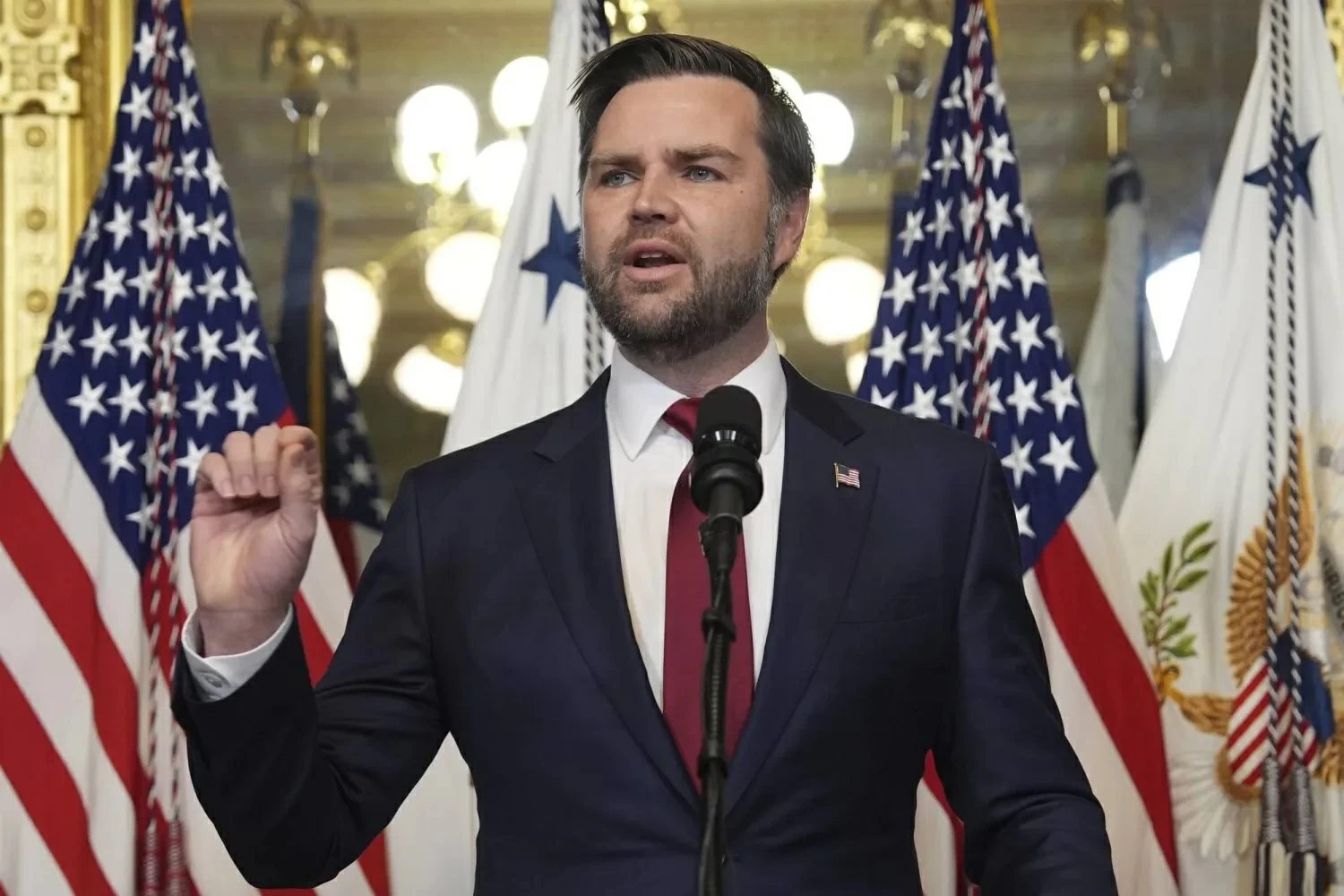
US Vice President J.D. Vance announced that the American military mission in Iran is nearing its end, emphasizing that the United States does not seek to remain in the country. This statement was made during a video interview today (Saturday), where he noted that his country is working to ensure the long-term sustainability of the results of military operations.
Vance confirmed that Washington has achieved its objectives in Tehran, anticipating a return to normal energy prices once these operations are completed. These remarks come at a sensitive time, as pressure mounts on the US administration to reach an agreement with Iran to end the ongoing conflict.
Details of the Event
In a related context, the US Special Envoy Steve Wittekov expressed his belief in statements made on Friday that Iran will engage in talks with Washington during this week. President Donald Trump reiterated his assertions that Iran is eager to reach an agreement, reflecting the US administration's desire to alleviate current tensions.
During an economic forum in Miami, Wittekov stated, "We believe there will be meetings this week, and we certainly hope for that," indicating that the United States is awaiting a response from Tehran regarding its proposal to end the war. Reports suggest that the US plan includes eliminating Iran's stockpiles of highly enriched uranium, halting enrichment activities, curbing its ballistic missile program, and stopping funding for armed groups in the region.
Background & Context
US-Iranian relations have been characterized by ongoing tensions for decades, witnessing numerous crises and conflicts. Since the US withdrawal from the nuclear agreement in 2018, tensions have escalated, leading to the imposition of severe economic sanctions on Iran. In response, Tehran has expanded its nuclear program and increased its military activities in the region.
These developments come at a critical juncture, as both sides seek to achieve their interests. While the United States aims to reduce Iranian influence in the region, Iran seeks to secure its national interests and ensure that wars do not recur.
Impact & Consequences
If negotiations are successful, they could lead to a de-escalation of tensions in the region, positively impacting global energy prices. Prices are expected to stabilize, which may help in stabilizing global financial markets.
However, if negotiations fail, tensions may escalate again, potentially leading to military escalation or even a new war in the region. Such a scenario would have negative repercussions on the global economy, especially given the heavy reliance on Iranian oil.
Regional Significance
Iran is a key player in the region, with its activities affecting many Arab countries. Any agreement between Washington and Tehran could alter the balance of power in the Middle East, impacting ongoing conflicts in Iraq, Syria, and Yemen.
Moreover, successful negotiations could pave the way for Arab countries to engage more closely with Iran, potentially contributing to regional stability. Conversely, failure could lead to further divisions and conflicts, threatening regional security.
In conclusion, attention remains focused on the developments of negotiations between the United States and Iran, as these discussions may determine the future of relations between the two parties and their impact on the entire region.