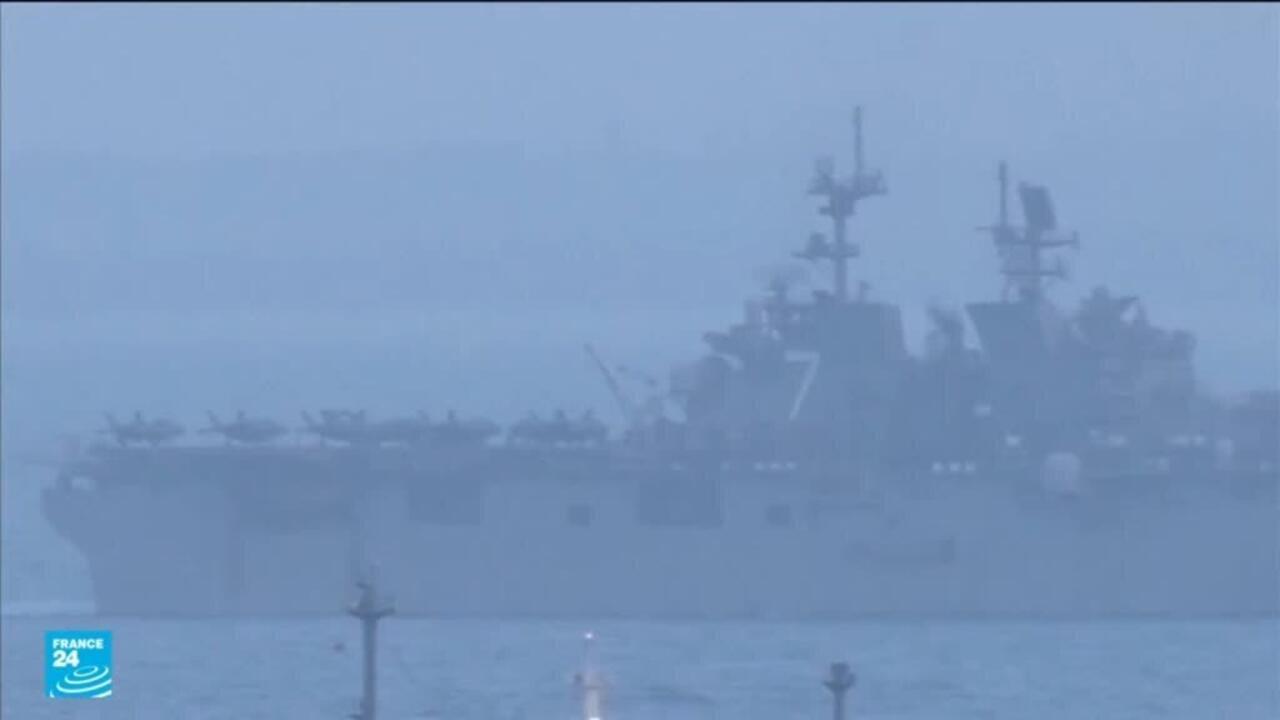
The amphibious assault ship USS Tripoli of the US Navy has arrived in the Middle East, carrying approximately 3,500 troops. This development comes at a time when speculation is increasing about the possibility of deploying US ground forces in Iran, raising growing concerns in the region.
In his statements, the Iranian Parliament Speaker, Mohammad Baqer Qalibaf, indicated that the United States "sends public messages of negotiation and dialogue while secretly planning a ground attack." This statement reflects a state of escalating tension between Tehran and Washington, especially given the unclear intentions of the current US administration led by President Donald Trump.
Details of the Event
The USS Tripoli arrived in the region on Friday, and it is one of the US warships deployed as part of enhancing the US military presence in the Middle East. This deployment comes at a sensitive time, as tensions in the region are escalating due to multiple political and military crises.
This move is considered part of a broader strategy by the United States aimed at enhancing regional security, particularly in light of the increasing threats from Iran. However, the presence of US forces in the region could lead to an escalation of conflict and increase the likelihood of direct military confrontation.
Background & Context
Historically, relations between the United States and Iran have been tense, especially since the Islamic Revolution in 1979. Recent years have seen an escalation in tensions, including the US withdrawal from the Iranian nuclear deal in 2018, which led to the imposition of severe economic sanctions on Tehran.
In this context, the deployment of US warships is part of a policy of pressure on Iran, as Washington seeks to reduce its influence in the region. However, this policy could provoke strong reactions from Iran, which considers any US military presence a threat to its national security.
Impact & Consequences
The arrival of the USS Tripoli in the Middle East has several potential consequences. First, this deployment may escalate military tensions between Iran and the United States, increasing the likelihood of armed conflict. Second, this situation could impact regional stability, as neighboring countries may be directly affected by the potential conflict.
Moreover, these developments could affect global markets, particularly oil markets, as any escalation in the region could lead to a significant rise in oil prices. Additionally, these circumstances may influence relations between the United States and Arab countries, which are trying to balance their economic and security interests.
Regional Significance
The Arab countries neighboring Iran find themselves in a precarious position, closely monitoring the military and political developments in the region. Any escalation in the conflict between the United States and Iran could have negative repercussions on security and stability in these countries, increasing internal tensions.
At the same time, some Arab countries may seek to strengthen their alliances with the United States to counter Iranian threats, potentially leading to changes in regional alliances. These dynamics could affect political and economic stability in the region, necessitating cautious positions from Arab states.
In conclusion, the situation in the Middle East remains complex, with overlapping political and military interests. As tensions continue, the region may face new challenges that require effective responses from all parties involved.