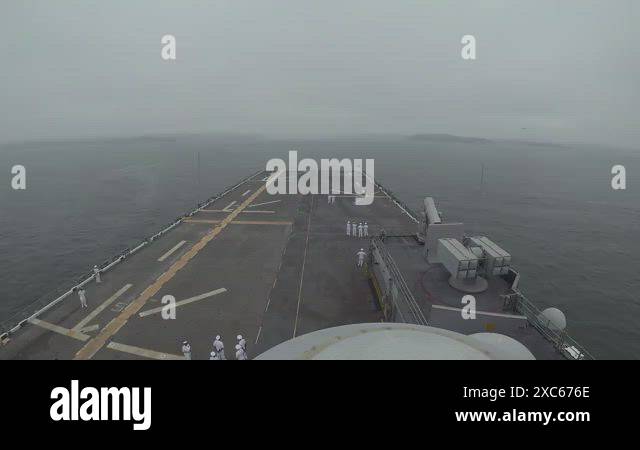
The U.S. Central Command announced on Saturday the arrival of new reinforcements of U.S. naval forces to the Middle East, transported aboard the amphibious assault ship USS Tripoli. The ship, which carries around 3,500 sailors and Marines, arrived in the region on Friday, reflecting the United States' commitment to enhancing its military presence in this vital area.
This move comes at a sensitive time as tensions escalate in the Middle East, particularly amid the multiple crises affecting the region. The presence of these forces serves as a clear message from Washington about its readiness to intervene at any moment to protect its interests and those of its allies.
Details of the Deployment
The USS Tripoli is one of the leading vessels in the U.S. fleet, known for its capability to conduct various operations, including amphibious assaults and logistical support. Equipped with the latest military technologies, it is capable of addressing a wide range of threats.
These reinforcements are part of a broader strategy by the United States aimed at ensuring stability in the region, especially in light of increasing tensions with Iran and other threats faced by U.S. forces in Iraq and Syria.
Background & Context
Historically, the United States has maintained a significant military presence in the Middle East, particularly following the events of September 11, 2001. This presence has been bolstered in recent years due to rising tensions with Iran, which Washington views as a major threat to regional security.
The situation in Iraq and Syria, along with the Israeli-Palestinian conflict, complicates the security landscape in the region, necessitating a strong U.S. military presence to address these challenges.
Impact & Consequences
Strengthening the U.S. military presence in the Middle East could escalate tensions with regional powers, particularly Iran, which may perceive this move as a threat to its national security. These developments are likely to provoke military or political reactions from Tehran, increasing the intensity of conflict in the region.
Moreover, these actions may affect U.S. relations with Arab nations, as some countries may view this military presence as a threat to their sovereignty and a factor contributing to instability.
Regional Significance
For Arab nations, the enhancement of U.S. forces in the Middle East may have varying implications. Some countries may see this presence as a guarantee of security and stability, while others may regard it as interference in their internal affairs.
At the same time, this situation could heighten tensions among various factions in the region, potentially undermining peace and stability efforts.
In conclusion, developments in the Middle East remain complex and fluid, with the bolstering of U.S. military presence appearing to be part of a larger strategy aimed at addressing the increasing challenges in the region. Attention will remain focused on regional and international reactions to this move.