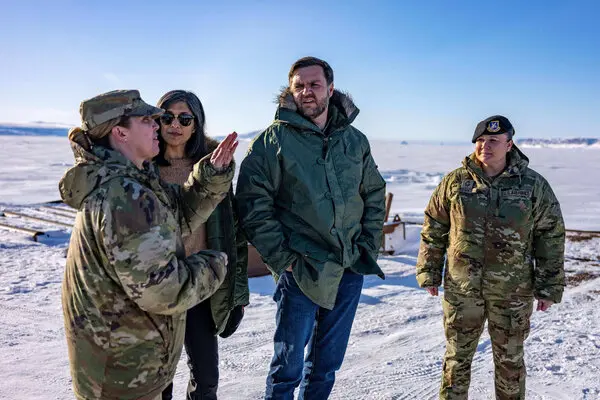
The United States is aiming to bolster its military presence in Greenland, with the U.S. Department of Defense (Pentagon) negotiating with Denmark for access to three new military bases. This move comes amid growing concerns over strategic threats in the region, reflecting the ongoing interest of the U.S. administration in the large polar island, even after the departure of former President Donald Trump.
General Gregory M. Guillot, commander of U.S. Northern Command, stated during a congressional hearing that the U.S. military is seeking to "increase access to various bases in Greenland." He explained that this step aims to enhance the options available to U.S. military leadership should circumstances require it.
Details of the Negotiations
The negotiations involve gaining access to two previously abandoned military bases by U.S. forces, marking the first expansion of the U.S. military presence in Greenland in decades. General Guillot confirmed the need to develop more ports and airports in the region, which would provide additional options for U.S. military leadership.
This negotiation places the Danish government in a sensitive position, as Greenland has been a semi-autonomous territory of the Kingdom of Denmark for over 300 years. Previously, Trump had shown significant interest in purchasing Greenland, which elicited mixed reactions in Denmark and Greenland, with some viewing it as a threat to the island's sovereignty.
Background & Context
Historically, Greenland has been a strategic point in the struggle between major powers, especially during the Cold War. In 1951, a defense agreement was signed between Denmark and the United States, granting U.S. forces access to military bases on the island. As geopolitical tensions in the region rise, particularly with increasing Russian activity in the Arctic, Greenland has become a focal point for many nations.
Greenland is also rich in natural resources, including minerals and oil, which enhances its strategic importance. With climate change opening up more maritime routes, the region is becoming increasingly attractive to global powers.
Impact & Consequences
This move could escalate tensions between the United States and Russia, as Moscow views any expansion of U.S. military presence in the region as a threat to its interests. Additionally, these developments may provoke reactions from other countries in the area, such as Canada, which may be concerned about increased U.S. military activity in the Arctic.
Moreover, this military expansion could affect relations between Denmark and Greenland, as many local residents express concerns that an increased military presence may negatively impact their daily lives and environment.
Regional Significance
Although Greenland is geographically distant from the Arab world, events in the Arctic could impact global security, including Arab security. Amid rising geopolitical tensions, Arab countries may need to reassess their security and defense strategies, especially in light of increasing challenges from major powers.
In conclusion, the expansion of the U.S. military presence in Greenland represents a strategic step that could have far-reaching implications for regional and international security. It is crucial to monitor developments in this matter and its potential impact on international relations.