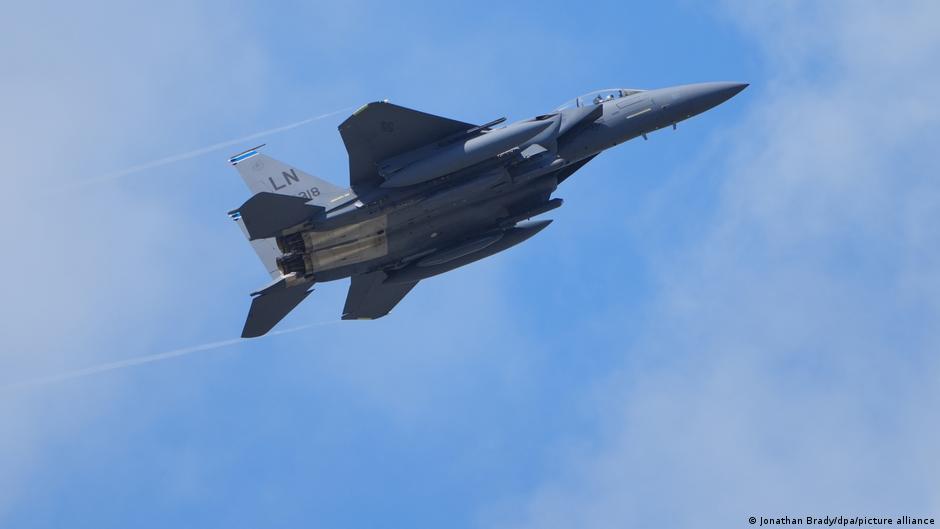
The United States is currently working to recover a missing pilot from an F-15 fighter jet, which was shot down over Iranian territory. This comes at a sensitive time as the UN Security Council postponed a vote on a resolution regarding the use of force to protect navigation in the Strait of Hormuz, considered one of the world's most vital waterways.
The incident occurred amid escalating tensions between the United States and Iran, with the region witnessing military escalation since the onset of American and Israeli attacks on Iran on February 28. These attacks led to Iran's closure of the Strait of Hormuz, a crucial transit point for about 20% of global oil trade.
Details of the Incident
The UN Security Council was set to vote on a draft resolution proposed by Bahrain, which holds the presidency of the council this month. The resolution aims to authorize the use of defensive force to protect vessels in the Strait of Hormuz from Iranian attacks. However, the vote was postponed due to resistance from some member states, including China and Russia.
In statements made by the Chinese ambassador to the UN, Fú Kōng, he indicated that the use of force would further escalate the situation, potentially leading to dire consequences. Passing any resolution in the Security Council requires nine supporting votes and no veto from the permanent members, which include the United Kingdom, China, France, Russia, and the United States.
Background & Context
Historically, the Strait of Hormuz is considered a vital strategic point, through which approximately 20% of global oil passes. In recent years, the region has seen increasing tensions between Iran and the United States, especially following Washington's withdrawal from the Iranian nuclear deal in 2018. Since then, hostilities have escalated, including attacks on oil tankers.
Iran's closure of the Strait of Hormuz is part of its responses to the military and economic pressures it faces, as it seeks to protect its national interests. This military escalation could negatively impact global oil prices and affect the global economy.
Impact & Consequences
The postponement of the vote in the Security Council highlights the international division on how to deal with Iran, as some countries reject the use of force as a means to resolve the conflict. This division could exacerbate the situation in the region, where these events might be used as a pretext for further military escalation.
On the other hand, the continued tensions in the region could lead to rising oil prices, which would impact the global economy as a whole. Additionally, any military escalation could drag the region into a broader conflict, threatening regional stability.
Regional Significance
The Arab countries neighboring Iran, such as Iraq, Kuwait, and the UAE, are among the most affected by the tensions in the Strait of Hormuz. Any military escalation could impact trade flows and increase security risks in the region.
Furthermore, Arab countries that rely on oil as a primary source of revenue will face significant economic challenges if oil prices continue to rise due to the tensions. Therefore, the situation in Iran and the Strait of Hormuz is a vital issue for Arab nations.
In conclusion, the current situation in Iran and the Strait of Hormuz underscores the importance of international cooperation to resolve conflicts peacefully, as any escalation could lead to severe consequences at both regional and international levels.