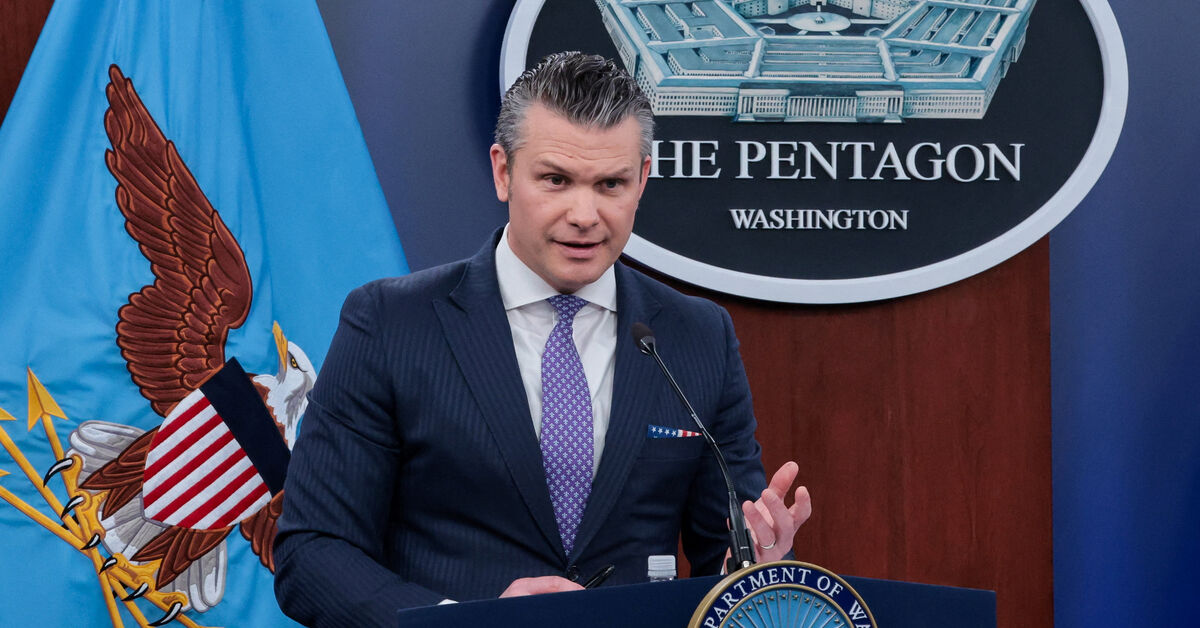
In a controversial move, U.S. Secretary of Defense Pete Hegseth announced on Tuesday that he would not confirm the American commitment to NATO's collective defense, clarifying that this matter is up to President Donald Trump. These remarks were made during a press conference at the Pentagon, where Hegseth noted that some key European allies have withdrawn their support for the United States in a potential conflict with Iran.
These statements are unusual, as collective defense is the cornerstone of NATO, which was established in 1949 to counter Soviet threats. The remarks have raised widespread concern among U.S. allies in Europe, who rely on Washington's security commitments.
Details of the Event
During the press conference, Hegseth explained that the U.S. position on NATO could change based on the policy adopted by President Trump. This statement comes at a sensitive time as tensions between the United States and Iran escalate, increasing the importance of cooperation between European allies and the United States.
In recent years, relations between the United States and its European allies have experienced some tensions, particularly regarding military and economic policies. The withdrawal of support from some European countries in the face of Iran has raised questions about the future of the alliance and its impact on regional and international security.
Background & Context
NATO was established after World War II as a means to ensure collective security for member states, with the principle of collective defense stating that any attack on one member is considered an attack on all. However, political changes in the United States, particularly with Trump's presidency, have significantly affected this principle.
In recent years, we have witnessed shifts in U.S. foreign policy, with a focus on domestic issues rather than traditional commitments to allies. These changes raise concerns about NATO's ability to address increasing security challenges, especially in light of threats from countries like Iran and Russia.
Impact & Consequences
Hegseth's remarks could lead to increased tensions between the United States and its European allies, potentially affecting military and intelligence cooperation. If these trends continue, we may witness a deterioration of trust among NATO member states, weakening the alliance's ability to confront security challenges.
Moreover, the lack of confirmation of the commitment to collective defense may encourage other countries to adopt more aggressive stances, increasing the risk of military conflicts in various regions of the world. This situation could negatively impact regional and international security and complicate relations among major powers.
Regional Significance
For the Arab region, the U.S. withdrawal from its commitment to NATO's collective defense could have direct implications. With rising tensions in the Middle East, particularly with Iran, Arab countries may find themselves in a difficult position if the United States abandons its traditional support.
This situation could lead to increased tensions between Arab nations and Iran, reflecting on the security and stability of the region. Additionally, the instability in relations between the United States and its allies may affect the security policies of Arab countries, increasing the need for enhanced regional cooperation to address common challenges.
In conclusion, developments in the relationships between the United States and its European allies remain under scrutiny, as any changes in policies could significantly impact regional and international security.