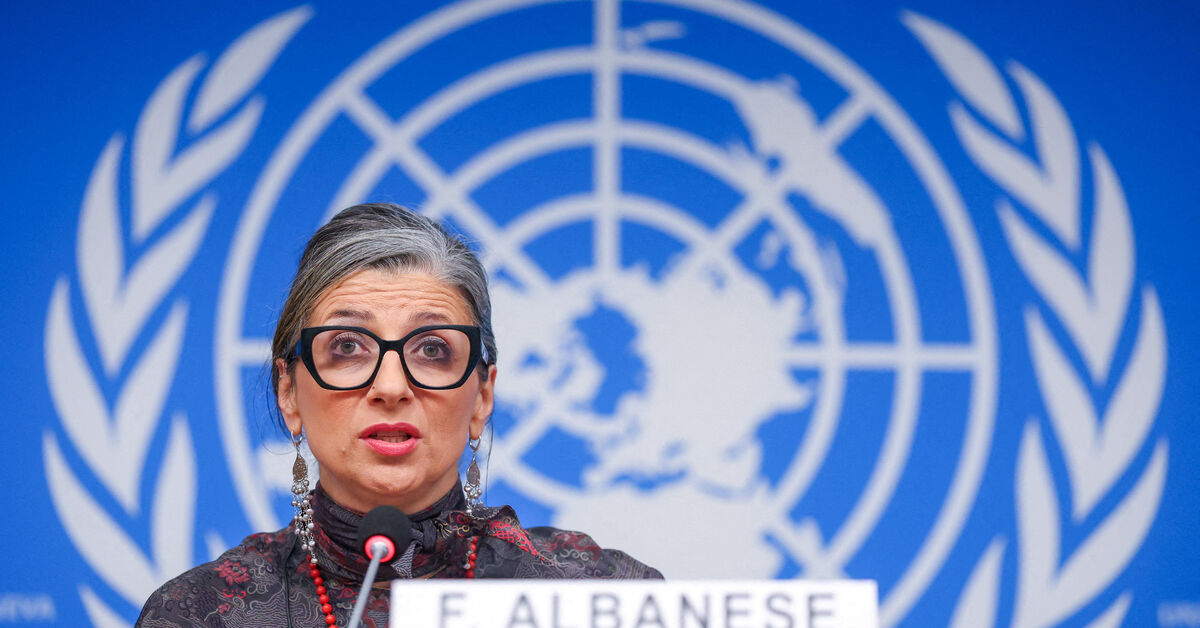
The United States has re-listed Francesca Albanese, the UN expert on Palestinian territories, on its sanctions list, as announced on the US Treasury Department's website on Wednesday. This decision comes at a sensitive time, as the US continues to support Israel amid escalating tensions in the region.
In July 2025, the US imposed sanctions on Albanese for what it deemed her efforts to encourage the International Criminal Court to take action against US and Israeli officials and companies. These sanctions reflect the increasing tension between Washington and international bodies seeking to hold accountable those responsible for human rights violations in Palestinian territories.
Details of the Sanctions
The sanctions imposed by the United States include freezing Albanese's financial assets and prohibiting her from entering US territory. This move has elicited mixed reactions, with some viewing it as an attempt by Washington to suppress voices calling for justice in the Palestinian issue. Conversely, others believe these sanctions demonstrate the US commitment to protecting its allies in the region.
Albanese, considered one of the leading advocates for Palestinian rights, has repeatedly called for accountability for those responsible for violations in the occupied territories. Many observers have noted that her re-listing on the sanctions list could negatively impact peace efforts in the region.
Background & Context
Historically, relations between the United States and international bodies, such as the International Criminal Court, have been marked by recurring tensions. The US has withdrawn from several international treaties and has refused to cooperate with investigations concerning human rights violations. This policy indicates a clear bias towards Israel, complicating peace efforts in the Middle East.
In recent years, calls from the international community for accountability regarding violations in Palestinian territories have intensified. However, steadfast US support for Israel has hindered these efforts, exacerbating the humanitarian situation in the region.
Impact & Consequences
The re-imposition of sanctions on Albanese is likely to exacerbate tensions between the United States and the international community. While the US seeks to protect its interests, this decision may bolster the position of those advocating for accountability for human rights violations.
Moreover, these sanctions could hinder Albanese's ability to work freely in the human rights field, potentially obstructing her efforts to document violations and provide support to victims. This move may also heighten feelings of frustration among Palestinians seeking justice.
Regional Significance
These developments are of significant importance to the Arab region, reflecting ongoing tensions between major powers and international bodies. The re-imposition of sanctions on Albanese may amplify feelings of resentment towards US policies in the region, potentially escalating tensions between Arab nations and the United States.
Under these circumstances, hope remains pinned on the international community to pressure for justice in the Palestinian issue and alleviate the humanitarian suffering in the occupied territories. The continuation of such policies could worsen the situation, necessitating urgent action from Arab nations and the international community.