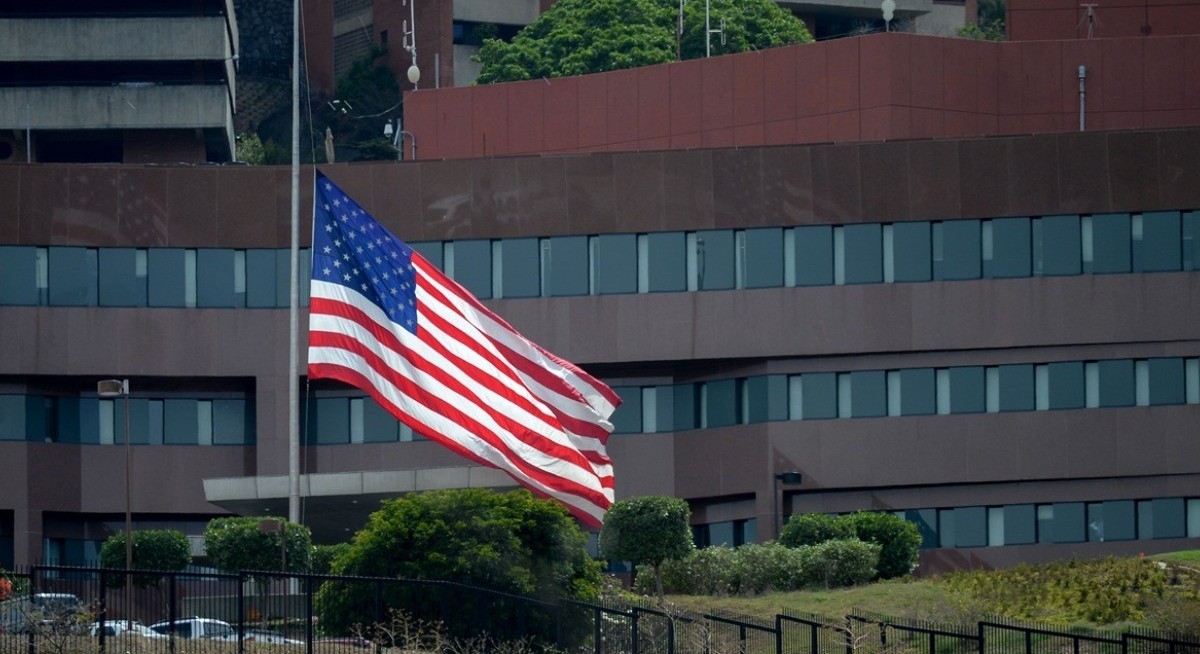
The United States has announced the reopening of its embassy in Venezuela, in a move that reflects a notable improvement in relations between the two countries. This decision comes after a prolonged period of political and economic tensions that have significantly impacted bilateral relations.
This step is seen as a sign of a shift in US foreign policy towards Venezuela, where relations had deteriorated sharply since 2019, when Washington recognized opposition leader Juan Guaidó as the interim president of the country, leading to the imposition of strict economic sanctions on the Venezuelan government.
Details of the Event
The announcement of the embassy reopening was made during a press conference by the US State Department, where officials confirmed that this move is part of efforts to improve diplomatic relations with the Venezuelan government. They noted that reopening the embassy would enhance dialogue between the two countries and facilitate the provision of humanitarian aid.
Reports indicate that the embassy will begin receiving diplomatic staff in the coming days, focusing on enhancing cooperation in areas such as food security and public health.
Background & Context
The history of US-Venezuelan relations is fraught with tensions, with recent years witnessing an escalation in conflict between the two governments. In 2019, the United States announced its support for the Venezuelan opposition, exacerbating the internal situation in the country. Washington also imposed sanctions on several Venezuelan officials, impacting an economy already suffering from a severe crisis.
However, things began to change with signs of dialogue emerging between the Venezuelan government and the opposition, prompting the United States to reassess its policy towards Caracas. These dynamics contributed to the decision to reopen the embassy.
Impact & Consequences
The reopening of the embassy is considered a positive step that may contribute to improving humanitarian conditions in Venezuela, where the country is facing severe shortages of food and medicine. Additionally, this move could pave the way for further cooperation between the two countries in various fields, including drug trafficking and regional security.
Nevertheless, questions remain about how the Venezuelan government will respond to this initiative and whether it will continue to improve its relations with the United States. These dynamics may also affect relations with other countries in the region, especially those adopting anti-US policies.
Regional Significance
Although US-Venezuelan relations may seem distant from Arab affairs, there are lessons to be learned from this shift. This development highlights the importance of dialogue and diplomacy in resolving international disputes, which could serve as a model for Arab countries facing similar challenges.
Moreover, improved relations between the United States and Venezuela may influence Arab countries' policies in dealing with Washington, especially amid ongoing tensions in the region. This could have implications for Arab positions on regional and international issues.
In conclusion, the reopening of the US embassy in Venezuela reflects a significant shift in bilateral relations, opening new avenues for cooperation and dialogue. It remains to be seen how these relations will evolve in the future and whether they will lead to improvements in the situation in Venezuela.