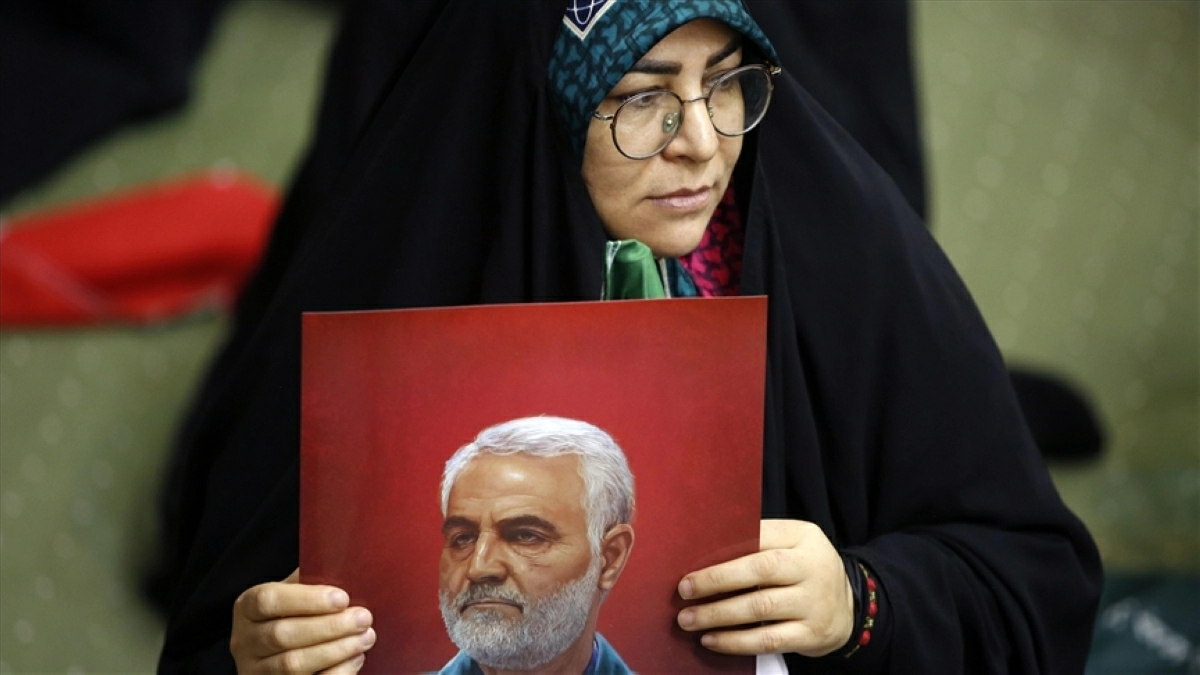
The US State Department announced on Saturday the revocation of the legal residency of two relatives of former Iranian Quds Force commander Qassem Soleimani, who were arrested by agents from the US Immigration and Customs Enforcement (ICE). The detainees have been identified as Hamida Soleimani Afshar, who is known to be Soleimani's niece, and her daughter.
According to the statement from the department, Hamida Soleimani Afshar expressed support for the Iranian leadership and the Quds Force, which Washington classifies as a terrorist organization. The department also pointed to her activities on social media, where she allegedly promoted messages from the Iranian government and praised attacks on US forces and military facilities.
Details of the Incident
In a related move, US Secretary of State Marco Rubio earlier this month revoked the legal status of Fatemeh Ardshir-Larijani, the daughter of former Iranian National Security Council Secretary Ali Larijani, and her husband Seyed Kalantar Motamedi. The couple left the United States following the revocation of their residency and are now prohibited from returning.
The State Department confirmed that these actions were coordinated with the Department of Homeland Security and ICE, emphasizing that individuals who support what it describes as anti-American terrorist entities will not be allowed to reside in the country.
Background & Context
These measures come at a time of escalating tensions between the United States and Iran, particularly amid the ongoing war between the US and Israel against Iran. Historically, relations between the US and Iran have been strained since the Islamic Revolution in 1979, which led to the severance of diplomatic ties and mutual accusations.
Qassem Soleimani, who was killed in a US airstrike in January 2020, is a pivotal figure in Iranian politics, leading Iranian military operations abroad and regarded as a symbol of resistance against American influence in the region.
Impact & Consequences
This step by the United States is part of a broader strategy to counter Iranian influence in the region, as Washington seeks to diminish Iran's sway over its allies in the Middle East. These actions may also escalate tensions between the US and Iran, potentially negatively impacting regional security.
Such measures are likely to provoke reactions from the Iranian government, which may view them as a violation of human rights, further complicating relations between the two countries. Additionally, these steps could affect US relations with its allies in the region, who may feel concerned about rising tensions.
Regional Significance
Arab countries are directly affected by these tensions, as Iran is a key player in many regional conflicts. US actions may bolster Iran's position in the region, potentially increasing tensions between Arab nations and Iran.
At the same time, some Arab countries may seek to strengthen their ties with the United States to counter Iranian threats, which could lead to new alliances in the region. Ultimately, the repercussions of these events on the Arab region remain complex and multifaceted.