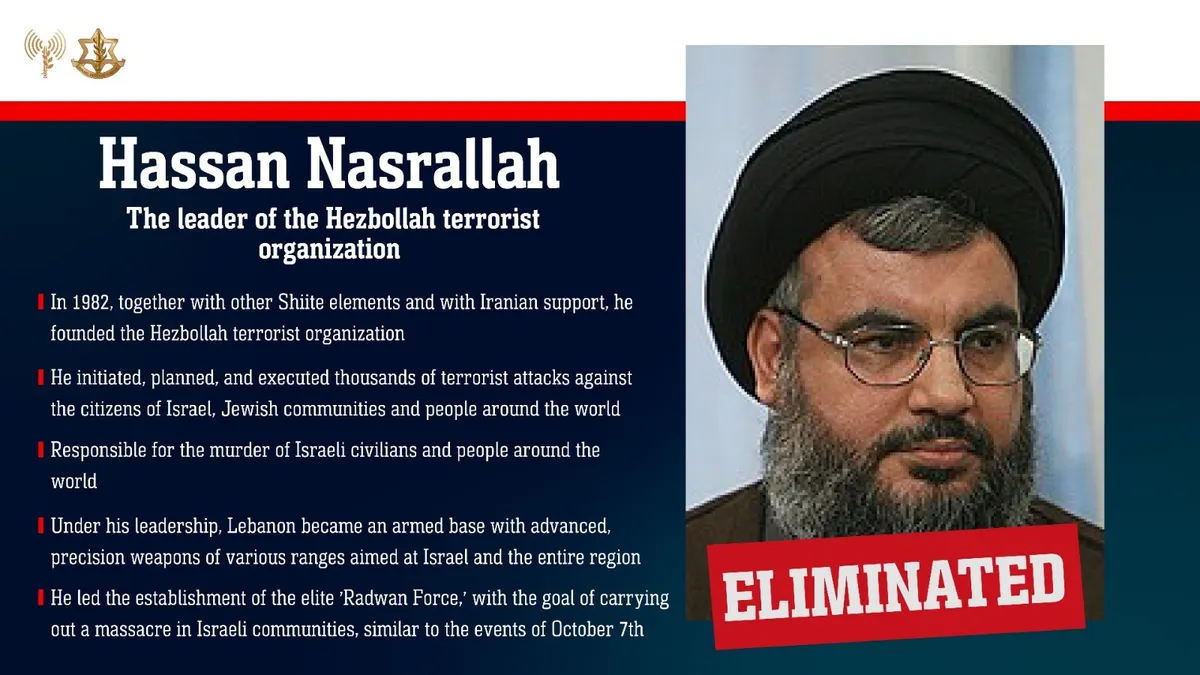
The United States has imposed new sanctions targeting the son of Hassan Nasrallah, the Secretary-General of Hezbollah, in a move that reflects ongoing pressure on the Iran-backed group. These sanctions are part of Washington's efforts to combat activities deemed threats to regional and international security.
The sanctions, announced by the U.S. Department of the Treasury, target individuals and entities linked to Hezbollah, demonstrating the U.S. commitment to countering the party's influence in the region. According to official reports, this step comes at a sensitive time as tensions in the Middle East escalate, particularly with the increase in military and political activities of Hezbollah in Lebanon and Syria.
Details of the Sanctions
Nasrallah's son, considered a prominent figure within the party, has been identified as part of the sanctions list, which also includes other individuals associated with the party's activities. These sanctions aim to dry up the funding and logistical support sources that the party relies on to carry out its operations. The U.S. Treasury Department has confirmed that these measures are a response to the security threats posed by Hezbollah to American interests and its allies in the region.
These sanctions are part of a broader strategy aimed at undermining Iranian activities in the Middle East, as the United States seeks to enhance regional stability by pressuring armed groups that receive support from Tehran.
Background & Context
Hezbollah was established in the early 1980s with support from Iran in response to the Israeli occupation of Lebanon. Since then, the party has evolved into a significant military and political force in Lebanon, wielding considerable influence in both government and society. However, the designation of the party as a terrorist organization by the United States and several Western countries has led to ongoing sanctions against it and its members.
In recent years, the United States has intensified its pressure on Hezbollah, particularly following the party's increased military activities in Syria, where it has supported the Syrian regime during the civil war. These activities have raised concerns among many Arab and Western countries, leading to intensified sanctions against the party and its affiliates.
Impact & Consequences
The new sanctions on Nasrallah's son could escalate tensions between the United States and Hezbollah. The group may respond to these sanctions by increasing its military activities or forming new alliances with other regional powers. Additionally, these sanctions could impact the economic situation in Lebanon, which is already suffering from a severe economic crisis.
These developments may lead to increased political division in Lebanon, as opinions on Hezbollah vary between supporters and opponents. This division reflects the challenges faced by the Lebanese government in managing the multiple crises afflicting the country.
Regional Significance
The U.S. sanctions on Nasrallah's son underscore the ongoing policy of pressuring armed groups in the region, which may elicit varied reactions from Arab countries. Some nations may view these sanctions as a positive step towards regional stability, while others may perceive them as interference in their internal affairs.
Under these circumstances, the situation in Lebanon remains a focal point of regional and international interest, as these sanctions are expected to affect relations between Lebanon and Western countries, in addition to their impact on the overall security situation in the region.
In conclusion, the new U.S. sanctions on Hassan Nasrallah's son reflect the ongoing tensions in the Middle East and highlight the challenges faced by countries in dealing with armed groups and the increasing Iranian influence in the region.