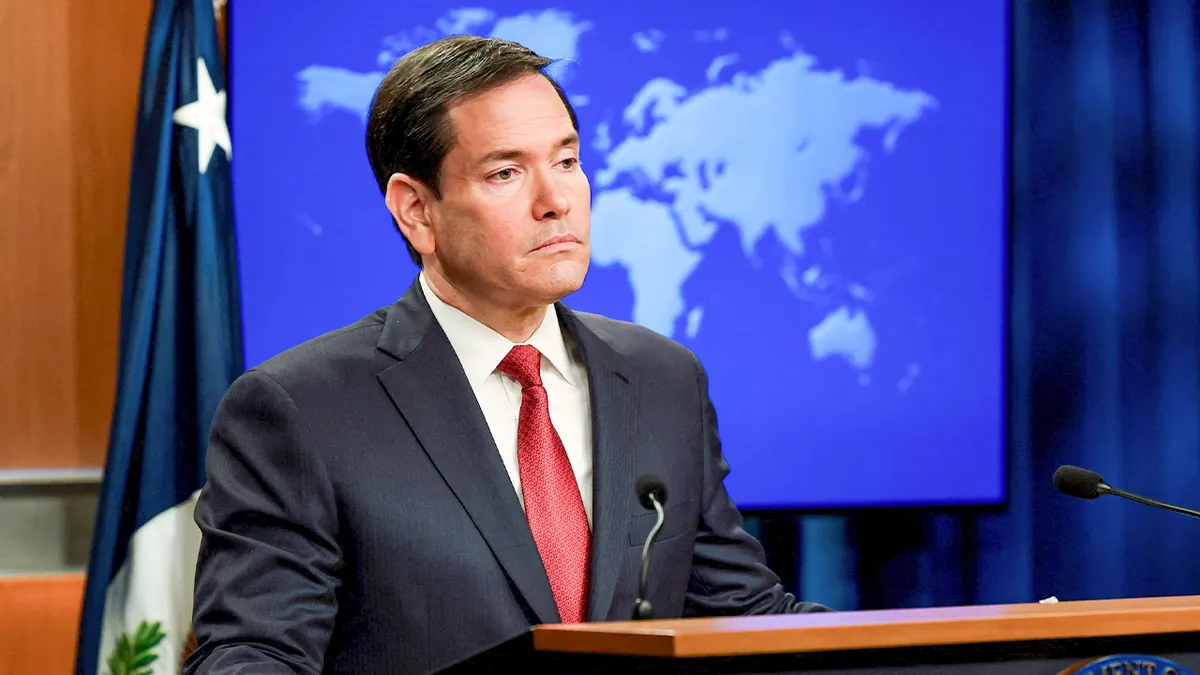
In the context of escalating tensions in the Middle East, U.S. Secretary of State Marco Rubio emphasized during the G7 summit in Yvelines that the United States does not anticipate the war in the region to continue for an extended period. These remarks come at a sensitive time as Iranian attacks are on the rise, intensifying the tensions in the area.
In the same vein, reports have indicated that 12 American soldiers were injured in a drone attack targeting a U.S. military base in Saudi Arabia. This attack reflects a notable escalation by Iran, which seeks to enhance its influence in the region through unconventional methods, such as drone strikes.
Details of the Incident
During the meeting, Rubio attempted to reassure allies that the United States is committed to the security of the region and is working to contain Iranian threats. He noted that existing alliances with Arab nations will remain strong, and the U.S. will continue to support these countries in facing security challenges.
However, the American statements come at a time when the U.S. military is facing increasing pressure due to repeated attacks, raising questions about the effectiveness of current strategies in countering Iranian threats. The recent attack also reflects Iran's capability to execute complex operations, which raises concerns in Washington and other capitals.
Background & Context
Historically, relations between the United States and Iran have seen escalating tensions since Washington's withdrawal from the nuclear agreement in 2018. Since then, Iran has adopted an aggressive policy in the region, leading to escalations in conflicts in Iraq, Syria, and Yemen. These dynamics have resulted in an increased U.S. military presence in the region, as the United States seeks to deter Iran and prevent its expansion of influence.
In recent years, the region has witnessed a surge in drone attacks, with Iran utilizing this technology as an effective means to achieve its strategic objectives. Attacks on U.S. military bases in Iraq and Syria, along with strikes on oil facilities in Saudi Arabia, indicate a shift in warfare methods in the region.
Impact & Consequences
The American statements could significantly affect regional dynamics. If the United States is serious about reducing its military presence in the region, this could create a security vacuum that Iran might exploit to enhance its influence. On the other hand, if Iranian attacks continue, the United States may be forced to reassess its military strategy.
The escalation of Iranian attacks may also increase tensions between the United States and its allies in the region, potentially negatively impacting the stability of Arab nations. Under these circumstances, Arab countries may find themselves in a difficult position, needing to balance their support for the United States with containing Iranian threats.
Regional Significance
For Arab nations, the current escalation may carry serious repercussions. An increase in Iranian attacks could lead to heightened conflicts in the region, threatening security and stability. Gulf countries, in particular, may be the most affected, as they rely on U.S. support to counter Iranian threats.
Ultimately, the question remains about how the United States will respond to the growing challenges in the region. Will it continue to support its allies, or will it move towards reducing its military presence? These questions will remain open as the world closely monitors developments in the Middle East.