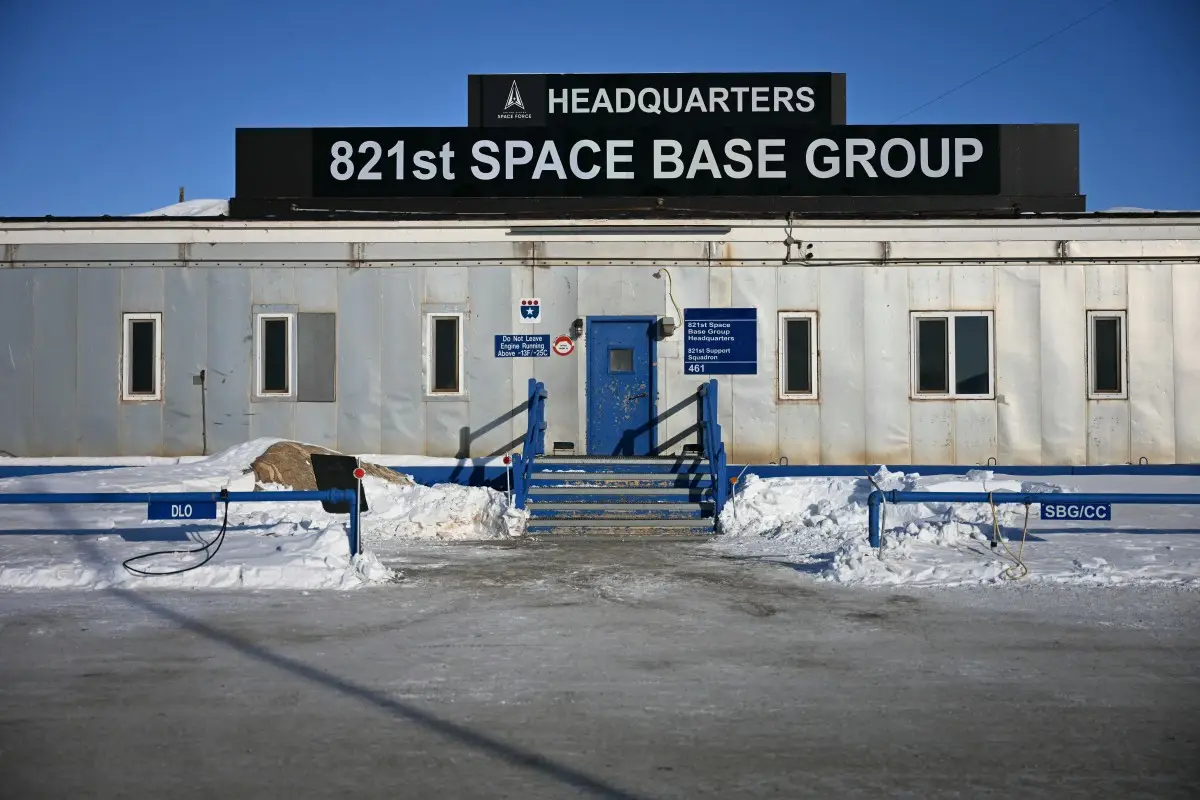
The United States is working to restore its military presence in Greenland by negotiating with the Danish government for access to three military bases, two of which have been closed for decades. General Gregory Guillot from the US Department of Defense (Pentagon) confirmed that this move represents the first major expansion of the US military presence in the region in several decades.
The negotiations involve military bases that were used by US forces during World War II and the Cold War, which were later handed over to Danish and Greenlandic authorities after the withdrawal of US troops. The bases in question are Thule Air Base, which was returned in the 1950s, and Kangerlussuaq Base, which was returned in the 1990s.
Details of the Negotiations
Although Pentagon officials have not disclosed the number of troops that may be deployed in Greenland, General Guillot indicated that these bases would support special operations and naval units. A report from the New York Times noted that most of the military infrastructure at these sites has been dismantled, yet both locations still have small operational airports. Additionally, Thule Air Base has a deep-water port, while Kangerlussuaq Base features a long runway capable of accommodating large aircraft.
Experts suggest that Denmark has limited capacity to prevent US plans, reflecting the complex geopolitical situation in the region.
Background & Context
Greenland is part of the Kingdom of Denmark, and previous statements by former US President Donald Trump regarding the US's desire to purchase Greenland sparked widespread controversy. Trump considered the island's strategic location to be vital for US national security, prompting Danish and Greenlandic authorities to emphasize the need to respect their territorial sovereignty.
Historically, Greenland served as a strategic launch point during the Cold War, with US military bases playing a crucial role in monitoring Soviet activities in the region. As the US military presence has diminished, the area has experienced a shift in geopolitical dynamics, making it a focal point for major powers.
Impact & Consequences
This negotiation is part of a broader strategy for the United States to enhance its military presence in the Arctic, where tensions between major powers have increased due to climate change and the opening of new shipping routes. Regaining military bases in Greenland could bolster the US's ability to respond to potential threats from Russia and China, both of which are also seeking to expand their influence in the region.
This move may also impact relations between the United States and Denmark, as the Danish government might feel pressured by the US to provide more military support, potentially leading to internal tensions in both Denmark and Greenland.
Regional Significance
Although Greenland is far from the Arab region, geopolitical tensions in the Arctic could influence regional security. Strengthening the US military presence in strategic areas may alter the balance of power globally, reflecting on Arab interests, especially amid increasing security challenges in the Middle East.
In conclusion, these negotiations between the United States and Denmark represent a significant step in reshaping the geopolitical landscape in the Arctic, opening the door for further tensions and challenges in the future.