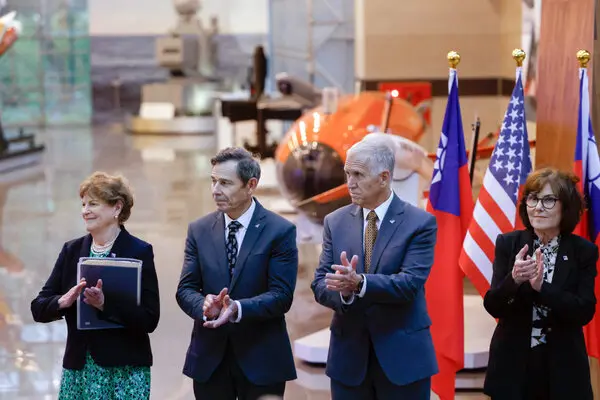
In a move reflecting the escalating tensions in the Asia-Pacific region, four U.S. senators have urged Taiwan to increase its military spending by $40 billion over the next eight years. This call comes at a time when Taiwan is facing political obstacles that hinder the implementation of this proposal, raising concerns in Washington about Taiwan's commitment to defend itself against increasing Chinese threats.
During their visit to Taiwan, the senators, representing both the Republican and Democratic parties, expressed strong support for the proposal put forth by Taiwanese President Tsai Ing-wen. Senator John Curtis, one of the Republican members, emphasized that this issue is being closely monitored in Washington, highlighting the importance of enhancing Taiwan's defensive capabilities.
Details of the Proposal
The proposal by President Tsai comes amid increasing pressure from the previous U.S. administration under Donald Trump, which called for Taiwan to boost its defense spending. However, the proposal faces resistance from opposition parties in the Taiwanese parliament, where they hold a majority. The Kuomintang Party, Taiwan's Nationalist Party, has criticized the proposal, citing a lack of transparency and concerns over delays in the delivery of already purchased American weapons.
During the visit, the senators expressed their concerns over delays in weapon deliveries, which complicate the security situation in the region. These delays have caused significant frustration in Taiwan, where these weapons are considered essential for bolstering defenses against Chinese threats.
Background & Context
Taiwan is a major point of tension in U.S.-China relations. Since the end of the Chinese Civil War in 1949, Taiwan has become a focal point of Chinese control, as Beijing considers it part of its territory. This situation has led to ongoing tensions, with Taiwan seeking to maintain its independence and enhance its defensive capabilities in the face of Chinese threats.
In recent years, China has increased its military activity near Taiwan, prompting the United States to bolster its support for the island. This support is part of a broader strategy aimed at countering China's growing influence in the region.
Impact & Consequences
This visit by U.S. senators is a sign of the United States' commitment to supporting Taiwan in the face of Chinese threats. However, the political obstacles facing the proposal may hinder Taiwan's ability to effectively bolster its defenses. If the proposal is not approved, Taiwan's capacity to respond to any future threats may be compromised, increasing risks in the region.
Furthermore, the ongoing tensions between the United States and China could escalate the conflict in the region, affecting regional stability. These new dynamics may require other countries in the region to reassess their security and defense strategies.
Regional Significance
As tensions rise in the Asia-Pacific region, Arab countries must closely monitor these developments. The tensions between major powers like the United States and China could impact regional stability, necessitating enhanced security and defense cooperation among Arab nations.
Moreover, these events may affect trade and economic relations between Arab countries and major powers, requiring new strategies to address future challenges.