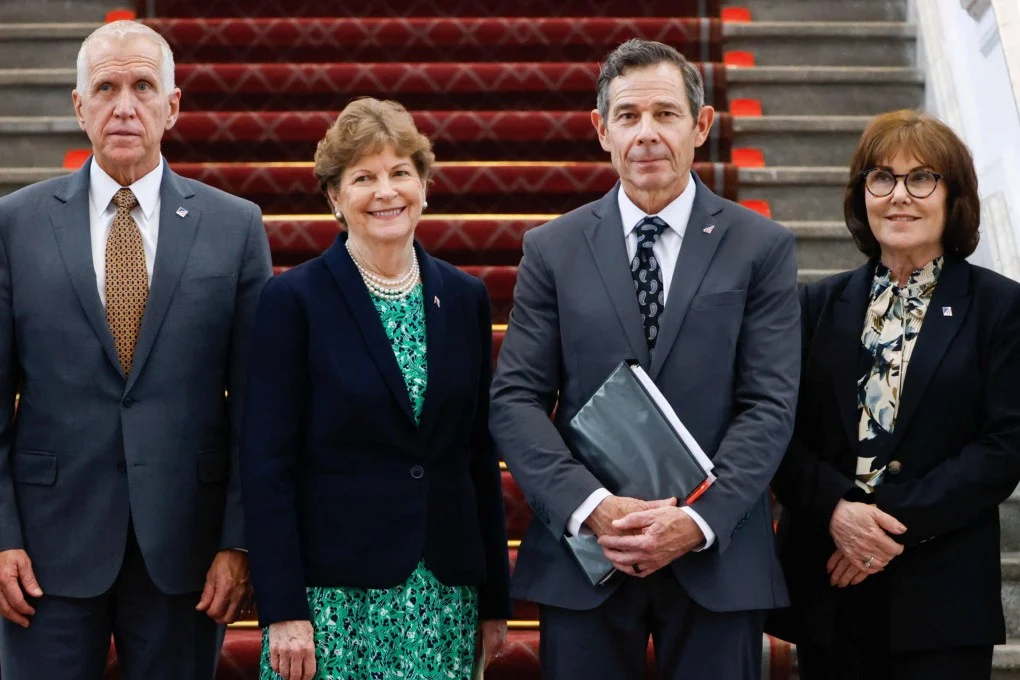
Four senior U.S. Senators have begun a two-day visit to Taiwan, where they are advocating for legislative approval of a special defense budget of 1.25 trillion Taiwanese dollars (approximately 40 billion USD) proposed by the island's government. This visit comes at a sensitive time, as Taipei faces increasing deadlines to pay for several arms packages approved by the United States, while funding issues remain stalled due to legislative opposition.
The visit by these Senators, seen as a signal of growing frustration in Washington over the delays, is an important step in strengthening defense relations between the United States and Taiwan. It has been announced that this visit occurs amid escalating military pressures from Beijing, heightening the importance of bolstering Taiwan's defense capabilities.
Details of the Visit
The delegation consists of four prominent Senators, each seeking to support Taiwan's defense budget. This budget has been proposed as part of the Taiwanese government's efforts to enhance its defense capabilities in the face of increasing threats from China. However, internal opposition in Taiwan has led to delays in approving this budget, raising concerns in Washington.
This visit is part of a broader U.S. strategy to support its allies in the Pacific region, especially amid rising tensions with China. Some analysts have noted that this move could escalate tensions between Beijing and Washington, as China considers Taiwan part of its territory.
Background & Context
Historically, relations between the United States and Taiwan have been complex. The United States officially recognized the People's Republic of China in 1979 but has continued to support Taiwan through arms sales and diplomatic backing. However, relations between Taiwan and China have deteriorated significantly in recent years, with China increasing its military activities near the island.
In recent years, Taiwan has witnessed an increase in military threats from China, including warplanes approaching its airspace. This has led to a heightened awareness in Taiwan of the importance of strengthening its defense capabilities, making the defense budget a hot topic in Taiwanese politics.
Impact & Consequences
The visit of U.S. Senators to Taiwan is a strategic move that could enhance defense relations between the two sides, but it may also escalate tensions with China. If the budget is approved, it would enable Taiwan to bolster its military capabilities, potentially increasing the likelihood of escalation in the region.
Moreover, this visit could affect U.S.-China relations more broadly. Any additional support for Taiwan may be viewed in Beijing as provocation, leading to negative reactions from the Chinese government.
Regional Significance
Amid rising tensions in the Pacific region, this event may have indirect effects on the Arab region. Any escalation in U.S.-China relations could impact regional stability, which may reflect on Arab interests in areas such as trade and security.
Additionally, the strengthening of defense relations between the United States and Taiwan may encourage other countries in the region to enhance their military capabilities, potentially leading to an arms race in the area.
In conclusion, the visit of U.S. Senators to Taiwan reflects the increasing challenges faced by the island amid military pressures from China, highlighting the importance of international support in addressing these challenges.