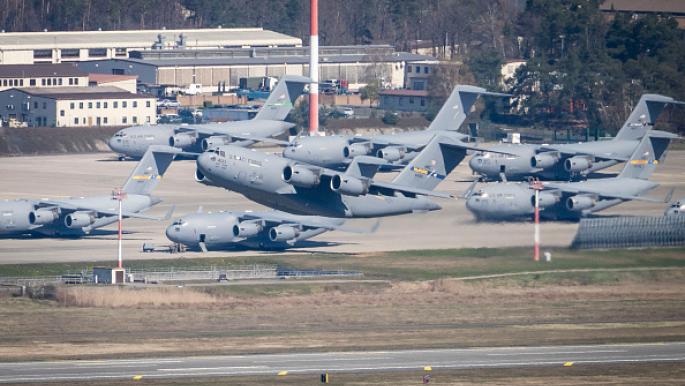
Bloomberg reported today that the United States intends to redirect the majority of its strategic stockpile of long-range stealth cruise missiles as part of its strategy to counter Iranian threats. This step reflects a notable escalation in tensions between Washington and Tehran, as the U.S. continues to bolster its military capabilities in the region.
Stealth cruise missiles are advanced weapons capable of evading air defense systems, making them an effective tool in any potential conflict. These developments come at a time when concerns are rising over Iran's nuclear activities, as well as its support for armed groups in the region, complicating the security landscape in the Middle East.
Details of the Situation
The United States aims to enhance its military presence in the region through this move, as Iran represents one of the primary challenges to its national security. Reports indicate that the U.S. has increased the number of air sorties and naval presence in the Arabian Gulf, reflecting Washington's intent to respond to any potential threats from Tehran.
These maneuvers come at a sensitive time, as relations between Iran and the United States are increasingly strained, especially following Washington's withdrawal from the nuclear agreement in 2018. This withdrawal led to heightened tensions and increased military activities between the two sides, raising concerns in the region.
Background & Context
Historically, U.S.-Iran relations have been tense since the Islamic Revolution in 1979. Since then, the region has witnessed numerous crises and conflicts in which Iran has been a participant, making it a focal point of U.S. policy in the Middle East. The United States has previously used military force as a means of pressuring Tehran, leading to escalated conflicts in the region.
In recent years, Iran has ramped up its military activities, including the development of its nuclear program and support for armed groups in Iraq, Syria, and Lebanon. These activities have raised alarms for the United States and its allies in the region, prompting them to take proactive military steps.
Impact & Consequences
The U.S. decision to allocate a significant portion of its stealth cruise missile stockpile toward Iran could lead to a potential military escalation in the region. This escalation may impact regional security, as it could provoke reactions from Iran and its allies, intensifying tensions further.
This move may also affect relations between the United States and its allies in the region, as some countries may feel concerned about the rising military tensions. At the same time, this step could strengthen the U.S. position as a leading military power in the Middle East, enhancing its ability to influence events.
Regional Significance
Arab countries neighboring Iran, such as Iraq and Saudi Arabia, are among those most affected by these developments. The escalation of tensions between the United States and Iran could lead to security and economic repercussions in the region, potentially impacting trade and investment flows.
Moreover, these developments could exacerbate sectarian tensions in the region, as armed groups may exploit these situations to enhance their influence. Therefore, Arab countries need to take proactive measures to ensure their security and stability in light of these changing circumstances.
In conclusion, developments in U.S.-Iran relations remain a focal point of significant interest, indicating the possibility of military escalation that could affect security and stability in the region as a whole.