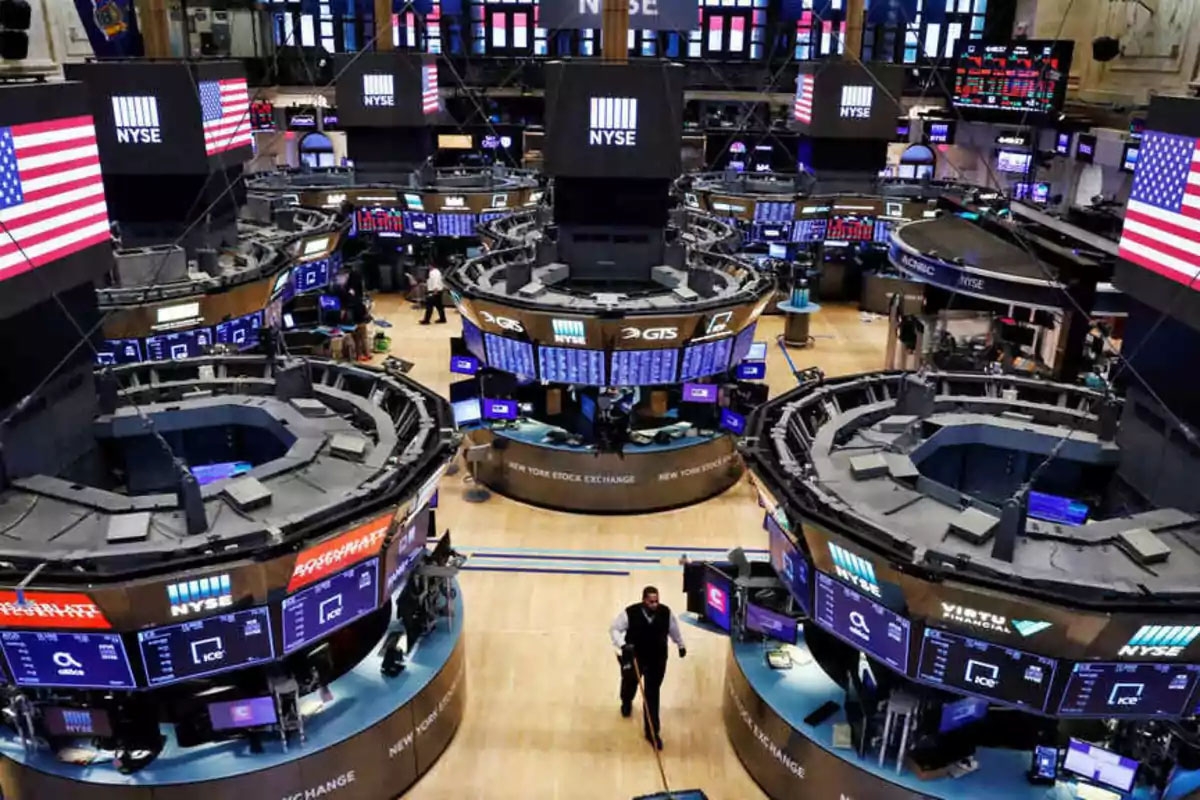
U.S. stock trading concluded on Friday with a notable decline, reflecting growing concerns among investors about the future of the American economy. This downturn comes amid increasing economic challenges. The main stock indices on Wall Street closed lower, indicating a state of anxiety among investors regarding the economic outlook.
In the details of the trading session, the Dow Jones Industrial Average fell by 200 points, while the Standard & Poor's 500 index dropped by 1.5%. The Nasdaq also experienced a decline of 2%, reflecting a general downturn in the markets.
Details of the Event
These declines come at a time when the U.S. economy is facing multiple pressures, including rising inflation rates and increasing interest rates. These factors have affected investor confidence, prompting them to adopt cautious positions in the markets. Additionally, recent economic reports have shown a slowdown in job growth, heightening concerns about economic stability.
Moreover, geopolitical tensions around the world, including trade disputes, are casting a shadow over the markets. Some analysts have indicated that these factors could lead to further volatility in the markets in the upcoming period.
Background & Context
Historically, U.S. markets have experienced significant fluctuations due to economic and political events. For instance, in 2008, the global financial crisis led to the collapse of many major financial institutions. In recent years, there has been a focus on how monetary policies affect the markets, especially with the changes seen in the U.S. Federal Reserve.
In recent years, the COVID-19 pandemic has also had a significant impact on the global economy, leading to structural changes in many sectors. As recovery from the pandemic began, markets also started to rebound, but current challenges indicate that the road ahead remains long.
Impact & Consequences
The decline in U.S. stocks could have wide-ranging implications for the global economy. As U.S. markets are among the largest financial markets in the world, any downturn could affect investor confidence in other markets. Additionally, a drop in stocks could lead to reduced investments, impacting economic growth.
Furthermore, a decline in stocks may increase pressure on the U.S. government to take measures to stimulate the economy. This could include increased government spending or tax cuts, which may affect the national budget.
Regional Significance
For the Arab region, the decline in U.S. stocks could impact foreign investments in Arab countries. Many Arab investors rely on U.S. markets as a primary source of investment. Any downturn in the U.S. economy could also affect oil prices, which in turn impacts the economies of oil-producing countries in the region.
In conclusion, the situation in U.S. financial markets remains a significant concern, as any changes could affect the global economy in general, and the Arab region in particular.