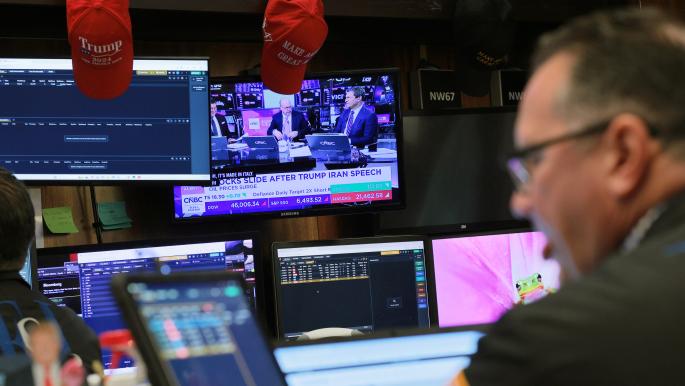
U.S. stocks declined today on Wall Street, significantly impacted by military threats issued by President Donald Trump towards Iran. This drop comes at a time when investors are experiencing confusion and anticipation, as the situation fluctuates between potential military escalation and political easing.
Financial markets are increasingly concerned about the repercussions of any potential escalation in the region, especially with rising tensions between the United States and Iran. These tensions have greatly affected investor confidence, leading to declines in major stock indices on Wall Street.
Details of the Event
Earlier, Trump announced a deadline for Iran to comply with U.S. demands, raising fears of possible military action if Tehran does not respond. This announcement resulted in a notable drop in stock indices, with the Dow Jones Industrial Average experiencing a significant decline, while the S&P 500 also saw a decrease.
These developments come at a sensitive time, as the global economy is grappling with the repercussions of the COVID-19 pandemic, complicating the economic landscape further. Analysts have indicated that any military escalation could exacerbate economic conditions, negatively impacting financial markets.
Background & Context
Historically, U.S.-Iranian relations have been marked by recurring tensions, particularly following the U.S. withdrawal from the nuclear agreement in 2018. Since then, Washington has imposed stringent economic sanctions on Tehran, worsening the situation in the region. This historical backdrop makes it challenging to predict the developments of the current situation.
In recent years, there have been multiple attempts to reach political agreements; however, these efforts often face significant obstacles. In this context, it is crucial to closely monitor events, as any new developments could influence global markets.
Impact & Consequences
If tensions between the United States and Iran persist, we may witness negative effects on the global economy as a whole. Any escalatory measures are likely to lead to rising oil prices, which will impact production and transportation costs, consequently affecting the prices of goods and services.
Moreover, these tensions could lead to increased instability in financial markets, prompting investors to make more cautious decisions. Under these circumstances, it is essential for markets to remain under surveillance, as conditions can change rapidly.
Regional Significance
The tensions between the United States and Iran directly affect the Arab region, where Iran is a key player in many regional conflicts. Any military escalation could worsen conditions in countries like Iraq, Syria, and Lebanon, complicating the security and political landscape in the region.
Additionally, rising oil prices due to these tensions may impact the economies of oil-producing Arab nations, potentially reflecting on their economic stability. Therefore, monitoring these developments is crucial for understanding the potential economic and political dimensions.