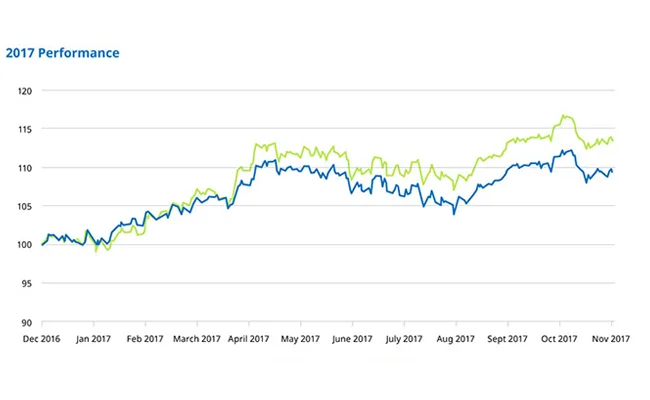
U.S. stocks closed with notable mixed performance yesterday, with some indices rising while others fell. This divergence reflects market reactions to new economic data, indicating a state of uncertainty in financial markets.
The Dow Jones Industrial Average rose by 150 points, reaching a level of 34,500 points, while the Standard & Poor's 500 index declined by 0.2%, closing at 4,400 points. Conversely, the Nasdaq experienced a drop of 0.5%, reaching 13,800 points, reflecting varied performance across different sectors.
Event Details
The U.S. markets were influenced by several factors, including quarterly earnings reports from major companies. Reports indicated that some firms achieved better-than-expected results, while others faced declines in profits. This situation led to mixed reactions from investors, impacting stock movements overall.
Additionally, recently released economic data, including inflation and unemployment rates, had clear effects on investor sentiment. The data showed a slight increase in inflation rates, raising concerns about the potential for interest rate hikes in the near future.
Background & Context
These changes in the U.S. markets come at a sensitive time, as investors seek to understand the impact of the Federal Reserve's monetary policies on the economy. After a period of significant financial stimulus, markets are beginning to adjust to potential changes in monetary policy, increasing uncertainty.
Moreover, geopolitical tensions in certain regions, along with global economic challenges, cast a shadow over the markets. These combined factors make it difficult for investors to make clear investment decisions.
Impact & Consequences
These changes in the U.S. markets can directly affect global markets, as the United States is one of the largest economies in the world. Any decline in U.S. markets could lead to a downturn in other markets, impacting global investments.
Furthermore, the mixed performance in U.S. markets may influence investor sentiment in the Arab region, where investors closely monitor developments in U.S. markets to determine their investment strategies. While Arab investors seek to capitalize on available opportunities, any fluctuations in U.S. markets could lead to a decline in confidence.
Regional Significance
Financial markets in Arab countries are significantly affected by economic events in the United States. Foreign investments in the region are closely linked to the performance of U.S. markets. Any downturn in these markets could lead to a reduction in foreign investments, impacting economic growth in the region.
Additionally, fluctuations in oil prices, which are pivotal for Arab economies, may also be influenced by changes in U.S. markets. Therefore, investors in the region are closely following these developments.
In conclusion, the performance of U.S. markets remains a focal point for investors, reflecting current changes that indicate a state of uncertainty in global markets. It is crucial to monitor these developments to understand their impact on the global and regional economy.