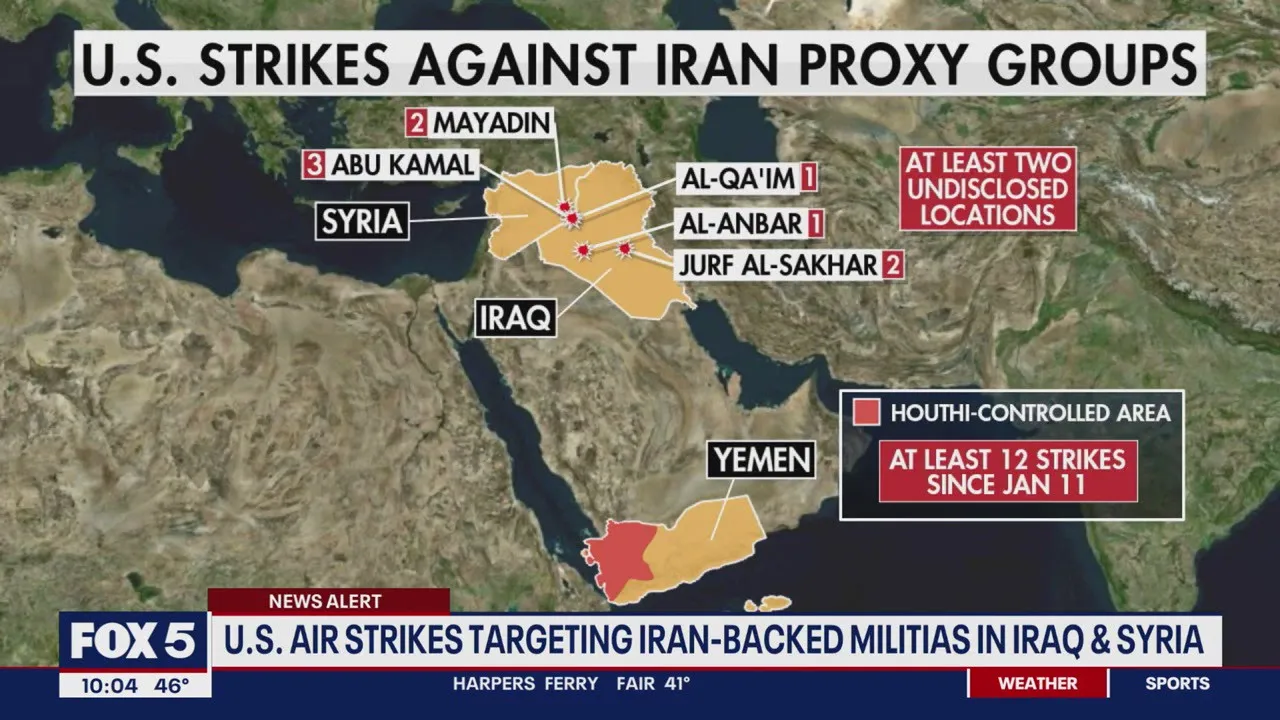
U.S. forces continue military strikes against Iranian sites as operations enter their thirty-third day. These actions are part of escalating tensions between the United States and Iran, which have seen a significant increase in recent months.
The U.S. strikes primarily target Iranian military facilities, including armed forces bases and logistical facilities. Reports indicate that these operations have resulted in the destruction of several strategic targets, increasing pressure on the Iranian government.
Details of the Event
According to military sources, the strikes have focused on locations in Iraq and Syria, where Iranian forces support local militias. Drones and precision missiles have been used to hit specific targets, reflecting an advanced military strategy aimed at minimizing collateral damage.
Reports suggest that the strikes have significantly impacted Iran's military capabilities in the region, with the destruction of weapon depots and command centers. Additionally, these operations have heightened tensions between U.S. and Iranian forces, raising concerns about a larger escalation in the future.
Background & Context
The roots of the current tensions trace back to the U.S. withdrawal from the Iranian nuclear deal in 2018, which was followed by the imposition of severe economic sanctions on Iran. Since then, relations between the two countries have deteriorated continuously, marked by mutual accusations and threats.
Iran views the presence of U.S. forces in the region as a threat to its national security, while the United States perceives Iranian activities in the Middle East, including militia support, as a threat to regional stability.
Impact & Consequences
The U.S. strikes emphasize that the United States is determined to confront Iranian influence in the region, which could lead to further military escalation. These operations may also affect U.S. relations with its allies in the region, who may feel concerned about rising tensions.
On the other hand, these strikes could bolster the Iranian government's position domestically, as they may be used as a means to unify the ranks against what they perceive as U.S. aggression.
Regional Significance
Neighboring Arab countries are directly affected by the rising tensions between the United States and Iran. Conflicts in Iraq, Syria, and Lebanon may reignite as a result of these strikes, complicating the security situation in the region.
Furthermore, these developments could impact oil prices and financial markets, potentially leading to increased volatility in the markets due to fears of possible military escalation.
In conclusion, as U.S. strikes against Iranian sites continue, the situation in the region remains tense. The international community must closely monitor developments, as any escalation could have dire consequences for regional and international security.