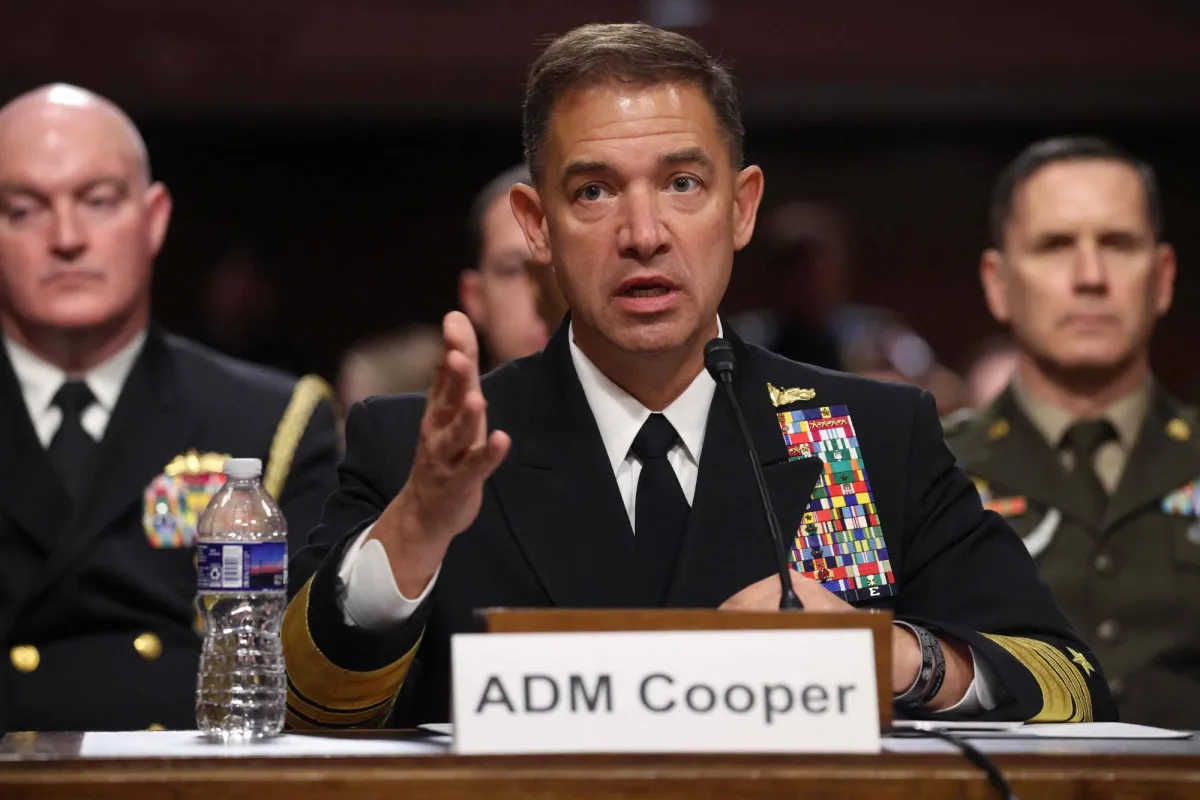
Admiral Brad Cooper, the commander of U.S. Central Command (CENTCOM), affirmed that U.S. military strikes have greatly contributed to reducing Iran's capability to threaten its neighbors and American interests in the region. During a briefing before a Senate committee, Cooper explained that Tehran is no longer able to exert threats as it did previously.
Cooper noted that "the Iranian threat has significantly decreased," adding that "their capabilities have diminished greatly." He revealed that U.S. forces have destroyed over 90% of Iran's stockpile of naval mines, which was estimated to be around 8,000 mines, through more than 700 airstrikes.
Details of the Event
In a related context, Cooper pointed out that Iran still retains some "disruption capabilities," such as limited drone and missile attacks, as well as support for certain proxies. However, it no longer possesses the means necessary to threaten major regional operations or deter American freedom of movement in both air and maritime domains.
On the other hand, Iranian Foreign Minister Abbas Araghchi urged member states of the BRICS group to condemn what he described as violations of international law by the United States and Israel. This came during a meeting of the group's foreign ministers in New Delhi, where Araghchi stated that Iran considers itself a victim of unlawful expansion and war incitement.
Background & Context
These statements coincide with rising tensions in the region, where commercial vessels are being attacked amid the ongoing conflict between Iran and the United States. India, the world's third-largest oil importer, summoned the Iranian ambassador to express its concern over the attacks on ships flying the Indian flag.
It is noteworthy that the BRICS group includes countries such as Brazil, Russia, India, China, and South Africa, along with Egypt, Iran, and the UAE, reflecting the complexity of regional and international relations amid current crises.
Impact & Consequences
These developments underscore the significance of the Strait of Hormuz, which is considered a vital passage for transporting oil and natural gas. The ongoing conflict has heightened the risks to commercial navigation in the Gulf, where several vessels have faced attacks or damage since the onset of the dispute.
The continuation of these tensions could lead to rising energy prices and increased fears of renewed inflation in global markets, directly affecting energy-importing countries.
Regional Significance
These events are particularly significant for Arab countries, as they contribute to shaping the contours of regional politics. Increased pressure on Iran may lead to changes in its regional strategies, which could affect relations with Arab nations.
In conclusion, the situation in the region remains tense, requiring effective diplomatic dialogue to avoid escalating the conflict and achieve stability.