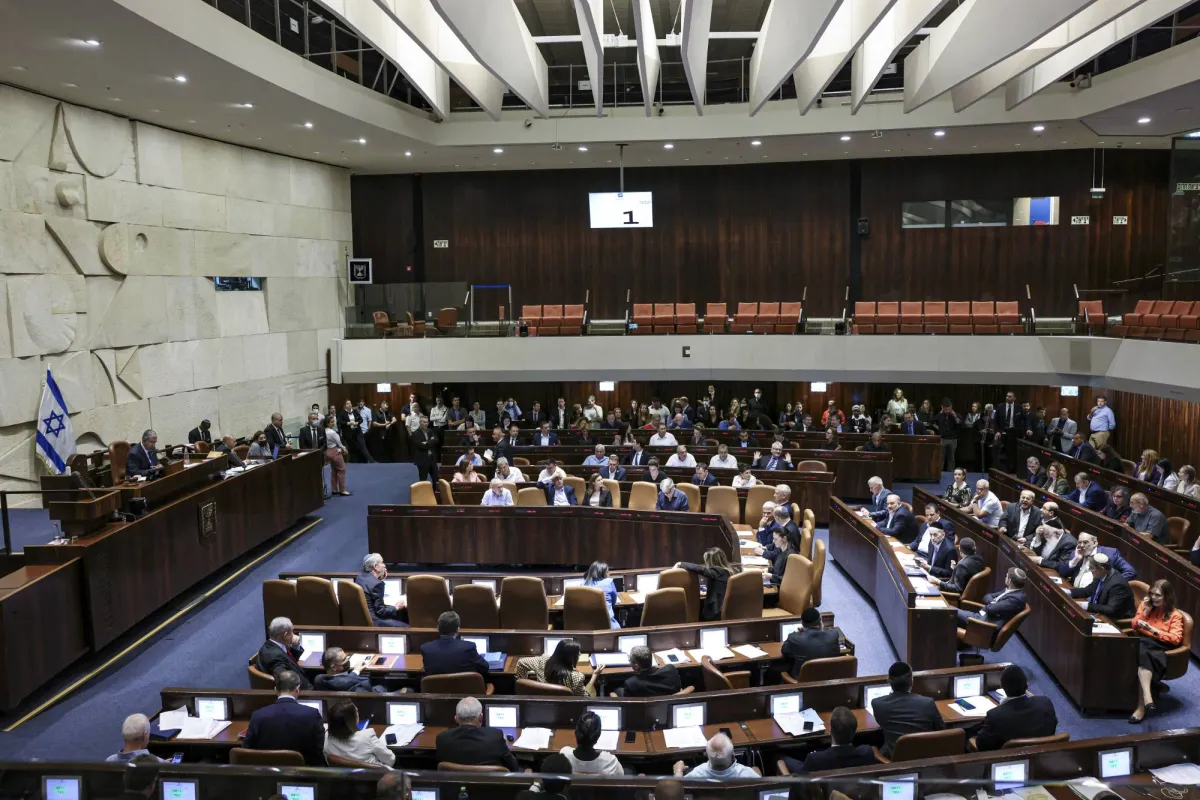
On Monday, the United States announced that it respects Israel's right to determine its own laws, following the Israeli Knesset's approval of a law allowing the execution of Palestinians convicted of "terrorism." This decision comes amid severe criticism from European countries and human rights organizations, which argue that this measure could undermine Israel's democratic commitments.
A spokesperson for the U.S. State Department stated, "We respect Israel's sovereign right to determine its own laws and penalties for individuals convicted of terrorism," adding that the United States is confident that any such measures will be implemented within the framework of a fair trial, according to reports from Agence France-Presse.
Details of the Law
The new law stipulates that anyone who intentionally causes the death of another person with the intent to harm an Israeli citizen or resident, and with the aim of ending the existence of the State of Israel, shall be punished by death or life imprisonment. For Palestinians in the occupied West Bank, the death penalty will be the default punishment if Israeli military courts classify the act of killing as "terrorism." Thus, Israel could apply the death penalty to any Palestinian citizen who kills an Israeli citizen, while it cannot be applied to an Israeli who kills a Palestinian.
It is worth noting that Israel has occupied the West Bank since 1967, where Palestinians are subjected to military courts, while Israeli settlers are tried in civilian courts. Although Israeli laws stipulate the death penalty, no executions have been carried out since 1962, when Nazi Adolf Eichmann was executed.
Context and Background
This move comes at a sensitive time, as the region is experiencing heightened tensions between Israel and the Palestinians, particularly in light of recent events in the West Bank and Gaza Strip. This law has raised deep concerns in international circles, with Britain, France, Germany, and Italy expressing fears that this step could exacerbate security conditions and intensify the conflict.
In this context, observers have pointed out that this law may contribute to increasing feelings of frustration and anger among Palestinians, potentially leading to an escalation of violence in the region. There are also concerns that this law could open the door to further human rights violations in the occupied territories.
Implications and Effects
This law is expected to have far-reaching implications for relations between Israel and Western countries, especially given the ongoing U.S. support for Israel. This support may lead to increased international criticism of Israel, which could affect its image in the international community.
Moreover, this law could strengthen the position of militant Palestinian groups, which may use it as a pretext to escalate operations against Israel. At the same time, it may increase pressure on the Israeli government from the international community, which is calling for adherence to human rights and democratic standards.
Impact on the Arab Region
This law could have negative repercussions on the situation in the Arab region as a whole, as it may lead to heightened tensions between Palestinians and Israelis, affecting stability in neighboring countries. Additionally, this law could enhance feelings of resentment in Arab countries towards Israeli policies, potentially leading to increased support for Palestinian groups.
In conclusion, the question remains as to how this law will affect the future of the Israeli-Palestinian conflict, and whether it will contribute to achieving peace or complicate matters further. The situation in the region requires serious dialogue and international cooperation to achieve stability and lasting peace.