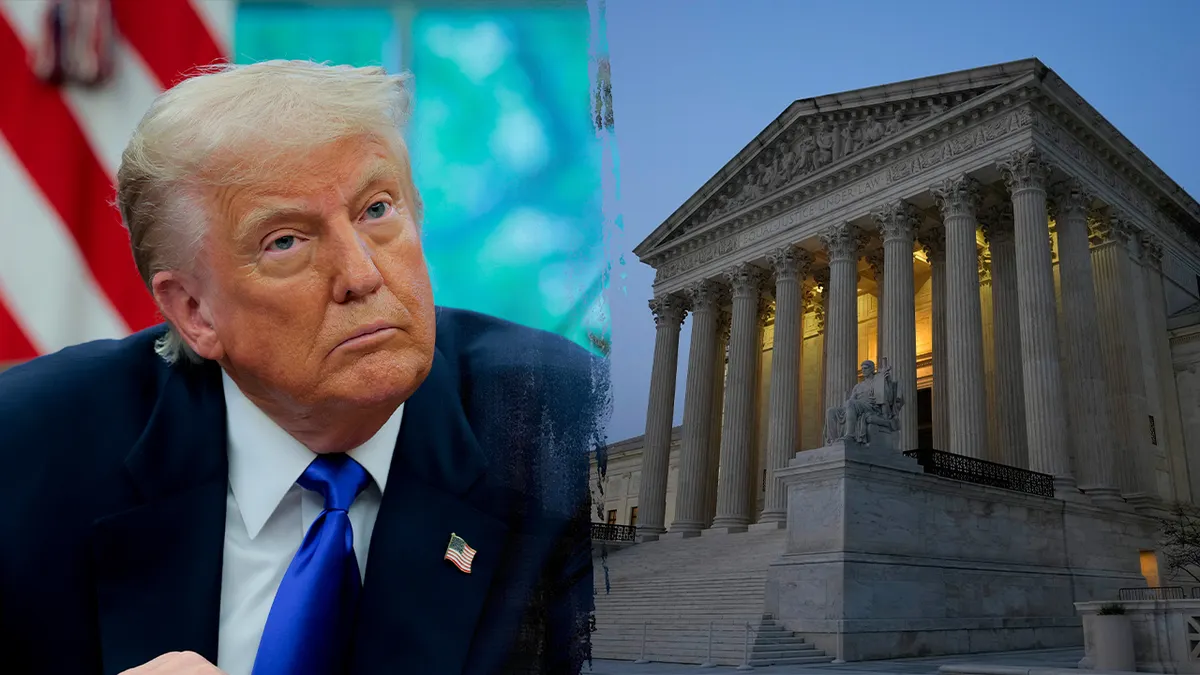
On Wednesday, the US Supreme Court commenced a crucial legal discussion regarding the potential revocation of birthright citizenship for children born in the United States, as stipulated by an executive order issued by former President Donald Trump. This case, known as "Trump v. Barbara," ignites widespread debate concerning the rights of undocumented immigrants and its implications for the future of many children born in the country.
Trump attended the session, marking an unprecedented event for a sitting American president, as he closely monitored the legal discussions that could impact the lives of thousands of families. In his remarks to reporters, Trump stated, "I am going," reflecting his personal interest in the case.
Details of the Event
The executive order issued by Trump on his first day in the White House on January 20, 2025, stipulates that after 30 days from its enactment, children born in the United States will not be granted citizenship if their parents are undocumented immigrants or unregistered workers. This order contradicts the prevailing legal interpretation for over 150 years, which holds that the Fourteenth Amendment of the US Constitution automatically grants citizenship to children born in the country, regardless of their parents' status.
The amendment states: "All persons born or naturalized in the United States, and subject to the jurisdiction thereof, are citizens of the United States." Several federal courts have ruled that Trump's order violates the Constitution, with two appellate courts upholding a ruling that prevents the enforcement of this order.
Background & Context
Historically, the United States has been viewed as a refuge for immigrants, with the right to birthright citizenship regarded as a fundamental right. However, recent years have witnessed a rise in anti-immigration rhetoric, particularly under the Trump administration. This shift in American policy raises significant concerns regarding human rights and social justice, reflecting increasing tensions surrounding immigration issues within American society.
The issue of birthright citizenship is one of the most contentious topics in American politics, intersecting with matters of national identity and national security. In recent years, numerous proposals have been put forth to amend laws related to citizenship, reflecting changes in political and social attitudes.
Impact & Consequences
If Trump's order is upheld, it would result in depriving tens of thousands of children born in the United States of citizenship each month, creating a state of legal and economic uncertainty for families. This situation could exacerbate social and economic crises, as families would face significant challenges in accessing essential services such as education and healthcare.
The ramifications of this order extend beyond American borders, potentially affecting international relations, especially with countries from which many individuals migrate to the United States. Furthermore, this order could intensify feelings of division within American society, as many people may feel that their fundamental rights are under threat.
Regional Significance
For the Arab region, the issues of migration and asylum are particularly sensitive. Many Arabs live in the United States and rely on laws that protect their rights as immigrants. If the right to birthright citizenship is revoked, it could lead to heightened tensions between Arab communities and US authorities, reflecting the challenges faced by immigrant communities worldwide.
In conclusion, the issue of birthright citizenship remains a vital topic that requires close monitoring, as its outcomes could significantly affect the lives of many individuals, both in the United States and in their countries of origin.