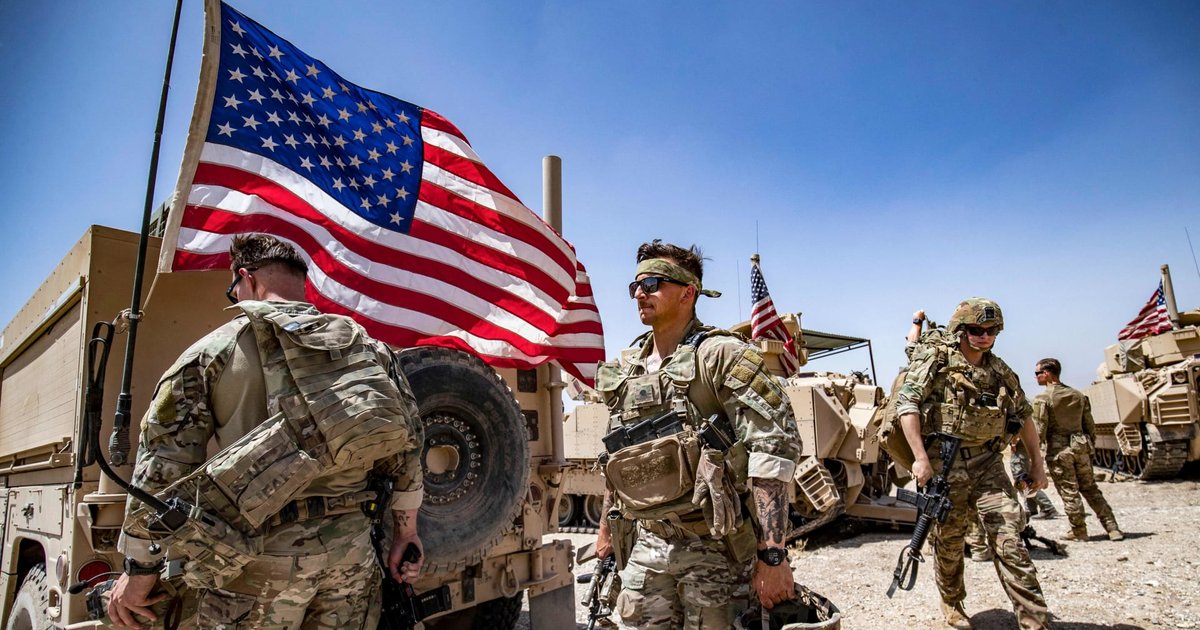
The US Central Command (CENTCOM) has announced the deployment of over 50,000 American soldiers in the Middle East, reflecting the escalating tensions in the region. This military reinforcement includes approximately 200 fighter jets and aircraft carriers, as well as 1,000 soldiers from the 82nd Airborne Division, and two Marine Corps units comprising around 5,000 soldiers and sailors.
This move comes at a sensitive time, as concerns grow over escalating conflicts in the region, particularly amid the tense situations in Iraq and Syria, as well as rising tensions with Iran. Through these reinforcements, the United States aims to bolster its military presence in the region, reflecting its commitment to the security of its allies.
Details of the Deployment
The US military reinforcements involve the deployment of approximately 200 fighter jets, enhancing the United States' rapid response capabilities in case of any escalation. Additionally, aircraft carriers have been sent to the region, strengthening the US Navy's presence in strategic waters. These steps are part of a military strategy aimed at securing American interests and protecting its allies in the region.
These reinforcements are considered part of the US response to increasing threats, as the United States closely monitors developments in the region, including Iranian military activities and their potential implications for regional security.
Background & Context
Historically, the United States has bolstered its military presence in the Middle East for decades, especially following the events of September 11, 2001. Since then, the region has become a hub for US military operations, with forces deployed in Iraq, Afghanistan, and Syria. In recent years, the region has witnessed escalating tensions, particularly with the rise of Iranian activities and its interventions in the internal affairs of neighboring countries.
These reinforcements are part of a broader strategy aimed at countering increasing threats from armed groups, including ISIS and Iran-backed militias. The United States also seeks to enhance cooperation with its allies in the region, such as Saudi Arabia and the United Arab Emirates, to address these challenges.
Impact & Consequences
These reinforcements indicate that the United States is preparing to face any potential escalation in the region. This move may increase tensions with Iran, which could perceive these reinforcements as a threat to its national security. Additionally, the presence of a large number of US troops may heighten the likelihood of direct confrontations with armed groups in Iraq and Syria.
Furthermore, these reinforcements may affect relations between the United States and its allies in the region, as some allies may feel uneasy about the rising tensions. At the same time, this move could be seen as a clear message to hostile nations that the United States is committed to protecting its interests and those of its allies in the region.
Regional Significance
These US military reinforcements signal the continuation of tensions in the Arab region, where many Arab countries remain under pressure from security challenges. This move may heighten fears of escalating conflicts in the region, particularly amid the tense situations in Iraq and Syria.
The presence of a significant number of US troops may also influence the political dynamics in the region, as some countries may seek to enhance their cooperation with the United States in addressing common threats. At the same time, this move may increase pressure on Arab governments to deal with the security and economic challenges they face.
In conclusion, these US military reinforcements reflect the United States' commitment to the security of the region, but they also indicate rising tensions that could impact regional stability in the future.