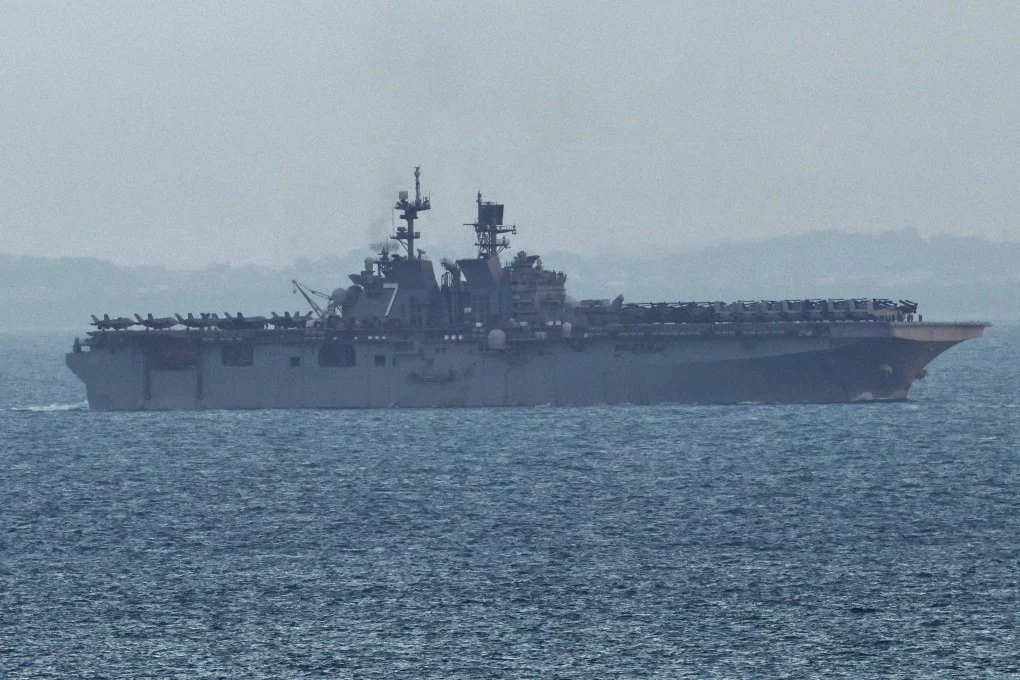
The American aircraft carrier USS Tripoli has arrived in the Middle East, as reported by the U.S. Central Command on Saturday, sparking increasing speculation about the possibility of deploying American ground forces in Iran. The ship, which is the flagship of a group that includes around 3,500 Marines and sailors, reached the region on Friday.
The group also includes transport and fighter aircraft, as well as amphibious and tactical assault assets, reflecting the United States' readiness to bolster its military presence in the region amid rising tensions.
Details of the Event
This move comes at a sensitive time, as concerns grow over escalating tensions between the United States and Iran. U.S. officials have indicated that these military reinforcements aim to protect American interests in the region, particularly in light of increasing Iranian threats.
The American military movements occur against the backdrop of heightened tensions in the Gulf region, where Iran has threatened to close the Strait of Hormuz, a vital corridor for oil transport. These threats have prompted the United States to enhance its military presence in the area, reflecting its concern over the potential escalation of conflict.
Background & Context
Historically, U.S.-Iranian relations have seen increasing tensions since the United States withdrew from the Iranian nuclear deal in 2018. Since then, the U.S. has imposed stringent economic sanctions on Iran, exacerbating tensions between the two countries.
In recent years, the region has witnessed numerous events that have complicated the situation, such as attacks on Saudi oil facilities, which Iran has been accused of orchestrating. These incidents have led to an increase in the U.S. military presence in the area, as Washington seeks to deter any potential threats.
Impact & Consequences
This step by the United States serves as a warning to Iran, reflecting Washington's determination to protect its interests in the region. However, the bolstering of military presence could lead to an escalation of tensions, increasing the likelihood of direct military conflict.
The potential repercussions of this move may include increased Iranian targeting of U.S. forces in the region, which could spiral into a cycle of violence. Additionally, any escalation could impact global oil prices, as the Gulf region is one of the world's most significant oil-producing areas.
Regional Significance
Arab countries are directly affected by any potential escalation between the United States and Iran. Gulf states, in particular, are living in a state of anxiety due to increasing Iranian threats. Any military escalation could destabilize the region, affecting security and the economy of Arab nations.
Furthermore, any conflict that may arise could lead to a flow of refugees and increased sectarian tensions in the region, further complicating the political and economic situations in Arab countries.