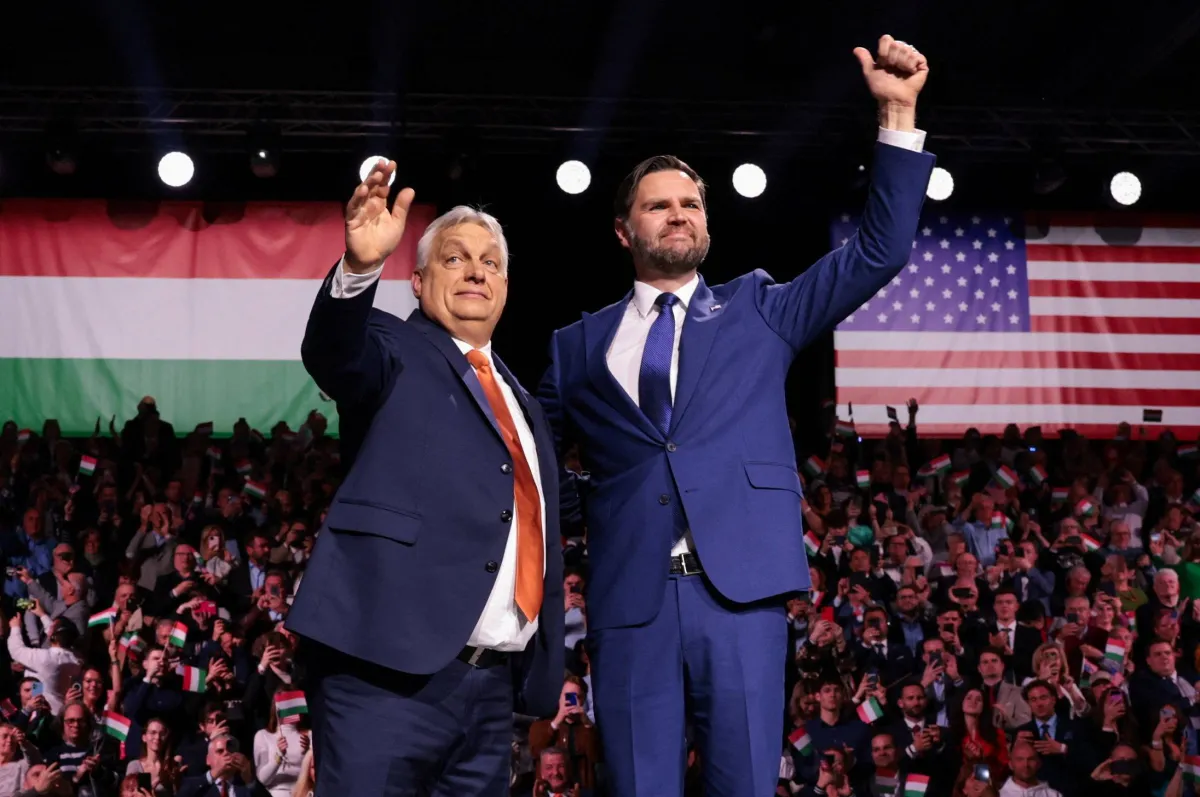
During his visit to Hungary, U.S. Vice President J.D. Vance accused European leaders of falling short in their efforts to end the ongoing Russia-Ukraine war, which has now entered its fifth year. He asserted that this conflict is one of the most challenging to resolve, highlighting the urgent need for increased collaboration among European nations.
Speaking at a press conference, Vance added that Kyiv has urged the United States to pressure Russia to end the invasion, noting that the ceasefire agreement reached by Washington with Iran demonstrates the effectiveness of American resolve in addressing international crises.
Event Details
During his visit to Budapest, Vance expressed his disappointment at the lack of interest shown by many European leaders in resolving the conflict in Ukraine. He explained that while significant progress has been made, challenges remain. He confirmed that both Ukrainian and Russian sides have outlined their positions, which are gradually starting to converge.
Vance also questioned the rationale behind the continuation of the war, stating, "Is it worth losing hundreds of thousands of young Russians and Ukrainians?" He pointed out that the war has led to rising energy prices and economic devastation.
Background & Context
The Russia-Ukraine war is considered one of the most complex conflicts in modern history, significantly impacting both European and global security. Since the outbreak of the conflict in 2019, the region has experienced escalating tensions, resulting in multiple international interventions.
Ukraine, which is under continuous invasion, seeks greater support from its allies, particularly the United States, to bring an end to this conflict. In this context, the Ukrainian Foreign Minister indicated that American resolve has proven effective, calling for pressure on Moscow to agree to a ceasefire.
Impact & Consequences
Concerns are growing that the continuation of the conflict could lead to serious economic and social repercussions for European nations, as the war has triggered an energy crisis and a refugee crisis. There is also apprehension that an escalation of the conflict could result in greater military interventions by major powers.
On the other hand, Russia hopes to resume trilateral talks under American auspices to end the war, although the Kremlin has indicated that American negotiators are currently preoccupied with Iranian affairs.
Regional Significance
The war in Ukraine indirectly affects the Arab region, as its repercussions include rising energy and commodity prices. The conflict may also lead to increased tensions in other areas, prompting Arab nations to pay closer attention to peace and stability efforts.
In closing, Vance emphasized the importance of international cooperation in resolving the conflict, stating that military solutions will not yield positive long-term results.