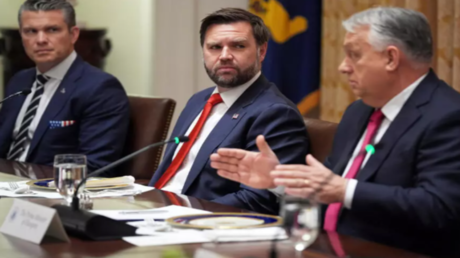
U.S. Vice President J.D. Vance arrived in the Hungarian capital Budapest on Monday night for an official visit aimed at delivering a strong message of support from President Donald Trump to his ally, the nationalist Prime Minister Viktor Orban. This visit comes at a sensitive time as Orban prepares for the parliamentary elections, highlighting the importance of U.S.-Hungarian relations in the current political context.
This visit is part of Trump's strategy to support allies in Central Europe, seeking to strengthen ties with leaders who adopt similar policies to his own. Vance emphasized the importance of cooperation between the United States and Hungary in addressing shared challenges, including security and immigration issues.
Event Details
During his visit, Vance met with Orban in a closed-door meeting where a range of bilateral issues were discussed, including economic and security cooperation. Topics related to immigration and European policies were also addressed, with Orban expressing his support for Trump's policies in this area. This visit follows a series of meetings between U.S. and Hungarian officials, demonstrating the depth of relations between the two countries.
This visit is expected to influence the upcoming parliamentary elections in Hungary, as Orban seeks to bolster his position before voters by showcasing U.S. support. Additionally, this visit may strengthen his standing as a strong leader in the face of both domestic and international criticism.
Background & Context
Historically, Hungary under Orban's leadership has been a focal point of controversy in Europe, with the government accused of undermining democracy and press freedom. However, Orban has managed to maintain a strong support base by focusing on national issues and sovereignty. In recent years, U.S.-Hungarian relations have grown closer, particularly with Trump's rise to power, who has shown clear support for Orban.
Hungary is part of a group of countries in Central Europe that are striving to enhance their nationalist policies, placing it at odds with some traditional European policies. These dynamics make Vance's visit a pivotal point for understanding the political trends in the region.
Impact & Consequences
Vance's visit may enhance Orban's position in the upcoming elections, potentially reflecting on future Hungarian government policies. U.S. support could also bolster Orban's stance against European criticisms, making him bolder in his political decisions.
On an international scale, this visit could strengthen alliances among nationalist countries in Europe, which may impact European policies overall. If Orban succeeds in the elections, it could encourage other countries in the region to adopt a similar approach, leading to changes in the European political landscape.
Regional Significance
The U.S.-Hungarian relations hold particular significance for the Arab region, as U.S. policies in Europe can influence Middle Eastern issues. American support for nationalist governments in Europe may reflect how the U.S. engages with Arab issues, such as the Israeli-Palestinian conflict and crises in Syria and Libya.
Furthermore, strengthening ties between the U.S. and Hungary may affect American aid to Arab countries, as Washington might seek to bolster alliances with nations that adopt policies similar to its own. Ultimately, this visit marks a significant milestone in international relations, warranting close attention to future developments.