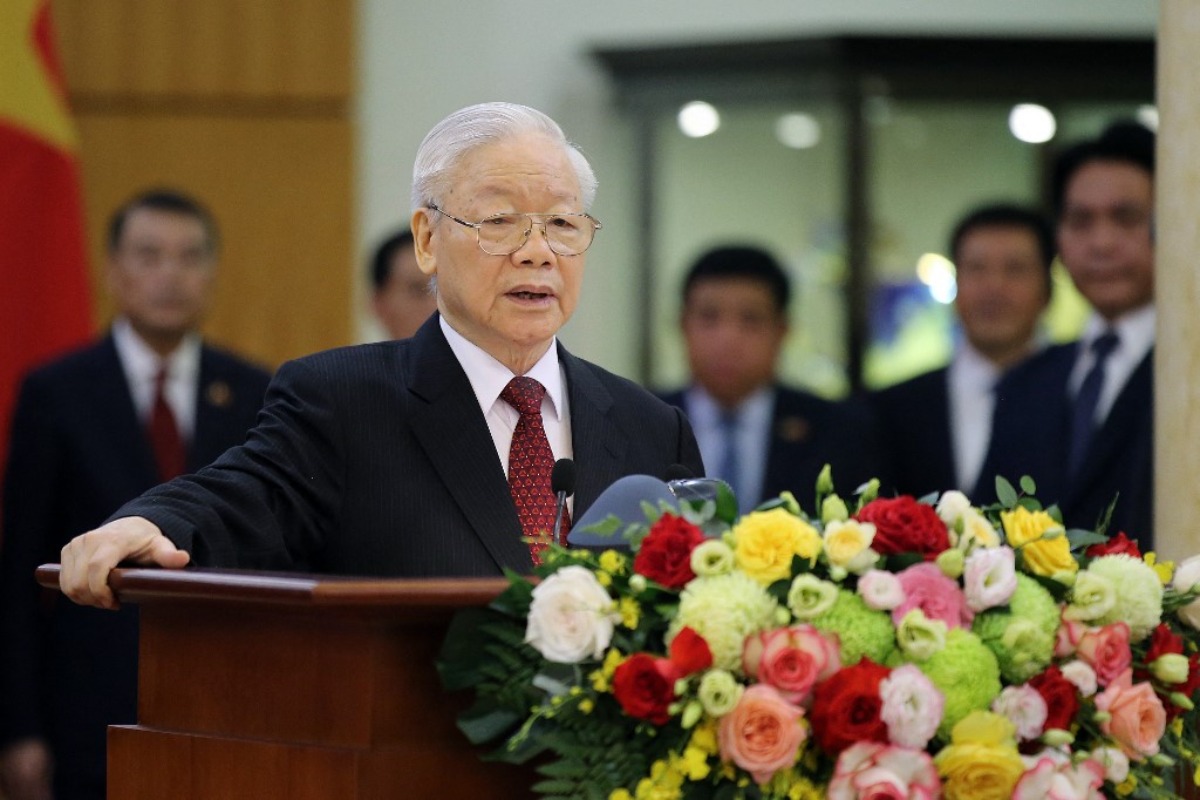
In a move that mirrors China's political structure, the Vietnamese Communist Party has elected its new leader to be the president of the country. This election comes at a sensitive time for Vietnam, as the government seeks to enhance political and economic stability amid internal and external challenges.
Nguyen Phu Trong, who serves as the General Secretary of the Communist Party, has been chosen as the new president, highlighting the party's strength in directing national policies. This election follows a period of political and economic tensions, as the party aims to balance economic growth with maintaining political control.
Details of the Election
The election of Trong comes at a time when Vietnam is undergoing significant changes in its domestic policy. He was voted in by members of the party's Central Committee, reflecting the strong support he enjoys within the party. This election is considered a strategic step to enhance unity within the party and steer policies towards achieving sustainable development goals.
In recent years, Vietnam has experienced notable economic growth, becoming one of the fastest-growing economies in Southeast Asia. However, challenges remain, including corruption and social pressures. Thus, Trong's election reflects the party's desire to effectively address these challenges.
Background & Context
Historically, Vietnam has been under the rule of the Communist Party since 1975, following the end of the Vietnam War. Since then, the country has relied on a mixed economic model that combines central planning with a free market. This model has helped achieve significant economic growth, yet issues related to human rights and political freedoms persist.
In recent years, Vietnam has begun to strengthen its relations with Western countries while maintaining its traditional ties with China. This balance in foreign policy reflects Vietnam's strategy in facing regional and international challenges.
Impact & Consequences
The election of Trong may have significant implications for Vietnam's domestic and foreign policy. The party is expected to continue reinforcing its control over political life, which may lead to further repression of political opposition. At the same time, Trong may seek to enhance economic relations with other countries, especially amid global trade tensions.
This election could also affect the relations between Vietnam and China, as both countries strive to enhance economic cooperation. However, border tensions and competition for influence in Southeast Asia may remain ongoing challenges.
Regional Significance
For the Arab region, this event underscores the importance of political stability in developing countries. Amid the economic and social challenges faced by many Arab nations, Vietnam's experience in achieving economic growth while maintaining political control could serve as an important lesson.
Moreover, the increasing economic relations between Vietnam and Western countries may open new avenues for trade and investment collaboration with Arab nations, enhancing growth opportunities in the region.
The election of the Vietnamese Communist Party leader as president represents a significant step in bolstering political and economic stability. As challenges continue, the question remains on how to manage these challenges within the current political structure.