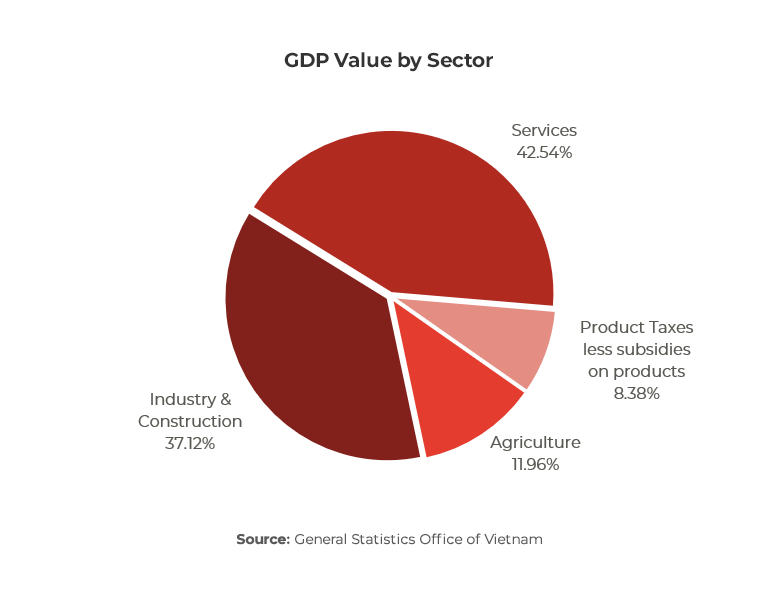
The Vietnamese government announced that the country's GDP grew by 7.83% in the first quarter of 2023, marking a significant decline compared to 8.46% in the last quarter of the previous year. This slowdown is attributed to pressures arising from rising oil prices, as Vietnam heavily relies on oil imports from the Middle East, which have been severely affected by the ongoing conflict in Iran.
The Vietnamese government aims for economic growth of at least 10% this year, but current challenges threaten to achieve this goal. More than 80% of the crude oil used in the country is imported from the Middle East, making it vulnerable to price fluctuations due to regional crises.
Event Details
A report from the General Statistics Office indicated that Vietnam's exports saw an increase of 20.1% in March compared to the same month last year, with export values reaching $46.44 billion. Industrial productivity also rose by 6.9%, indicating some stability in productive sectors despite the challenges.
Despite these positive figures, consumer prices rose by 4.65% in March, driven by increased transportation costs, which recorded a rise of 10.81%. Fuel prices surged significantly, with gasoline prices increasing by 21% and diesel prices rising by 84%, according to data from Petrolimex, the largest fuel trader in the country.
Background & Context
Historically, Vietnam has relied on imported oil to meet its energy needs, and with the increasing demand for energy, it has become more susceptible to global market fluctuations. The ongoing conflict in Iran, which has entered its sixth week, has led to disruptions in oil shipments, directly impacting the Vietnamese economy. The Vietnamese government is seeking alternative oil sources from Gulf countries, Japan, and South Korea.
In March, imports rose by 27.8% to reach $47.11 billion, resulting in a monthly trade deficit of $670 million. In the first quarter, exports increased by 19.1% to $122.93 billion, while imports rose by 27.0% to $126.57 billion, leading to a deficit of $3.64 billion.
Impact & Consequences
The slowdown in economic growth may affect the Vietnamese government's plans to expand investment projects and develop infrastructure. Additionally, rising fuel prices could negatively impact airlines and other sectors reliant on transportation. The government has taken steps to mitigate costs, including reducing fuel taxes and providing support through a government fund.
Vietnam faces additional challenges as prices continue to rise, which may lead to a decline in consumers' purchasing power. However, growth in exports and industrial productivity may provide some hope for achieving short-term economic stability.
Regional Significance
Vietnam is one of the countries that heavily depend on oil imported from the Middle East, making it closely linked to developments in the region. Any disruptions in oil supplies could affect global oil prices, reflecting on the economies of oil-producing Arab countries.
Under these circumstances, Arab countries may seek to strengthen their trade partnerships with Vietnam, particularly in the fields of energy and trade, to enhance economic stability on both sides.