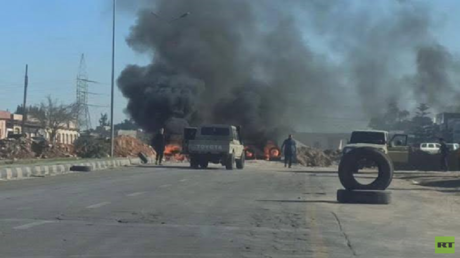
Armed clashes erupted violently in the city of Zawiya, located in western Libya, on Thursday, the second day of Eid al-Adha, after the killing of Captain Mohammed Al-Aribi, an officer in the Zawiya Security Directorate. This incident led to chaos and anxiety among residents, as the intensity of the clashes increased along the coastal road, affecting traffic and the safety of citizens.
These clashes come at a sensitive time, as Libyans seek to celebrate Eid al-Adha amid a backdrop of political and security tensions. Local sources reported that the clashes broke out between various armed groups, reflecting the ongoing divisions within the country.
Details of the Incident
Captain Mohammed Al-Aribi, who was killed under mysterious circumstances, was known for his role in enhancing security in Zawiya. His assassination sparked angry reactions from his colleagues and community members, leading to the outbreak of clashes. Videos circulated on social media showed scenes of chaos, with heavy weapons being used in the confrontations.
The clashes were not limited to Zawiya alone; they extended to neighboring areas, complicating the security situation further. Local authorities have yet to issue any official statement regarding the incident, increasing anxiety among the populace.
Background & Context
Historically, Libya has witnessed numerous security disturbances since the overthrow of Muammar Gaddafi's regime in 2011. The country suffers from political divisions and armed conflicts among various factions, negatively impacting its stability. Zawiya, being one of the major cities, has not been immune to these conflicts, having experienced several similar incidents in recent years.
Political assassinations have become a recurring phenomenon in Libya, seen as part of the ongoing struggle for power and influence. The killing of Al-Aribi highlights the dangers faced by security personnel in the country and reflects the chaotic state of Libya.
Impact & Consequences
The repercussions of these clashes could be severe for security in Zawiya, as they may lead to an escalation of violence among armed factions. Furthermore, these events could hinder the government's efforts to restore order and security in the country, complicating the political landscape.
Such clashes might increase tensions among local communities, threatening social peace. At the same time, some armed groups may exploit this chaos to enhance their influence, further complicating national reconciliation efforts.
Regional Significance
The events in Libya raise widespread concern in the Arab region, as any escalation in violence could affect stability in neighboring countries. Libya is a critical transit point for illegal migration, and any chaos could lead to an increased flow of migrants towards Europe.
Moreover, the ongoing conflict in Libya may impact relations among Arab states, as some countries seek to support specific factions, exacerbating divisions in the region. Recent events remind everyone that stability in Libya is an integral part of regional security.
In conclusion, the situation in Zawiya and Libya in general requires close monitoring, as any development could significantly affect the country's future and the stability of the region.