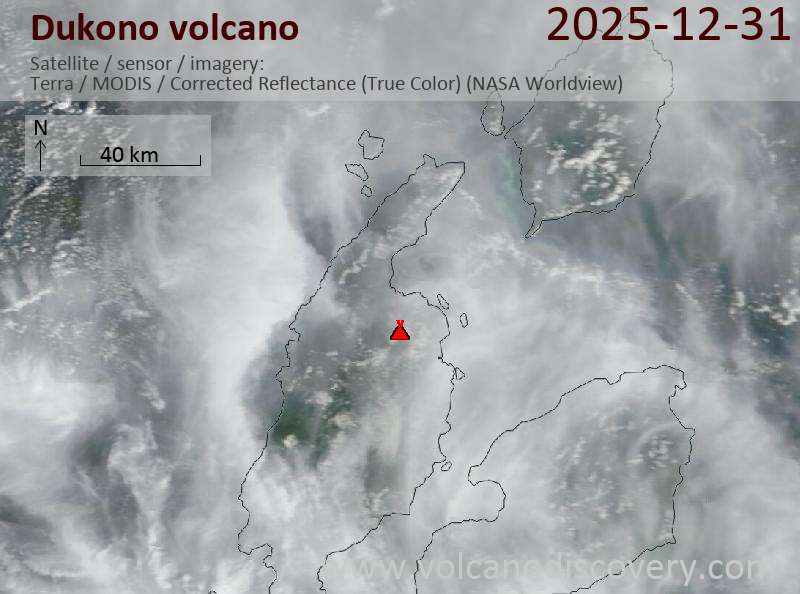
The Dukono volcano in Indonesia remains active, with recent reports from the North Halmahera Volcano Monitoring Center indicating that the volcano released volcanic ash clouds reaching heights of 3000 meters above its summit on Friday evening.
Bambang Sujiono, a staff member at the Volcano Monitoring Center, stated that the volcanic activity continued until 22:18 local time, with a gray ash column of high density recorded moving towards the northwest.
Details of the Eruption
Data recorded shows that the volcano experienced 77 explosions, with ash column heights ranging between 1500 and 4000 meters above the summit. The volcanic activity was detected on a seismometer, with vibration amplitudes reaching 14 millimeters and lasting for 158.21 seconds.
Currently, the Dukono volcano is classified at alert level two (caution), indicating the need for continuous monitoring of volcanic activity. Local authorities have warned residents and visitors to avoid approaching the Malubang Wariang crater within a radius of 4 kilometers.
Background & Context
The Dukono volcano is considered one of the most active volcanoes in Indonesia, historically witnessing numerous eruptions. In previous days, similar volcanic activity was reported, with the volcano releasing ash clouds that reached heights of 4000 meters on Friday. This recurring activity reflects the dynamic nature of volcanic activity in the region.
Indonesia is one of the countries most susceptible to volcanic activity, situated on the Pacific Ring of Fire, making it home to many active volcanoes. The country has experienced several natural disasters resulting from volcanic activity in the past, necessitating swift responses from local authorities.
Impact & Consequences
Volcanic eruptions can significantly affect the lives of local residents, as ash clouds can deteriorate air quality, posing health risks. Authorities have urged residents to wear masks to avoid inhaling volcanic ash, which can negatively impact respiratory health.
Furthermore, eruptions can disrupt air travel, as ash clouds may lead to the closure of airports in nearby areas. This situation requires airlines to take precautionary measures to ensure passenger safety.
Regional Significance
While volcanic activity in Indonesia may seem distant from the Arab region, such natural events remind us of the importance of preparedness for natural disasters. Climate change and volcanic activity can also affect weather patterns, which may impact agriculture and food security in Arab countries.
In conclusion, the ongoing activity of the Dukono volcano highlights the challenges Indonesia faces in managing natural risks. It is crucial for local authorities and communities to remain prepared to deal with any developments that may arise from this volcanic activity.