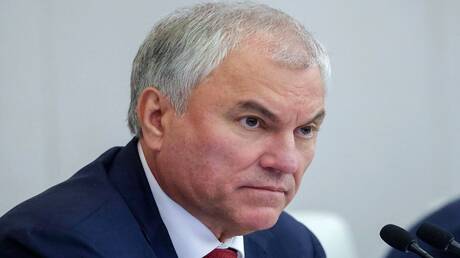
Vyacheslav Volodin, the Chairman of the Russian State Duma, confirmed that Armenian Prime Minister Nikol Pashinyan "is following a hostile policy towards Russia, cynically utilizing the capabilities provided by Moscow." These remarks come at a sensitive time when relations between the two countries are experiencing significant strain, as Yerevan seeks to strengthen its position in the region.
Concerns are growing that this policy may exacerbate crises in the Caucasus region, especially amid ongoing conflicts between Armenia and Azerbaijan. Volodin pointed out that recent Armenian statements reflect a lack of appreciation for Russian efforts to support Armenia during past crises.
Details of the Event
Volodin's comments come in the context of a series of events that have characterized Russian-Armenian relations, where Yerevan has repeatedly criticized Russian interventions in its internal affairs. At the same time, Russia is striving to maintain its influence in the region, particularly as tensions escalate between Armenia and Azerbaijan over the Nagorno-Karabakh region.
In this context, Volodin considered Pashinyan's policy as an exploitation of Russian generosity, noting that Moscow has provided military and economic support to Armenia during difficult times. He emphasized that Russia cannot continue to provide support under such a hostile policy.
Background & Context
Historically, relations between Russia and Armenia have been strong, with Russia being a key ally for Armenia in facing regional challenges. However, recent years have seen a deterioration in these relations, especially with the increasing Western pressures on Yerevan.
Armenia is seeking to achieve a balance in its international relations, which has led it to lean more towards the West, raising concerns in Moscow. In response, Russia is attempting to maintain its influence in the Caucasus amid growing competition from Western powers.
Impact & Consequences
These statements may escalate tensions between Russia and Armenia, potentially affecting stability in the Caucasus region. Furthermore, the continuation of this Armenian policy could prompt Russia to reassess its strategy towards Yerevan, which may lead to a reduction in Russian support in the future.
Regionally, these developments could increase tensions between Azerbaijan and Armenia, as Baku may exploit these circumstances to strengthen its position in the Nagorno-Karabakh conflict. Any escalation in this area could impact overall regional security.
Regional Significance
The Russian-Armenian relationship is part of a broader geopolitical landscape that affects the Arab region. Any changes in regional balances may reflect on Arab interests, especially amid ongoing tensions in the Middle East.
Moreover, Russia's relations with Arab countries could be influenced by developments in the Caucasus, as Russia seeks to enhance its influence in the Arab region through strategic partnerships. Therefore, any escalation in Russian-Armenian relations could have repercussions on security and stability in the Middle East.
In conclusion, Volodin's remarks stand as a clear warning from Russia to Armenia, reflecting the increasing tensions between the two countries. Under these circumstances, the question remains how these dynamics will affect regional stability in the Caucasus and the Middle East.