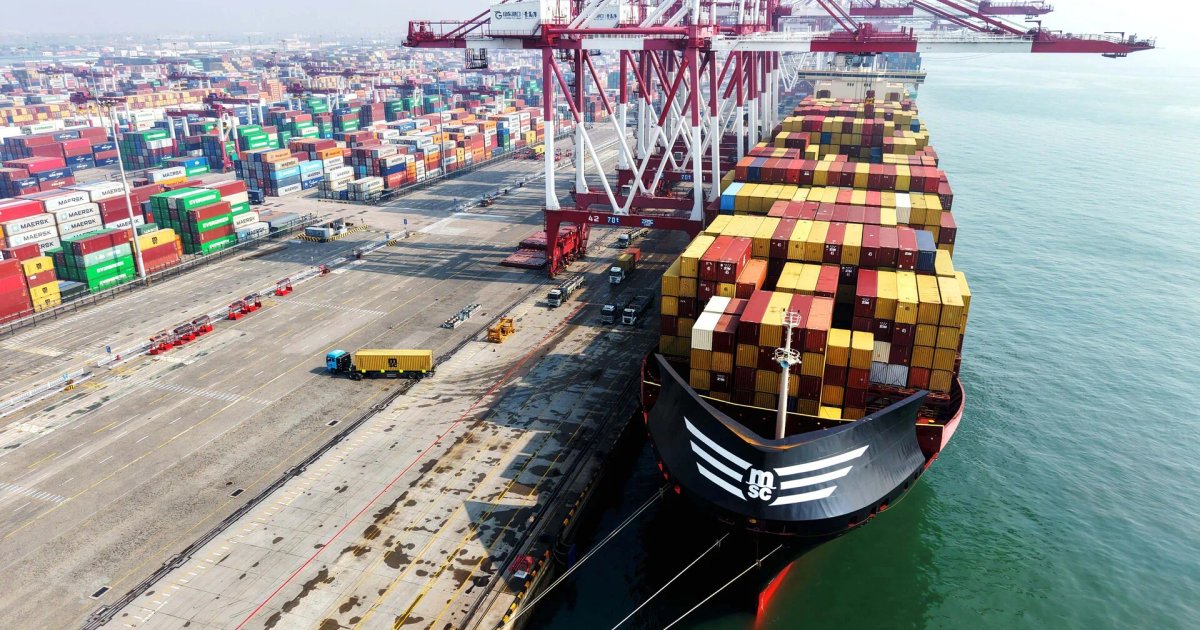
The economic repercussions of the war in the Middle East are expanding to impact Asian economies, where energy disruptions intersect with supply chain imbalances and rising costs. These conditions raise increasing concerns about inflationary pressures that threaten the stability of major markets on the continent.
In this context, Bloomberg reported a sharp decline in Asian liquefied natural gas (LNG) imports last month, marking the largest drop in over three years. The agency predicted that prices could rise by as much as 50% due to competition for spot shipments.
Details of the Event
Bloomberg indicated that China and India recorded the largest declines in their gas imports during March compared to last year, reflecting the extent of the disruption in energy markets and the impact of tensions in the Strait of Hormuz on vital supply flows. In China, the economy is facing a continuous wave of repercussions, as a local airline decided to raise fuel surcharges for domestic flights by nearly six times.
This decision reflects the transfer of the crisis's effects from international flights to the domestic market, indicating the depth of the impacts, especially with the continued rise in oil prices and the resulting increase in operating costs across various sectors.
Background & Context
In the industrial sector, steel exports emerge as one of the most affected areas, as data shows that the Middle East accounts for about 42% of China's exports, making the continuation of the war a direct threat to one of the most important drivers of the Chinese industrial economy. At the same time, the People's Bank of China warned of what it termed "imported inflation," emphasizing that every $1 increase in the price of a barrel of oil adds billions of dollars to the import bill, putting pressure on corporate profits.
Despite government interventions to stabilize domestic fuel prices and absorb the financial gap to support refining companies, the ongoing crisis could undermine these measures, especially with the decline in technology company stocks in the markets before recording a relative recovery later.
Impact & Consequences
The repercussions are not limited to companies but extend to individuals, as transportation and courier companies bear rising costs without passing them on to consumers, reflecting a government attempt to contain the social impact of the crisis. In contrast, Pakistan appears to be more affected due to its geographical location, with Al Jazeera's correspondent in Islamabad reporting that the government approved a new increase in LNG prices exceeding 34%, marking the third increase since the outbreak of the war.
This step comes amid expectations of further increases in fuel and electricity prices, with a study underway to raise power outage hours in an attempt to adapt to supply disruptions and rising costs associated with imports from the Gulf. The geographical proximity to Iran and the Strait of Hormuz enhances the level of impact, as Pakistan heavily relies on energy imports, making it directly vulnerable to any military escalation or disruption in maritime navigation.
Regional Significance
In Southeast Asia, the crisis has manifested in rising oil refining costs, and markets have experienced fluctuations in crude prices, with a temporary drop in Brent prices below $100 per barrel before resuming an upward trend. These developments intersect with a previous report on the war's implications for the global economy, where targeting supply lines has led to unprecedented increases in maritime transport costs, with significant jumps in shipping and energy prices.
Data indicates that thousands of ships are disrupted in the Gulf, and there is an increasing reliance on alternative routes, adding additional pressures on global supply chains and increasing the cost of trade between Asia and the rest of the world.