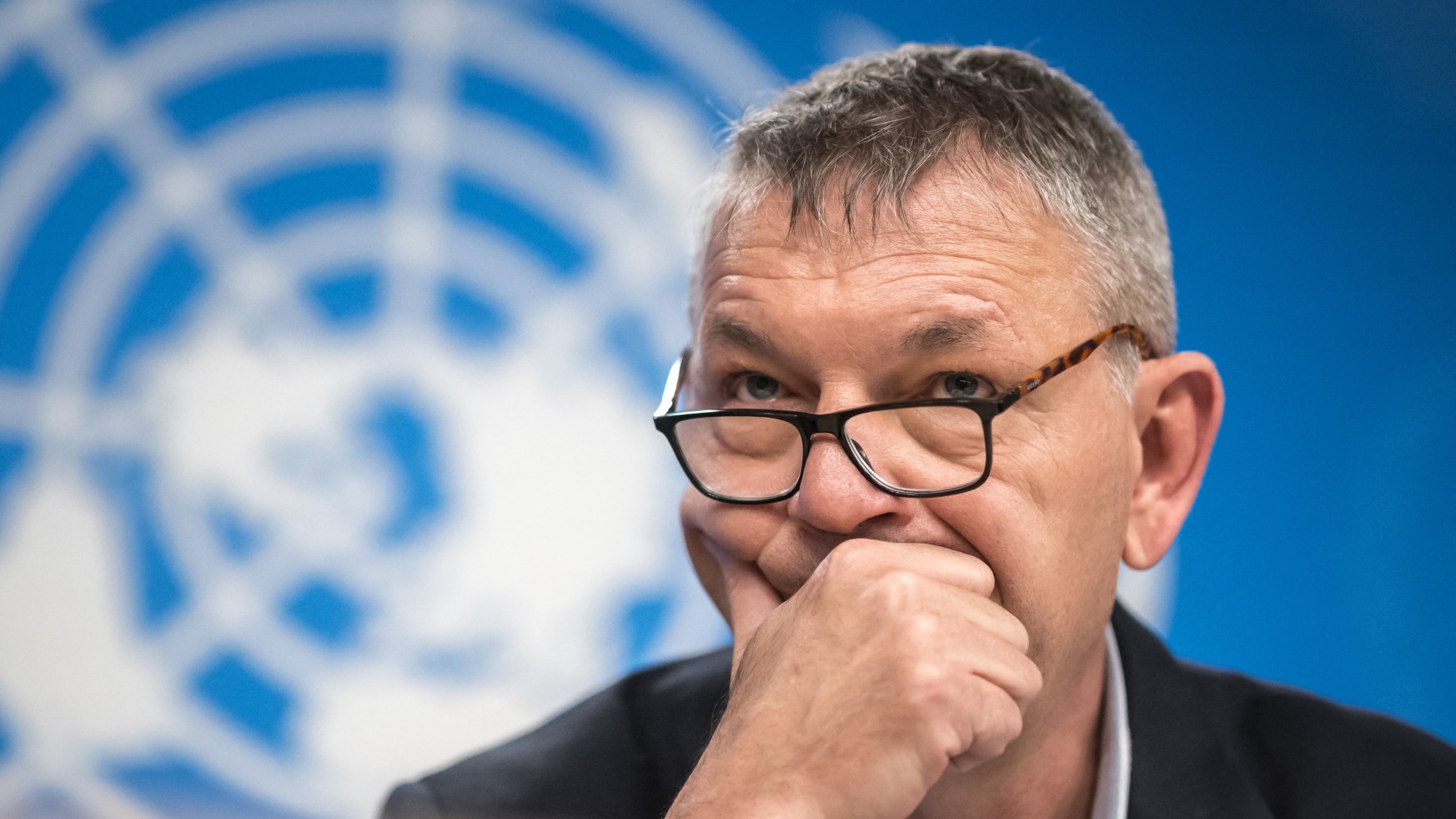
Philippe Lazzarini, the Commissioner-General of UNRWA, has warned that allowing Israel to dismantle the agency, which is the primary source of educational and health services for Palestinians, could open the door to the dismantling of other UN agencies. This statement came in his latest interview before the end of his term, where he accused the international community of failing to take real action against what he described as Israel's declared attempts to destroy UNRWA.
Lazzarini stated, "The agency has come under massive attack," noting the deaths of 391 of its staff. He also referred to the assault on the agency's main headquarters in Sheikh Jarrah, which was stormed, destroyed, and set on fire, expressing his discontent with the lack of real measures taken by UN member states to stop these assaults.
Details of the Incident
In his remarks, Lazzarini emphasized that the campaign against UNRWA is politically driven, and the accusations against the agency of collaborating with Hamas and Islamic Jihad are merely a pretext aimed at intimidating donor countries. He pointed out that an investigation conducted by former French Foreign Minister Catherine Colonna found no evidence to support these claims.
Despite the pressures, Lazzarini maintained a strong stance, asserting that UNRWA continues to provide public health services, including vaccination campaigns, clean water supply, and waste management. He explained that the agency is focused on restoring education and bringing children back into a learning environment.
Background & Context
Since Israel began its war on Gaza in October 2023, residential areas, schools, hospitals, and civilian infrastructure have been subjected to continuous bombardment. This has led to the collapse of health services, with doctors working without adequate equipment or medications, exacerbating the spread of diseases in overcrowded shelters.
UNRWA continues to operate in Gaza with approximately 11,000 employees, providing around 20,000 health consultations daily, while about 70,000 children have returned to in-person education, and over 250,000 have received remote education.
Impact & Consequences
Lazzarini indicated that the Israeli campaign aims to undermine the right of return, which is a central issue in final negotiations, as UNRWA is the only agency that recognizes Palestinian refugees and their descendants. However, he affirmed that the status of refugees will remain even if the agency is dismantled.
Lazzarini also criticized the decline in funding from Arab countries, which has dropped by 90% since 2024, warning that the agency may not remain viable if interest and funding from member states do not increase.
Regional Significance
As global attention shifts towards the conflict between the United States and Israel on one side and Iran on the other, Israel continues to impose restrictions on the flow of food and medical aid to Gaza. This has resulted in a severe shortage of medical supplies, with organizations like Doctors Without Borders unable to deliver essential medical items.
In closing, Lazzarini emphasized that UNRWA cannot be replaced by any other UN agency, stressing that education must remain an inalienable right for Palestinians, warning that dismantling the agency could lead to the loss of an entire generation of Palestinians.