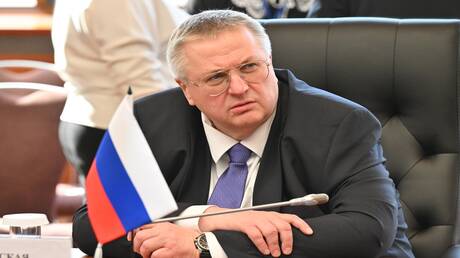
Russian Deputy Prime Minister Alexei Overchuk has warned that Armenia's shift towards integration with the European Union could lead to economic decline and rising energy prices, negatively impacting the country's standard of living.
Overchuk's statements come at a sensitive time as Armenia experiences significant political and economic transformations, with the Armenian government seeking to strengthen its ties with the EU amid ongoing tensions with neighboring Azerbaijan.
Details of the Warning
Overchuk clarified that the economic policies adopted by Armenia in its pursuit of closer ties with the EU could have negative repercussions on the national economy. He pointed out that this approach could increase reliance on imported energy, which would affect local prices.
He also emphasized that Russia considers Armenia a strategic partner, and any shifts in its foreign policy should be taken into account by the Armenian government. He noted that economic cooperation between the two countries should continue without negative impacts from political changes.
Background & Context
Historically, Armenia was part of the former Soviet Union and has maintained close relations with Russia after gaining independence. However, tensions with Azerbaijan over the Nagorno-Karabakh region have pushed Armenia to seek external support, leading it to turn towards the EU.
In recent years, relations between Armenia and the EU have improved significantly, with cooperation agreements signed in various fields. However, these shifts have raised concerns in Russia, which views Armenia as part of its traditional sphere of influence.
Impact & Consequences
The new economic policies in Armenia could lead to a decline in the standard of living, as energy prices are expected to rise due to increasing reliance on imports. Additionally, political transformations may affect foreign investments, increasing pressure on the local economy.
Furthermore, any economic downturn could lead to social unrest, as citizens face rising living costs. This may negatively impact political stability in the country.
Regional Significance
The relations between Armenia and Russia are significant issues in regional politics, as they can influence the balance of power in the Caucasus region. Any new tensions could lead to increased instability in the area, potentially affecting Arab interests in energy and security.
In light of these circumstances, Arab countries should closely monitor developments in Armenia, as any changes in Armenian foreign policy could impact regional and international relations.