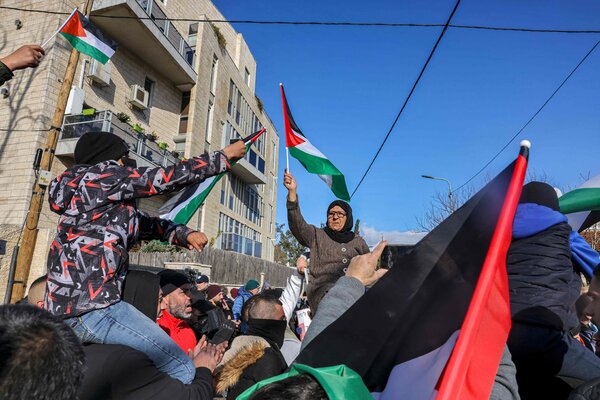
Palestinian authorities have warned of the risk of forced displacement affecting around 200 families in Jerusalem, as Israeli authorities continue to implement policies aimed at evicting Palestinian residents from their homes. This warning comes at a sensitive time marked by increasing tensions in the city, raising concerns about the future of Palestinians in Jerusalem.
The Israeli government is seeking to expand settlements in East Jerusalem, threatening the existence of many Palestinian families in their homes. Palestinian officials have indicated that these policies represent a blatant violation of international law and human rights, as force is being used to compel residents to leave their areas.
Details of the Situation
Reports of forced evictions in Jerusalem are on the rise, as these operations are part of a broader strategy aimed at altering the demographic composition of the city. According to local sources, targeted families are facing increasing pressure from Israeli authorities, including threats of arrest and continuous searches of their homes.
In this context, human rights organizations have issued statements condemning these violations, emphasizing the need to protect the rights of Palestinians in Jerusalem. They have also called on the international community to intervene to stop these practices that contradict international laws.
Background & Context
Historically, Jerusalem has witnessed numerous attempts at forced displacement since its occupation in 1967. Israeli policies have led to a deterioration of the humanitarian situation for Palestinian residents, making them vulnerable to displacement and eviction. In recent years, these policies have escalated significantly, provoking strong reactions from the international community.
Jerusalem is a city of great religious and cultural significance, housing many sacred sites for Muslims, Christians, and Jews. However, the political and social tensions in the city reflect the ongoing conflict between Palestinians and Israelis, complicating the situation further.
Impact & Consequences
If forced evictions continue, it will exacerbate the humanitarian conditions in Jerusalem, as many families will lose their homes and livelihoods. These policies may also lead to increased tensions between Palestinians and Israelis, threatening stability in the region.
Moreover, forced displacement could negatively impact international relations, as Israel will face increasing criticism from the international community. Such criticism may lead to sanctions or diplomatic pressure on the Israeli government.
Regional Significance
The issue of Jerusalem is central to the Arab-Israeli conflict, evoking strong sentiments in the Arab world. Any forced displacement of Palestinians in Jerusalem could provoke angry reactions in Arab countries, heightening tensions in the region.
Furthermore, the continuation of these policies may affect peace efforts in the region, making it more difficult to reach a fair and comprehensive solution to the conflict. Ultimately, Jerusalem remains a symbol of the ongoing struggle, and the international community must work to protect the rights of Palestinians within it.