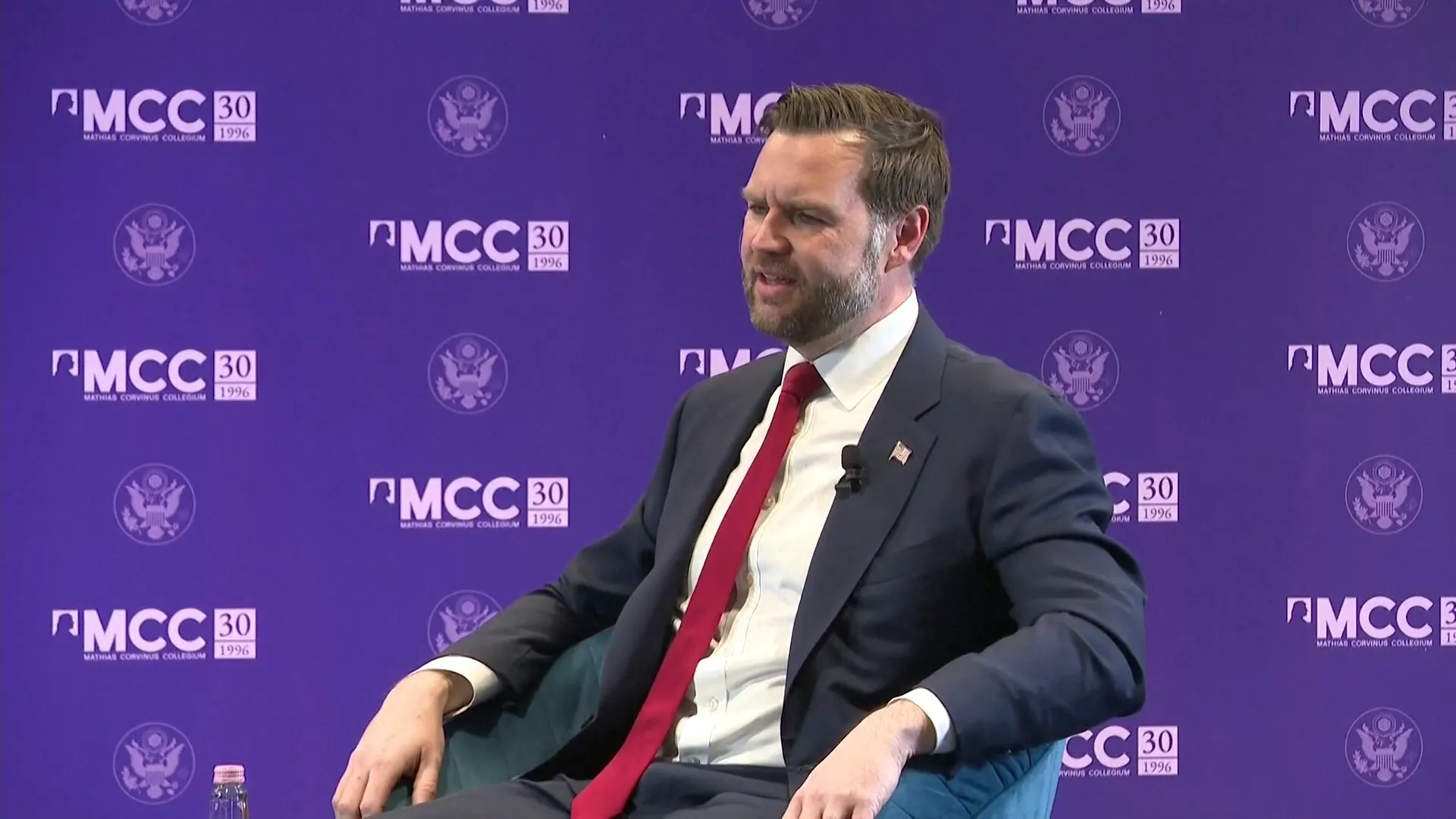
U.S. Vice President J.D. Vance characterized the existing agreement with Iran as a 'fragile truce' during a discussion at a Hungarian university, noting that this truce depends on the Iranian government's consent to open the Strait of Hormuz. Vance emphasized that President Donald Trump is not one to compromise during negotiations.
Vance clarified that Trump has given Iran a deadline, demanding that they open the Strait of Hormuz and cease using the global economy as leverage in exchange for a ceasefire. He pointed out that Iran had agreed to open the strait, while the United States and its allies committed to halting attacks.
Details of the Event
In his remarks, Vance mentioned that Trump had instructed him and the U.S. negotiating team to act in good faith to reach an agreement with Iran. He warned that if the Iranians do not act sincerely, they will find out that Trump is not one to be trifled with. He expressed hope that the Iranians would make the right decision.
Vance also stressed that Trump 'cannot be manipulated' and that his patience is wearing thin. He noted that some Iranian officials, such as Foreign Minister Abbas Araghchi, have reacted positively to the agreement, confirming their acceptance of U.S. terms and entering negotiations to open the Strait of Hormuz. However, he added that there are others within the Iranian regime who deny reaching any agreement.
Background & Context
These statements come at a sensitive time as the United States seeks to stabilize the region by applying pressure on Iran. Relations between Washington and Tehran have been increasingly strained in recent years, especially following the U.S. withdrawal from the Iranian nuclear deal in 2018.
The Strait of Hormuz is one of the most critical waterways in the world, through which approximately 20% of the world's oil passes. Therefore, any tension in this area could significantly impact the global economy.
Impact & Consequences
These warnings could escalate tensions between the United States and Iran, potentially affecting regional stability. Additionally, failure to reach an agreement may lead to military escalation in the area, a scenario many observers fear.
If Iran continues to disregard U.S. demands, Washington may take stricter measures, which could exacerbate the situation in the Middle East.
Regional Significance
The developments in U.S.-Iranian relations are of great importance to Arab countries, as regional stability heavily relies on how major powers interact with Iran. If tensions escalate, neighboring countries could be directly affected, increasing instability.
In conclusion, the question remains whether Iran will respond to U.S. demands and whether this fragile truce can withstand upcoming challenges.